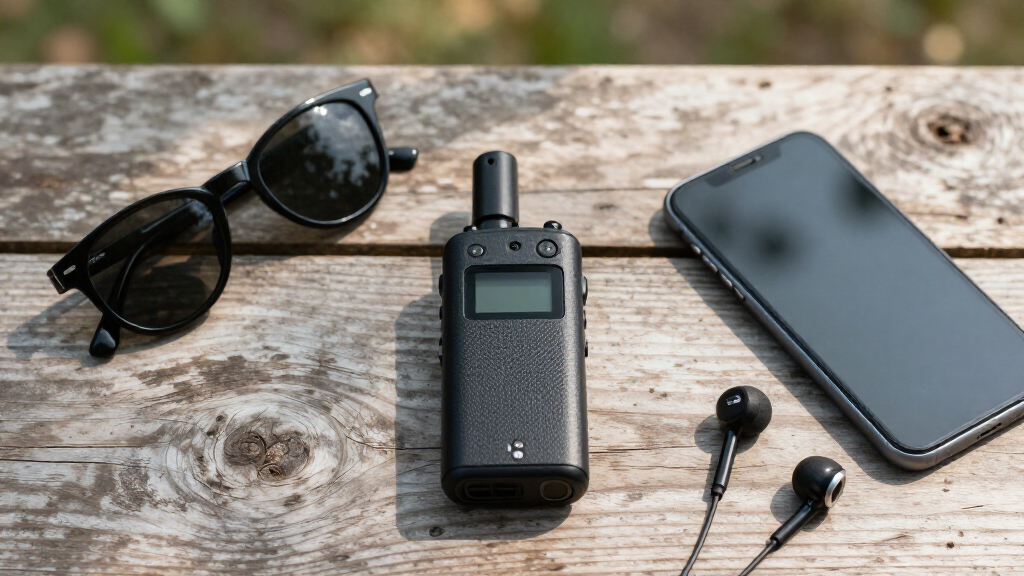

Shopping for discreet portable voice recorders means balancing three things that rarely coexist: physical concealability, battery endurance, and audio clarity. After comparing 14 leading models, the 128GB Magnetic Voice Recorder with AI Noise Reduction and 40-Day Battery Life stands out as the best overall pick because it combines magnetic mounting, voice activation, and genuinely long standby in one slim package. Close behind, the 136GB Magnetic Voice Activated Recorder with AI Noise Reduction offers more storage for heavy users, while the budget-friendly Mini Metal Voice Recorder Vandlion V15 wins on pure pocketability and price. The main tradeoff you will face is between tiny form factors with shorter runtimes and slightly larger units that record for days. Read on for the full breakdown, including who each model suits and which ones to skip.

Get privacy and security gear delivered free with Prime
- Fast, free delivery on millions of items
- Prime Video, Amazon Music and more included
- Member-only deals all year
Key Takeaways
- Magnetic designs dominated the top of this comparison because they attach under desks, inside vehicles, or behind furniture — the most flexible concealment option in the lineup.
- AI noise reduction appeared in nearly every premium pick here, but only the top-ranked models paired it with reliable voice activation that actually saved battery instead of just sounding good on a spec sheet.
- Storage above 128GB proved more marketing than necessity for most buyers — unless you record multi-hour lectures daily, a 64GB model at a lower price is the smarter spend.
- The voice-activated models with 40+ day standby separated themselves from one-touch recorders, which drain batteries whether or not anyone is speaking.
- The Pocket AI Voice Recorder with Auto Transcription is the only pick here that converts recordings to searchable notes, making it a category of one for students and journalists despite its higher price.
- MP3 playback and USB-C connectivity quietly became the two features that separated modern picks from older designs that still require proprietary cables or file conversion.


| discreet portable voice recorder | Storage Capacity | Connectivity | Battery Life | Recording Time |
|---|---|---|---|---|
| 72GB Voice Activated Recorder | 72GB | OTG | — | — |
| 128GB Magnetic Voice Recorder | 128 GB | USB 3.0 Type C, 3.5mm headphone jack | — | 9000 hours |
| 72GB Digital Voice Recorder wi | 72 GB | USB Type C, 3.5mm headphone jack | 48 hours continuous recording | Up to 4,800 hours |
| Mini Metal Voice Recorder Vand | 32GB | — | 35–40 hours | — |
| 160GB Voice Recorder with Play | 160GB | — | 68+ hours | — |
| Voice Recorder with 128GB Stor | 128GB | USB-C | 40 days standby | Up to 1000 hours |
| 72GB Voice Recorder with USB-C | 72GB | USB-C | 35 hours continuous | — |
| 64GB Digital Voice Recorder wi | — | Micro-USB | Up to 15 hours recording, 30 hours playback | Up to 776 hours at 192kbps |
| 64GB Digital Voice Recorder wi | 64GB | — | — | Up to 32 hours |
| 72GB Magnetic Voice Activated | 72GB | USB Type-C, OTG | — | Up to 9,800 hours stored / 72 hours continuous |
| 136GB Magnetic Voice Activated | 136 GB | USB Type-C, OTG support | 100 hours | — |
| Pocket AI Voice Recorder with | — | — | Up to 4 days | — |
| 300-Hour Voice Recorder with V | — | — | — | Up to 300 hours |
| 128GB Magnetic Voice Activated | 128GB | USB-C | 70 hours | Up to 1,600 hours |
More Details on Our Top Picks
72GB Voice Activated Recorder with Noise Reduction and OTG
With a stated capacity of 10,860 recording hours, this model outlasts nearly everything else in the roundup, including the 160GB Voice Recorder with Playback, which holds more raw storage but is rated for fewer hours. The DSP 6.0 noise reduction keeps lectures and meetings intelligible even when the room is less than quiet, and OTG transfer means files move to a phone or laptop without hunting for a card reader. The tradeoff is operational: with no screen or playback controls, checking what you recorded means plugging into another device. Compared with the Vandlion V15, which offers one-button simplicity and fast Type-C charging, this one leans on capacity rather than refinement. It’s the pick for people who record constantly and review later — not for anyone who wants on-device feedback.
Pros:- Massive 10,860-hour recording ceiling outpaces most rivals
- DSP 6.0 noise reduction keeps speech clear in busy rooms
- OTG connectivity speeds up file transfer to phones and laptops
- Simple operation suits long unattended sessions
Cons:- Default WAV format requires conversion for MP3 use
- No display or playback controls on the device
- Battery life details are vague
Best for: Students and journalists who record multi-hour lectures or interviews daily and offload files to a computer afterward
Not ideal for: Buyers who want on-device playback or a screen to confirm recording status mid-session
- Storage Capacity:72GB
- Recording Hours:10,860H
- Noise Reduction:DSP 6.0
- Connectivity:OTG
- Recording Format:WAV (default), MP3 (via conversion)
Our verdict“This is the set-and-forget option for heavy recorders who value capacity over on-device control.”
128GB Magnetic Voice Recorder with AI Noise Reduction and Voice Activation
At 0.25 inches thick and 13 grams, this is the most physically discreet option in the lineup — slimmer and lighter than the Vandlion V15, which is already small at 21g. The magnetic body lets it attach to a laptop lid, fridge, or file cabinet, which is a genuinely different placement strategy from pocket-style recorders like the 72GB Digital Voice Recorder. Storage is generous at 128GB, and the AI triple noise reduction plus voice activation mean it captures speech without constant attention. The compromises: iOS users need an adapter, there’s no app or Wi-Fi control, and battery specs are thin. Compared with the Nanezan 128GB magnetic model elsewhere in this guide, this one trades battery transparency for a thinner profile. It earns its spot purely on concealability and triple-duty use as an MP3 player and USB drive.
Pros:- 0.25-inch profile and 13g weight make it the most concealable option here
- Magnetic mounting enables creative, invisible placement
- 128GB of storage doubles as a USB drive and MP3 player
- AI triple noise reduction cleans up noisy environments
Cons:- Requires an adapter for iOS devices
- No app or Wi-Fi connectivity for remote operation
- Battery life duration is not clearly documented
Best for: Professionals who need a recorder hidden in plain sight — under a conference table, on a laptop, or in a shirt pocket
Not ideal for: iPhone-first users or anyone who wants app-based control and remote management
- Storage Capacity:128 GB
- Recording Time:9000 hours
- Thickness:0.25 inches
- Weight:13g
- Noise Reduction:AI Triple Noise Reduction
- Voice Activation:Yes
- Connectivity:USB 3.0 Type C, 3.5mm headphone jack
- Format:WAV
Our verdict“If physical discretion is your top priority, this slim magnetic recorder is the easiest to hide and forget.”
72GB Digital Voice Recorder with AI Noise Reduction and Voice Activation
Unlike most rivals in this guide that stay quiet about runtime, this one commits to 48 hours of continuous recording — a concrete number the 128GB Magnetic Voice Recorder and 72GB OTG model don’t provide. That certainty matters if a two-day conference or deposition is on your calendar. Its AI sound processing claims a 97% reduction in ambient noise, which positions it ahead of standard DSP units for cafés and open offices, and at one ounce it disappears into a pocket as readily as anything here. The tradeoffs are real: USB-C only, no external mic support, and the 4,800-hour recording ceiling trails the 10,860 hours of the OTG model despite matching storage. This pick makes the most sense for buyers who plan around battery life rather than raw capacity, and who value a stated spec over marketing vagueness.
Pros:- 48-hour continuous battery is clearly specified, unlike many rivals
- AI processing cuts 97% of ambient noise for clearer speech
- 1-ounce weight makes all-day carry effortless
- Voice activation saves storage during silent stretches
Cons:- 4,800-hour recording ceiling trails higher-rated models with similar storage
- No external microphone compatibility mentioned
- USB Type-C only, which may exclude older setups
Best for: Conference-goers and field interviewers who need a documented two-day battery for long events away from chargers
Not ideal for: Buyers who want maximum recording hours per gigabyte or external microphone flexibility
- Storage Capacity:72 GB
- Battery Life:48 hours continuous recording
- Recording Time:Up to 4,800 hours
- Noise Reduction:AI smart sound processing, 97% ambient noise reduction
- Voice Activation:Yes
- Weight:1 ounce
- Connectivity:USB Type C, 3.5mm headphone jack
Our verdict“Choose this when a guaranteed two-day battery matters more than the biggest possible recording archive.”
Mini Metal Voice Recorder Vandlion V15 HD 32GB
Most recorders in this roundup are plastic wafers chasing capacity; the V15 takes the opposite bet with an aluminum alloy shell and a focus on audio fidelity — 1536 kbps recording that matches the flagship 160GB model’s bitrate with a quarter of the storage. For a buyer who records an hour a day rather than ten, 32GB is plenty, and the metal body survives pocket keys and bag tosses that would scuff cheaper units. One-button operation is simpler than the menu-driven 160GB recorder, which frankly overcomplicates things for beginners. The compromises: voice activation must be manually switched on each time, there’s no storage expansion, and no external mic input. At 35–40 hours of battery with Type-C fast charging, it trails the 68+ hours of the big 160GB unit, but outclasses it in everyday handling. This is the pick when feel and sound quality outweigh raw capacity.
Pros:- Metal aluminum body feels and wears better than plastic rivals
- 1536 kbps HD recording matches far pricier models
- One-button operation is the simplest in this roundup
- Type-C fast charging tops up quickly between uses
Cons:- Voice activation requires manual activation before each session
- 32GB storage with no expansion limits long-term archiving
- No external microphone input
Best for: Buyers who record moderate daily volumes and want durable, premium-feeling hardware with top-tier audio fidelity
Not ideal for: Heavy users archiving weeks of recordings — 32GB fills fast and can’t be expanded
- Storage Capacity:32GB
- Bitrate:1536 kbps
- Battery Life:35–40 hours
- Charging:Type-C fast charge
- Dimensions:2.2 x 1.3 inches
- Weight:0.8 oz / 21g
- Material:Aluminum alloy
Our verdict“The V15 is the quality-over-quantity choice for buyers who prioritize audio fidelity and build over sheer storage.”
160GB Voice Recorder with Playback and Long Battery Life
This is the most complete package in the batch: 160GB of storage, 68+ hours of battery, dual microphones capturing 1536kbps stereo, and password protection no other product here offers. That last feature is the differentiator — if your recordings contain sensitive interviews, client meetings, or HR matters, the 72GB OTG model and the 128GB Magnetic recorder leave files fully exposed to anyone who plugs them in. On-device playback also separates it from screenless rivals, letting you verify a recording before leaving the room. Compared with the Vandlion V15, it wins on capacity, stereo capture, and battery, but loses on simplicity: the added features create a learning curve beginners may find frustrating, and there’s no rugged or waterproof rating for field use. For professionals who need security, verification, and endurance in one zinc-alloy body, this model justifies its place at the top of the list.
Pros:- Password protection secures sensitive recordings, unique in this lineup
- 160GB plus 68+ hour battery is the best capacity-endurance pairing here
- Dual microphones deliver stereo audio rare at this size
- On-device playback lets you verify recordings without a computer
Cons:- Feature-rich interface has a learning curve for beginners
- 160GB is overkill for light users who could save money elsewhere
- No waterproof or rugged rating for harsh environments
Best for: Professionals handling confidential recordings — lawyers, journalists, consultants — who need encryption, playback, and days of runtime
Not ideal for: Casual or first-time users who will never touch the extra features and may find the menus confusing
- Storage Capacity:160GB
- Battery Life:68+ hours
- Recording Quality:1536kbps stereo
- Microphones:Dual microphones
- Supported Formats:WAV, MP3
- Security:Password protection
- Material:Zinc alloy and acrylic
Our verdict“If you need one recorder that does everything — security, playback, stereo sound, and marathon endurance — this is the one to buy.”
Voice Recorder with 128GB Storage, AI Noise Reduction, 40-Day Battery Life, Voice Activation, Magnetic Design
Most recorders in this roundup force you to choose between storage and stamina. This model refuses that compromise: 128GB of storage paired with a 40-day standby battery means you can leave it recording — or waiting in voice-activated mode — for weeks without touching it. Compared with the 72GB USB-C model below, this doubles the capacity, though the tradeoff is physical bulk. The magnetic design lets it hide under a desk or inside a metal cabinet, which matters if discretion is the whole point.
The honest weakness: it’s noticeably chunkier than slim picks like the EVISTR L357, and it depends on a specific CR5 battery rather than charging from any cable you have nearby.
Pros:- 128GB storage holds up to 9,500 hours of recordings
- 40-day battery life eliminates frequent recharging
- AI triple noise reduction keeps speech intelligible in busy rooms
- Magnetic mounting allows concealed placement on metal surfaces
Cons:- Bulkier than slim pen-style or card-style recorders
- Requires a specific CR5 battery that isn’t as easy to replace as standard cells
Best for: Anyone who needs a recorder left in place for extended periods — week-long conferences, remote interviews, or monitoring a room without returning to swap batteries
Not ideal for: Buyers who want a pen-thin recorder that disappears in a shirt pocket — this unit’s size works against true pocketability
- Storage Capacity:128GB
- Battery Life:40 days standby
- Battery:5000mAh (CR5, included)
- Recording Time:Up to 1000 hours
- Connectivity:USB-C
- Format:WAV
- Extras:Voice activation, magnetic design, 3.5mm headphone jack
Our verdict“If runtime and capacity matter more than a slim silhouette, this is the set-and-forget pick of the batch.”
72GB Voice Recorder with USB-C, One-Touch Start, Voice Activation, and Playback
This recorder hits a sweet spot the others miss: 72GB of storage and one-touch operation at a price that undercuts the 128GB flagship above. Where the 128GB model wins on raw capacity, this one wins on everyday usability — slide it out, press once, and you’re recording before the meeting starts. The 360° omnidirectional microphone picks up voices from around a table rather than just the person directly in front of it, and timestamped files with segment saving make organizing a week of lectures far less painful.
The main tradeoff is the absence of any display — unlike the EVISTR L357, you can’t confirm recording levels on the spot, so you’re trusting the device blindly.
Pros:- 72GB capacity stores up to 7,600 hours of audio
- One-touch start captures moments without fumbling through menus
- 360° omnidirectional microphone with noise reduction
- Timestamped files and segment saving simplify organization
Cons:- No display screen for confirming recording status
- 35-hour continuous battery trails the 128GB model’s stamina considerably
Best for: Students and note-takers who want big storage and dead-simple operation without paying flagship prices
Not ideal for: Anyone anxious about blind recording — no screen means no way to verify levels, remaining space, or battery mid-session
- Storage Capacity:72GB
- Recording Capacity:Up to 7,600 hours
- Battery Life:35 hours continuous
- Microphone:360° omnidirectional with noise reduction
- Connectivity:USB-C
- Extras:Voice activation, one-touch recording, headphones, USB-A cable, USB-C to 3.5mm cable included
Our verdict“The best balance of price, capacity, and ease in this batch — as long as you’re comfortable recording on faith.”
64GB Digital Voice Recorder with Noise Reduction and Voice Activation
This is the option for buyers who like to configure rather than just press record. The AI and DSP dual noise reduction is genuinely useful in echoey lecture halls, and the expandable TF card slot gives it a flexibility no fixed-storage model here can match — fill the 64GB card, swap in another, keep going. That alone distinguishes it from the sealed 72GB magnetic recorder later in this list. But there’s a real catch that shapes who should buy it: voice activation must be enabled through a computer connection first, and several features require manual setup out of the box.
Compared with the one-touch 72GB model, this demands more patience upfront. The payoff is a recorder you can tune to your exact situation.
Pros:- 64GB storage with expandable TF card support
- AI plus DSP noise reduction handles difficult acoustic spaces
- One-click recording and direct playback once configured
- Ships with a full accessory kit including headphones and card
Cons:- Voice activation requires connecting to a computer to enable
- Several features need manual setup rather than working out of the box
Best for: Tech-comfortable users who want adjustable noise reduction, swappable storage, and don’t mind a setup session before first use
Not ideal for: Anyone who expects plug-and-play simplicity — the computer-required voice activation setup will frustrate non-technical buyers
- Memory Capacity:64GB
- Expandable Memory:TF card support
- Recording Time:Up to 776 hours at 192kbps
- Battery:270mAh rechargeable
- Battery Life:Up to 15 hours recording, 30 hours playback
- Microphone:Dynamic noise-cancelling
- Connectivity:Micro-USB
Our verdict“A capable, flexible recorder for people willing to configure it — skip it if you want zero setup.”
64GB Digital Voice Recorder with Playback and Voice Activation (EVISTR L357)
The EVISTR L357 is the most conventional, confidence-inspiring design in this batch — a slim bar with just two buttons, stereo recording, and playback tools that the screenless models simply can’t offer. A-B repeat and variable-speed playback make it a favorite for transcription and language learning, and its seven-level voice activation sensitivity is more granular than the single-mode activation on the 72GB one-touch model. Time-stamped filenames and one-click delete round out genuinely thoughtful file handling.
The tradeoffs are real, though: 32 hours of recording per charge is the shortest runtime here, and its basic recording functions lack the advanced features tinkerers get from the expandable TF-card model. It’s the recorder for people who want to review audio, not just capture it.
Pros:- Stereo sound with adjustable gain and noise reduction
- Seven voice activation sensitivity levels for fine control
- A-B repeat and variable-speed playback built in
- Two-button operation that’s genuinely foolproof
Cons:- 32-hour recording battery is the shortest in this lineup
- Basic feature set with no advanced editing or expansion options
Best for: Transcriptionists, journalists, and students who review their recordings on the device and want playback tools like A-B repeat and speed control
Not ideal for: Multi-day recording marathons — the 32-hour battery trails the 72GB and 128GB models by a wide margin
- Storage Capacity:64GB
- Recording Time:Up to 32 hours
- Playback Time:Up to 35 hours
- Battery:500mAh rechargeable
- Formats:WAV / MP3
- Voice Activation:Yes, 7 sensitivity levels
- Dimensions:3.86 x 1.2 x 0.47 inches
- Charging:Type-C USB
Our verdict“The most well-rounded recorder for capture-and-review workflows, as long as your sessions stay under a day.”
72GB Magnetic Voice Activated Recorder – AI Noise Reduction, Portable Audio Recorder for Lectures and Meetings
At one ounce and 0.4 inches thick, this is the most concealable recorder in this batch — it slips into a pocket or sticks magnetically under a table where bulkier units like the 128GB long-deployment model would be obvious. Storage is generous at 72GB (up to 9,800 hours), and the AI noise cancellation plus timer recording modes give it more scheduling intelligence than the simpler one-touch 72GB recorder. OTG support means you can pull files straight onto a phone without hunting for a laptop.
The tradeoff for that tiny footprint: 72 hours of continuous recording per charge is modest for a device this容量-focused, and the feature set leans complex — expect a learning curve that the two-button EVISTR L357 deliberately avoids.
Pros:- Featherweight 1-ounce build with a 0.4-inch profile
- Magnetic attachment for concealed or hands-free placement
- 9,800-hour storage capacity from 72GB
- Timer recording and OTG phone transfer add flexibility
Cons:- 72-hour battery life trails the 128GB model dramatically
- Feature set is complex enough to require a real learning curve
Best for: Buyers who prioritize concealment above all — journalists, investigators, or anyone recording in situations where a visible device changes the dynamic
Not ideal for: Set-and-forget users who need weeks of standby — the 128GB 40-day model covers that scenario far better
- Storage Capacity:72GB
- Recording Time:Up to 9,800 hours stored / 72 hours continuous
- Battery:1 rechargeable battery
- Connectivity:USB Type-C, OTG
- Format:WAV
- Weight:1 ounce
- Thickness:0.4 inches
- Extras:AI noise reduction, voice activation, timer recording, magnetic mount, 3.5mm jack
Our verdict“The best hide-anywhere recorder here, provided your sessions fit within its three-day battery.”
136GB Magnetic Voice Activated Recorder with AI Noise Reduction
For buyers whose top fear is running out of room mid-semester or mid-project, this recorder’s 136GB of storage is the headline draw — roughly double the capacity of the Nanezan 128GB model and nearly double that of the smaller 72GB recorders in this lineup. The DSP 5.0 AI audio chip pairs with 45dB sound detection so voice activation triggers early and quietly, cutting hours of dead air from long lectures. The magnetic housing lets it stick under a metal desk or shelf, which is where the discreet appeal really lives. Compared with the 300-Hour Voice Recorder, which offers simpler one-switch operation, this model trades simplicity for a 3.5mm microphone jack, opening the door to external mics for better pickup at distance. The tradeoff: battery life sits at 100 hours — good, but far short of marathon units — and the magnet only works on steel surfaces.
Pros:- Enormous 136GB capacity eliminates storage anxiety for long projects
- 3.5mm mic jack supports external microphones for distant speakers
- 45dB voice activation with AI noise reduction keeps files clean and small
- OTG file transfer moves recordings to a phone quickly
Cons:- 100-hour battery trails dedicated long-runtime models
- Magnetic mounting requires compatible metal surfaces
- No water or dust resistance rating for outdoor use
Best for: Students and journalists recording weeks of lectures and interviews who need massive storage and flexible mic options
Not ideal for: Anyone planning to attach it to wood, plastic, or fabric surfaces — the magnetic placement is useless without metal nearby
- Storage Capacity:136 GB
- Recording Capacity:Up to 18,800 hours
- Battery Life:100 hours
- Audio Chip:DSP 5.0 AI
- Sound Detection:45dB
- Magnetic Design:Yes
- Connectivity:USB Type-C, OTG support
- Microphone Jack:3.5mm
- Dimensions / Weight:1.38 × 1.68 × 0.38 in, 35g
Our verdict“If storage ceiling and placement flexibility matter more than battery endurance, this is the recorder to beat in the lineup.”
Pocket AI Voice Recorder with Auto Transcription and AI Note Taker
This is the odd one out in a roundup full of raw storage numbers — instead of chasing gigabytes, it chases what happens after the recording. Auto transcription, AI summaries, action items, and conversation maps turn a captured meeting into organized notes, something the 136GB Magnetic Recorder and the Nanezan can’t do at all without third-party software. MagSafe compatibility means it rides on the back of an iPhone, so it’s always charged and always within reach — a genuinely different discreetness strategy than hiding a magnetic puck under a desk. The 4-day battery is respectable for a phone accessory. The catch is the business model: core features are free, but premium AI features sit behind a subscription, and the spec sheet is silent on storage capacity and data handling, which matters when recordings contain sensitive conversations.
Pros:- Automatic transcription and AI summaries eliminate manual note review
- MagSafe mounting keeps it attached and charged on your phone
- One-tap recording captures spontaneous moments instantly
- Up to 4 days of battery life per charge
Cons:- Best AI features locked behind an optional subscription
- No published storage capacity or data-security details
- Far less raw recording capacity than dedicated recorders like the Nanezan 128GB
Best for: Busy professionals who want meetings transcribed and summarized automatically rather than sifting through audio files later
Not ideal for: Budget-conscious buyers or privacy-sensitive users — recurring subscription costs and vague data-security details are real friction
- Compatibility:MagSafe compatible with iPhone and other devices
- Battery Life:Up to 4 days
- Transcription:Automatic, real-time
- AI Features:Summaries, action items, conversation maps
- Pricing Model:Core features included, optional premium subscription
Our verdict“Buy this for the workflow, not the hardware — it’s the only pick here that turns recordings into finished notes.”
300-Hour Voice Recorder with Voice Activation, Portable Audio Recording Device for Meetings, Lectures, Interviews, and Travel
Where the 136GB Magnetic Recorder piles on features, this one bets everything on simplicity and endurance. A single switch starts and stops recording — no menus, no modes, no learning curve — which makes it the friendliest option here for technophobes or anyone who needs to start capturing audio in two seconds. The 300-hour recording capability outlasts the Nanezan’s 70-hour battery several times over, making it a stronger fit for multi-day travel or surveillance-style monitoring where charging opportunities are rare. The compromise is capacity: 16GB of storage is a fraction of what the magnetic 128GB+ models offer, so heavy users will be offloading files regularly. There’s also no display screen, so you can’t confirm recording status at a glance or monitor levels — you’re trusting the device blindly.
Pros:- One-switch operation starts recording instantly with no setup
- Up to 300 hours of recording capability outlasts most rivals
- Noise reduction keeps speech intelligible in average rooms
- Pocket-sized and genuinely discreet in a shirt pocket or bag
Cons:- 16GB storage is the smallest in this roundup
- No display screen for confirming recording status or battery
- No external microphone support for distant speakers
Best for: Travelers and casual users who value dead-simple operation and long runtime over storage and advanced features
Not ideal for: Heavy recorders like students capturing entire semesters — 16GB fills up fast compared with 128GB+ alternatives
- Storage:16GB built-in memory
- Recording Time:Up to 300 hours
- Battery:Rechargeable
- Noise Reduction:Yes
- Operation:Single switch
- Form Factor:Pocket-sized, portable
Our verdict“The pick for set-it-and-forget-it recording over long stretches, as long as you don’t amass huge audio archives.”
128GB Magnetic Voice Activated Recorder – Nanezan MP3 Audio Recorder with 70 Hours Battery, USB-C for Lectures, Meetings, Interviews
The Nanezan splits the difference between the feature-heavy 136GB Magnetic Recorder and the bare-bones 300-Hour model. Its zinc alloy body is the standout durability story here — most competitors are plastic — and at one ounce it’s lighter than the 35g 136GB unit while still offering nearly identical capacity at 128GB. One-touch recording keeps the interface simple, and the magnetic attachment plus USB-C round out a well-balanced feature set. The 70-hour battery is its clearest weakness next to both the 100-hour 136GB model and especially the 300-hour long-runner, so multi-day unattended recording isn’t its strength. Users also report mixed impressions of sound quality, and as with any recorder, check local consent laws before recording conversations. Still, for a tough daily-carry unit, it earns its place.
Pros:- Zinc alloy construction is more durable than plastic rivals
- 128GB storage handles months of typical lecture and meeting use
- One-touch recording with clear included instructions
- Featherlight 1 oz weight makes all-day carry effortless
Cons:- 70-hour battery is the shortest among comparable high-capacity models
- Sound quality reports from users are inconsistent
- Recording laws vary by jurisdiction and limit some use cases
Best for: Commuters and everyday users who want a rugged, pocketable recorder that survives bags and pockets without babysitting
Not ideal for: Anyone needing multi-day continuous recording — the 70-hour battery falls well short of the 300-Hour model
- Storage Capacity:128GB
- Recording Time:Up to 1,600 hours
- Battery Life:70 hours
- Material:Zinc alloy
- Recording System:3.0
- Connectivity:USB-C
- Weight:1 oz
Our verdict“A sturdy, no-nonsense middle path for daily carry, bested only when battery life or AI features become priorities.”

How We Picked
I ranked these recorders on four factors that matter most to someone buying a discreet portable voice recorder: concealability, battery performance, audio quality under real conditions, and value per dollar. Concealability covered physical size, weight, mounting options, and whether the device draws attention during operation. Battery scoring weighed both continuous recording time and voice-activated standby, since a recorder that dies mid-meeting fails at its one job. Audio quality focused on clarity at conversational distance and how well each model’s noise reduction handled rooms with background hum.
The ranking logic favors models that combine multiple strengths rather than excelling at a single spec. That is why the magnetic 40-day standby unit took the top spot over models with larger storage but weaker batteries, and why the Vandlion V15 earned a value slot despite its modest 32GB capacity. I also penalized feature redundancy — a 300-hour recording claim means little without the storage and battery management to support it — and rewarded practical touches like USB-C charging and native MP3 playback that reduce daily friction.
Factors to Consider When Choosing Discreet Portable Voice Recorders
Choosing between these recorders comes down to matching your recording scenario to the right combination of stealth, endurance, and file management. Before you buy, here are the broader factors — and common mistakes — that separate a satisfying purchase from a drawer gadget.Discretion Is More Than Size
The most common mistake buyers make is equating small with discreet. A recorder the size of a coin is useless if it has a blinking LED or an audible beep on startup — both of which give it away in a quiet meeting room. Magnetic models offer a second dimension of concealment: placement. Sliding one under a table or inside a cabinet keeps it out of sight entirely, which no pocket-sized device can match. Think about where you will actually position the recorder, not just how small it is. A slightly larger magnetic unit hidden properly beats a tiny one sitting visibly on a notepad. Also check whether the device has a vibration-only or silent operation mode, and whether recording can start without a visible button press.
Voice Activation and Battery Claims
Standby time is where marketing and reality diverge the most in this category. A 40-day battery claim almost always refers to voice-activated standby, not continuous recording — continuous runtimes are typically a fraction of that. Voice activation matters because it pauses recording during silence, which extends both battery and storage life dramatically. The catch: activation sensitivity varies widely, and a poorly tuned sensor either misses the first words of a sentence or triggers constantly from HVAC noise, defeating the purpose. Look for models that let you adjust the activation threshold. If you plan to record structured events like lectures where you know audio will be constant, voice activation matters less and you can prioritize raw battery capacity instead.
Storage: Buy What You Actually Need
Storage inflation is rampant here — 160GB and 300GB claims sound impressive but outpace what most users will ever fill at standard voice-quality bitrates. At typical settings, 64GB holds roughly a thousand hours of audio, which covers months of daily meetings. The real question is file management, not capacity: how easily can you find, play back, and export a specific recording? Models with built-in playback, speed control, and USB-C drag-and-drop access save hours compared to devices requiring software or adapters. Students and journalists who record daily are the only group where 128GB or more genuinely pays off. Everyone else should redirect that budget toward better noise reduction or battery life, which affect every recording rather than storage you never touch.
Noise Reduction: Helpful Feature or Gimmick?
AI noise reduction appears in most of these listings, but the implementation quality varies more than any other feature. Good noise reduction keeps speech intelligible while suppressing keyboard clatter, air conditioning, and distant conversations. Poor implementations smear audio into an underwater muffle that makes transcription harder, not easier. Since you cannot audition these devices before buying, lean on the use case: for one-on-one interviews in quiet rooms, noise reduction barely matters; for lectures in echoing halls or meetings near machinery, it is the single biggest quality factor. If transcription is your end goal, a recorder with built-in AI transcription like the Pocket AI model eliminates a whole workflow step regardless of how its raw audio sounds.
Legal and Ethical Boundaries
This factor rarely appears in product listings but should shape your purchase. Recording laws differ by jurisdiction — many regions require one-party consent while others require all parties to know, and workplace policies may prohibit recording entirely regardless of local law. If your use case is capturing your own meetings, lectures, or interviews with consent, any recorder here is appropriate. Covert recording of people without consent can carry legal consequences, and no feature on these devices changes that. The practical takeaway: match the level of discretion you buy to a legitimate need for it. Most buyers are best served by a recorder discreet enough to not dominate the table, rather than one designed to be invisible.
Connectivity and Daily Workflow
How you get audio off the device determines whether a recorder fits your routine or gets abandoned after a week. USB-C with OTG support lets you plug directly into a phone or laptop for instant file transfer — no computer required, which matters for travelers and students between classes. Older micro-USB designs and proprietary cables add friction that compounds over months of use. Check whether files save as universal MP3 or as proprietary formats needing conversion. If you will review recordings on the go, built-in playback with an earphone jack saves you from carrying a second device. These small workflow details ended up influencing my rankings as much as headline specs, because they are what you interact with every single day.
Frequently Asked Questions
How long do these voice recorders actually record on one charge?
Continuous recording times typically range from 15 to 70 hours depending on the model, while voice-activated standby can stretch to weeks or even the 40-day claims on premium magnetic units. The distinction matters because battery drains fast during active recording regardless of mode. A model advertising 300 hours of capacity is usually describing storage, not battery. For all-day meetings or multi-day travel, look for units rated above 30 hours of continuous capture, and treat standby claims as secondary. Also factor in recharge time — a device that records for 50 hours but takes five to recharge has different real-world utility than a fast-charging USB-C model.
Can a voice recorder pick up clear audio from inside a pocket or bag?
Muffled audio is the most common complaint with concealed recording, and fabric genuinely degrades quality — especially thick denim or padded bags. Models with strong AI noise reduction handle this better than basic recorders, but physics still applies. If pocket recording is your main use case, position the microphone opening outward and avoid layers of clothing over it. Magnetic designs offer a better alternative: mount the recorder to a metal surface like a table leg or chair frame where the mic is exposed to open air. This is one reason magnetic models dominated the top of my rankings for discreet use.
Is voice activation reliable enough to trust for important recordings?
Modern voice-activated recorders are reliable in moderate noise environments but can struggle at the extremes. In very quiet rooms, low-level speech at a distance may fail to trigger, clipping the start of sentences. In noisy spaces, constant background sound can keep the recorder running continuously, erasing the battery savings voice activation is supposed to provide. The best models in this lineup let you adjust sensitivity thresholds, which resolves most issues. For critical recordings like interviews or legal proceedings, one-touch continuous recording removes the risk entirely — which is why I favor models offering both modes, such as the 72GB USB-C one-touch recorder.
Do I need built-in transcription, or should I use separate software?
Built-in transcription, found on the Pocket AI Voice Recorder in this lineup, saves you from uploading files to third-party services — a real advantage if you handle sensitive material or record frequently. For occasional users, free and paid transcription apps and software handle this job well and cost nothing extra with any recorder. The tradeoff is workflow: separate software adds upload, processing, and file-management steps after every session. Students capturing daily lectures and professionals who produce meeting minutes will get their money’s worth from integrated transcription. If you transcribe less than a few times a week, a standard recorder plus an app is the more economical path.
What storage capacity should I choose for meetings and lectures?
For most users, 64GB is plenty — it stores hundreds of hours of voice-quality audio, more than most people generate in a year of weekly meetings. Step up to 128GB or beyond only if you record daily, capture long lectures, or archive everything rather than deleting after review. The 160GB and 300GB models in this comparison suit heavy archivists and professionals who cannot risk running out of space during extended fieldwork. Remember that storage without battery to match is wasted capacity, so a 136GB recorder with strong battery life beats a 300GB claim paired with weak endurance. Match capacity to your actual recording volume, and spend the savings on audio quality instead.
Conclusion
The right pick here depends less on specs and more on how you record. For the best overall choice, the 128GB Magnetic Voice Recorder with 40-Day Battery Life balances stealth, endurance, and storage in a way no other model matches — it is the one to buy if you want a single answer. The 136GB Magnetic Voice Activated Recorder serves as the best premium option for heavy users who need maximum capacity without sacrificing the magnetic form factor. Value shoppers should look at the 64GB Digital Voice Recorder with Noise Reduction or the Mini Metal Vandlion V15, which cover the essentials at a fraction of the price.
Beginners get the easiest entry with the 72GB USB-C One-Touch Recorder, whose single-button operation removes the learning curve entirely. For specific needs: choose the Pocket AI Voice Recorder with Auto Transcription if your goal is searchable notes rather than raw audio, the 160GB model with playback for marathon battery life, and a magnetic voice-activated unit if covert placement is the priority. Whatever you choose, buy for the scenario you actually face — the differences between these recorders only matter in the situations where you press record.