


Cyber espionage is on the rise, with recent reports revealing that a Chinese hacking group, UNC3886, has infiltrated Juniper Networks routers running Junos OS. This group specifically targeted end-of-life MX Series routers, exploiting a medium-severity vulnerability (CVE-2025-21590) that allows local attackers with high privileges to compromise device integrity. While fewer than ten victims are known, the true number is likely higher due to the stealthy nature of these attacks.
Since mid-2024, UNC3886 has employed sophisticated techniques to execute their campaigns. They’ve used process injection to introduce malicious code into legitimate processes, effectively bypassing Junos OS’ Verified Exec protection. By leveraging legitimate credentials, attackers gain access through terminal servers managing network devices, making detection even more challenging.
They also deploy custom backdoors based on TinyShell, ensuring long-term access to the compromised networks. To minimize the risk of detection, UNC3886 has embedded scripts that disable logging mechanisms. This tactic allows them to operate under the radar, while they access the FreeBSD shell from the Junos OS command-line interface (CLI) to execute malicious commands.
The malware they’ve deployed comes in various forms, with six distinct TinyShell variants, each possessing unique capabilities for active and passive backdoor access. These backdoors support file uploads, interactive shells, and SOCKS proxies, providing attackers with robust control over compromised networks. The malware identified was specifically a modified version of a Tinyshell backdoor, indicating a sophisticated level of customization.
The industries targeted by these espionage attacks are concerning. The defense, technology, and telecommunications sectors are primary targets, particularly organizations in the U.S. and Asia. By infiltrating internal networking infrastructure, such as ISP routers, UNC3886 aims to gain access to critical infrastructure and sensitive data.
In response to these attacks, Juniper Networks has released patches to address the exploited vulnerability. However, it’s crucial for you to implement additional security measures. Adopting multi-factor authentication can significantly enhance security, while enforcing granular, role-based access control for network devices is essential.
Enhanced network monitoring solutions are also necessary to detect malicious activity, as well as proactive threat intelligence to evaluate and improve your security posture. Finally, consider implementing a device lifecycle management program to ensure that your network devices remain secure throughout their operational life.
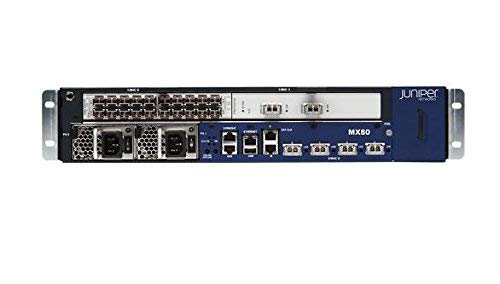
Juniper Networks MX80-T-AC MX-Series 4x10GE XFP MX80 Router 2x MIC Slots 2x AC Power (Renewed)
- Model Compatibility: Supports MX5, MX10, MX40, MX80
- High Performance: Midrange 3D Universal Edge Router
- Connectivity: 4x 10GE XFP ports
As an affiliate, we earn on qualifying purchases.
As an affiliate, we earn on qualifying purchases.

As an affiliate, we earn on qualifying purchases.

Symantec VIP Hardware Authenticator – OTP One Time Password Display Token – Two Factor Authentication – Time Based TOTP – Key Chain Size
- OATH Compliant TOTP Token: Standard time-based OTP
- 6-Digit OTP with Countdown: Displays 6-digit code with timer
- No Software Needed: Zero installation required
As an affiliate, we earn on qualifying purchases.
As an affiliate, we earn on qualifying purchases.

The Data Warehouse Lifecycle Toolkit
As an affiliate, we earn on qualifying purchases.
As an affiliate, we earn on qualifying purchases.