Deepfakes threaten national security by creating highly convincing fake videos and audios that can spread misinformation, sway public opinion, and interfere in elections. They can manipulate key officials, trigger diplomatic crises, and undermine trust in institutions. Malicious actors exploit this technology for espionage and influence operations, making detection difficult. As this threat grows more sophisticated, understanding its scope and defenses is vital—if you want to learn more, keep exploring how these risks can be managed.
Key Takeaways
- Deepfakes can be used to spread disinformation, undermining trust in government and destabilizing national security.
- They enable covert espionage by impersonating officials, leading to misinformation and diplomatic crises.
- Realistic synthetic media complicates verification processes, challenging intelligence agencies and security protocols.
- Malicious actors can manipulate elections or public perception, threatening democratic stability.
- Developing detection technology and policies is critical to counteract the evolving threat of AI-generated fakes.
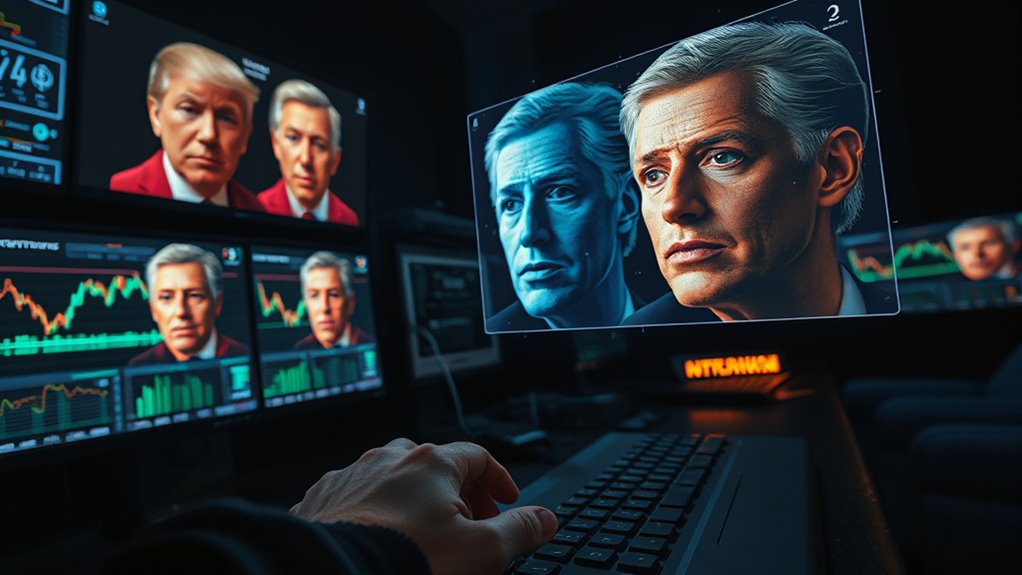
Deepfakes—highly realistic manipulated videos and audio—pose a growing threat to national security by enabling misinformation, espionage, and political destabilization. When you consider how convincing these synthetic media can be, it’s clear that their potential to influence public opinion and undermine trust is significant. They can be used to create false narratives around elections, making it difficult for citizens to discern truth from fiction. As a result, election interference becomes easier for malicious actors who leverage deepfakes to sway voters, discredit candidates, or spread false information that disrupts democratic processes. You might not always see the signs of a deepfake at first glance, which makes detecting and countering such interference a top priority for security agencies.
Beyond election meddling, deepfakes are also a potent tool for espionage techniques. State-sponsored actors and cybercriminal groups can craft videos or audio recordings that appear to originate from trusted officials or foreign dignitaries. These fake communications can be used to manipulate decision-makers, leak false information, or trigger diplomatic crises. For instance, a deepfake of a government leader issuing a directive or making a statement could lead to severe misunderstandings or even military escalation if believed to be genuine. This form of deception can be highly targeted, making it a sophisticated form of espionage that’s difficult to trace back to its source. The realism of deepfakes enables adversaries to bypass traditional security measures, cultivating plausible deniability while achieving their covert objectives.
You need to recognize that the threat isn’t just about creating fake content; it’s about the strategic use of that content to influence key institutions and populations. As someone responsible for national security, you should be aware of the evolving landscape where deepfakes can be weaponized to manipulate elections or conduct espionage. This means investing in detection technologies that can identify synthetic media and developing policies that promote media literacy among the public. It also involves strengthening diplomatic and intelligence frameworks to monitor and counteract these emerging threats. The more convincingly deepfakes mimic reality, the more urgent it becomes for you to understand how they can be exploited in election interference and espionage techniques, ultimately threatening the stability and integrity of your nation’s security infrastructure.
Frequently Asked Questions
How Can Governments Detect Deepfake Videos Quickly?
To detect deepfake videos quickly, you should implement advanced fake detection tools that analyze inconsistencies in facial movements, audio sync, and pixel patterns. Use AI-powered software designed for rapid identification to scan videos in real-time. Additionally, train your team on recognized signs of deepfakes, and stay updated with the latest detection techniques. Combining automated tools with human oversight guarantees faster, more precise identification of fake content.
What Legal Measures Exist Against Malicious Deepfake Creation?
Imagine a digital courtroom where justice fights fake creations. You’ll find legal enforcement targeting malicious deepfake creators through anti-cybercrime laws, fines, and criminal charges. Intellectual property laws also protect against unauthorized use of images and videos. Governments are updating regulations to hold offenders accountable, making it clear that creating harmful deepfakes isn’t just unethical—it’s illegal. These measures aim to deter malicious actors and safeguard digital integrity.
Are There Ethical Guidelines for Developing Ai-Generated Media?
You should follow established AI ethics and prioritize media responsibility when developing AI-generated media. These guidelines emphasize transparency, accuracy, and respecting privacy. You’re encouraged to avoid creating deceptive or harmful content, ensuring your work promotes trust and accountability. By adhering to AI ethics, you help prevent misuse of AI-generated media, fostering a safer digital environment and maintaining public confidence in technological advancements.
How Do Deepfakes Influence Public Trust in Media?
Deepfakes can substantially erode your trust in media by making it harder to distinguish real from fake content. To protect yourself, you need strong media literacy skills and practice information verification. Always question sensational videos or images, cross-check sources, and look for signs of manipulation. By staying vigilant and critical, you help ensure you’re consuming accurate information and reduce the influence of deceptive deepfakes on your perception of reality.
Can Deepfakes Impact International Diplomacy or Peace Talks?
Yes, deepfakes can impact international diplomacy or peace talks by fueling disinformation campaigns and enabling diplomatic sabotage. You might encounter manipulated videos or audio that falsely depict leaders making controversial statements, undermining trust and complicating negotiations. These AI-generated fakes can escalate tensions, spread false narratives, and destabilize diplomatic efforts, making it harder to maintain peaceful relations and achieve mutual agreements.
Conclusion
So, next time you see a politician confidently announcing groundbreaking news, remember—your friendly neighborhood deepfake might just be the digital Houdini pulling the wool over your eyes. With AI’s sneaky tricks, today’s “authentic” speech could be tomorrow’s masterful forgery. Stay alert, because in this new era, the only thing more convincing than reality is a fake that looks just like it. Welcome to the age where trust is just another digital illusion.