![Self-Distillation Enables Continual Learning [pdf]](https://aiespionage.net/wp-content/uploads/2026/05/self-distillation-enables-continual-learning-pdf-featured-200x110.jpg)
TL;DR
Cerelog has launched the ESP-EEG, an open-source 8-channel biosensing board utilizing the ADS1299 chip. It aims to provide a more affordable, open hardware alternative to existing EEG devices like OpenBCI. Its firmware is open-source, but hardware licensing is non-commercial, and some features are still in development.
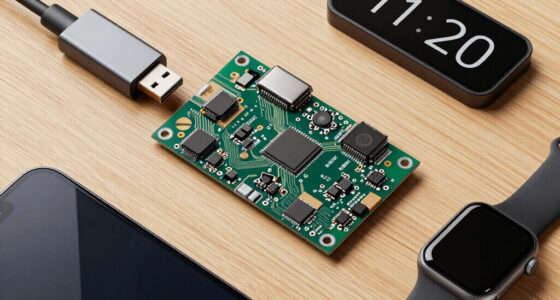
Cerelog has unveiled the ESP-EEG, an open-source 8-channel biosensing board based on Texas Instruments’ ADS1299 analog-digital converter, offering a lower-cost alternative to commercial EEG devices for research and development.
The ESP-EEG uses the same core chip as the OpenBCI Cyton, the TI ADS1299, which provides 24-bit resolution across 8 channels. The device is designed with a focus on cleaner signal quality through true closed-loop active bias circuitry. Its firmware and schematic files are open-source under the MIT License, while the PCB layout is available under a non-commercial license (CC-BY-NC-SA). The hardware supports Bluetooth and WiFi, but the firmware for wireless connectivity is not yet available, limiting use to USB connections for now.
Developed by former SpaceX hardware engineer Simon Hakimian, the ESP-EEG aims to be a cost-effective alternative, priced at less than half the current cost of the OpenBCI Cyton. The device’s software support includes a fork of the OpenBCI GUI and BrainFlow, facilitating integration with existing biosignal analysis tools. However, some details about licensing and firmware availability have caused initial confusion, which Hakimian clarified in recent updates.
Why It Matters
This development matters because it offers an affordable, open-source option for researchers, hobbyists, and developers interested in EEG technology. By providing schematics and firmware, Cerelog promotes transparency and customization, potentially lowering barriers for innovation in neurotechnology. The device’s lower cost and open architecture could accelerate research and development in brain-computer interfaces and related fields.
As an affiliate, we earn on qualifying purchases.
Background
The open-source EEG community has seen various projects, with OpenBCI being a prominent example. However, OpenBCI’s devices tend to be more expensive, and some users seek more customizable, cost-effective alternatives. The ESP-EEG’s design, based on the TI ADS1299 chip, aligns with this trend. Previous efforts have faced licensing and hardware accessibility challenges, which Cerelog aims to address through open schematics and firmware, albeit with some restrictions on commercial use.
“I wanted to handle everything natively on the ESP32 for high-bandwidth WiFi streaming, which required a ground-up redesign. Building it from scratch helped me uncover a lot of subtle design constraints.”
— Simon Hakimian, Cerelog developer
“The firmware is licensed under MIT, but the hardware schematics are non-commercial to protect against low-effort clones while supporting open-source learning.”
— Simon Hakimian, Cerelog developer
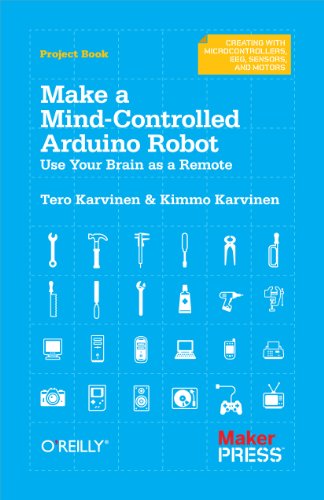
Make a Mind-Controlled Arduino Robot: Use Your Brain as a Remote (Creating With Microcontrollers Eeg, Sensors, and Motors)
- Condition: Used Book in Good Condition
As an affiliate, we earn on qualifying purchases.
As an affiliate, we earn on qualifying purchases.
What Remains Unclear
Details about the firmware’s wireless functionality are still pending, as the Bluetooth/WiFi firmware is not yet available. The full hardware schematics are restricted to non-commercial use, which may limit some applications. It is also unclear when or if the firmware for wireless features will be released publicly.
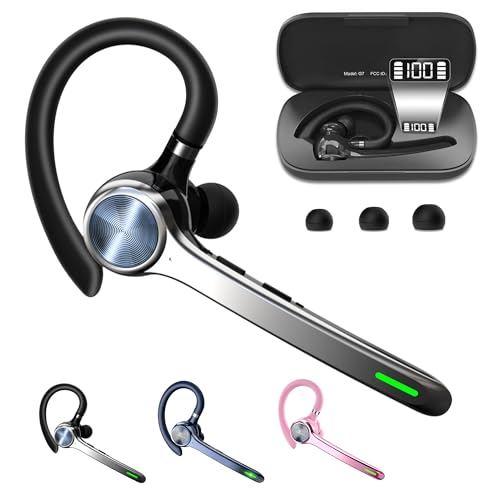
HEIBAS Bluetooth Headset, Wireless Bluetooth Earpiece with 500mAh Charging Case 72 Hours Talking Time Built-in Microphone for iOS Android Cell Phone, V5.1 Hand-Free Headphones for Trucker, Office
- Digital Power Display: Shows remaining charging case power
- Long Battery Life: Up to 72 hours talk/music time
- Mute Button: Easy mute during phone calls
As an affiliate, we earn on qualifying purchases.
As an affiliate, we earn on qualifying purchases.
What’s Next
Cerelog plans to release firmware updates to enable wireless connectivity and may develop additional hardware variants. The community will likely evaluate the device’s signal quality and usability in real-world research settings. Further licensing clarifications and commercial options may also emerge.
As an affiliate, we earn on qualifying purchases.
Key Questions
Can I use the ESP-EEG for medical diagnosis?
No, the ESP-EEG is intended for research and development purposes only. It is not approved for medical diagnosis or clinical use.
Is the hardware fully open-source?
The schematics are available under a non-commercial license (CC-BY-NC-SA), and the firmware/software are open-source under the MIT License. However, the PCB layout is not freely available for commercial cloning.
When will wireless support be available?
The firmware for Bluetooth and WiFi connectivity is not yet released. No specific timeline has been announced for its availability.
How does the cost compare to OpenBCI devices?
The ESP-EEG is priced at less than half the current cost of the OpenBCI Cyton, making it more accessible for hobbyists and researchers with limited budgets.