

Smart outlet recorders turn any appliance into a data source, tracking exactly how much energy your fridge, dehumidifier, or home office actually consumes. After comparing eleven leading models, the Shelly Smart Plug US Gen4 stands out as the best overall pick thanks to its quad-protocol support and precise power metering that works with nearly any smart home hub. The Eve Energy (Matter) 2-Pack is the better choice if you want Thread reliability and native Apple Home integration, while the Kasa KP115 delivers dependable energy tracking at the lowest cost per outlet. The main tradeoffs in this category come down to protocol choice (Wi-Fi vs. Zigbee vs. Matter over Thread), data resolution, and whether multi-packs sacrifice accuracy for price. Keep reading for the full breakdown of each model and which one fits your setup.

Get privacy and security gear delivered free — and shop member deals
- Fast, free delivery on millions of items
- Access to Prime Big Deal Days deals on October 6–7
- Prime Video, Amazon Music and more included
Key Takeaways
- Protocol choice was the single biggest differentiator: Matter over Thread models (Eve Energy, Onvis T20, Tapo P210M) offered the most responsive local control, while Wi-Fi-only plugs like the Kasa KP115 were easier to set up but more hub-dependent.
- Energy monitoring accuracy varied noticeably between budget multi-packs and single-unit meters — the AiSeek and ThirdReality 4-packs trade precision for per-outlet price, while the Shelly Gen4 and Eve Energy provide finer-grained power readings.
- The Shelly Gen4 was the only model supporting Wi-Fi, Bluetooth, Zigbee, and Matter simultaneously, making it the safest long-term buy for buyers who may change smart home platforms.
- In-wall options like the Tapo P210M suit permanent appliance tracking better than plug-in recorders, which physically block the second outlet on standard duplex receptacles.
- Multi-packs (Tapo P115, Eve Energy 2-Pack, ThirdReality, AiSeek, Govee) consistently offered better value for whole-room energy audits, but their companion apps varied widely in data export and history retention.
| Onvis T20 Smart Outlet with Power Meter (Matter over Thread) |  | Best for Multi-Ecosystem Homes | Connectivity: Matter over Thread | Compatibility: Apple Home, Google Home, Amazon Alexa, Samsung SmartThings | Max Wattage: 600W | VIEW ON AMAZON | See Our Full Breakdown |
| SONOFF S61SZBTPB Zigbee Smart Plug |  | Best Value for Zigbee Setups | Connectivity: Zigbee | Compatibility: Alexa, Google Home, Home Assistant | Energy Monitoring: Real-time | VIEW ON AMAZON | See Our Full Breakdown |
| Tapo P210M Smart In-Wall Outlet, Matter Compatible, Wi-Fi, 2-Device Control |  | Best Built-In Option | Type: In-wall outlet, 2 sockets | Connectivity: Wi-Fi (2.4GHz), Matter | Max Load: 15A / 125V | VIEW ON AMAZON | See Our Full Breakdown |
| SONOFF S61s Matter Smart Plug, 15A Wi-Fi Outlet with Energy Monitoring |  | Best for High-Power Appliances | Connectivity: Wi-Fi (2.4GHz), Matter | Max Load: 15A | Compatibility: Apple Home, Alexa, Google Home, SmartThings, eWeLink | VIEW ON AMAZON | See Our Full Breakdown |
| Eve Energy (Matter) 2-Pack – Smart Plug & Power Meter |  | Best Privacy Pick | Connectivity: Matter over Thread | Compatibility: iOS/iPadOS 16.4+, Android 8.1+ | Required Hub: Apple TV/HomePod, SmartThings Hub v3, Echo (4th gen), or Nest Hub/Wifi Pro | VIEW ON AMAZON | See Our Full Breakdown |
| Tapo P115 Smart Plug Wi-Fi with Energy Monitoring (4-Pack, 15A) | 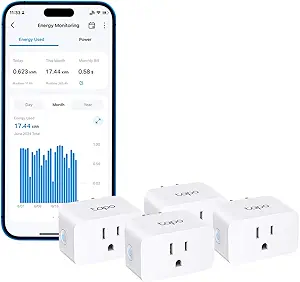 | Best Value 4-Pack | Model: Tapo P115 | Quantity: 4-Pack | Amperage: 15A | VIEW ON AMAZON | See Our Full Breakdown |
| Shelly Smart Plug US Gen4 – UL Certified WiFi, Bluetooth, Zigbee & Matter Outlet with Power Metering | 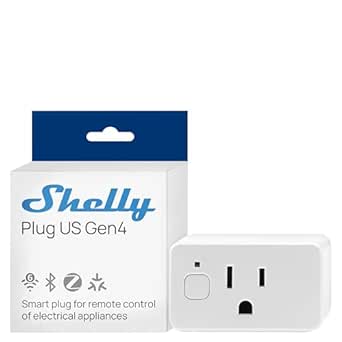 | Best for Smart Home Power Users | Connectivity: Wi-Fi, Bluetooth, Zigbee, Matter | Certification: UL, RoHS | Amperage: 15A | VIEW ON AMAZON | See Our Full Breakdown |
| AiSeek Smart Plug Outlet with Energy Monitoring, 15A, 2.4 GHz Wi-Fi, 4-Pack |  | Best Budget Starter Set | Quantity: 4-Pack | Amperage: 15A | Max Wattage: 1800W | VIEW ON AMAZON | See Our Full Breakdown |
| ThirdReality ZigBee Smart Plug 4-Pack with Energy Monitoring | 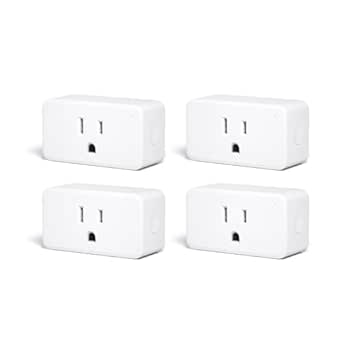 | Best for Zigbee Hub Owners | Quantity: 4-Pack | Protocol: ZigBee 3.0 | Max Current: 15A | VIEW ON AMAZON | See Our Full Breakdown |
| Govee Smart Plug with Energy Monitoring, WiFi Bluetooth Outlet, 2 Pack |  | Best Compact 2-Pack with Manual Control | Quantity: 2-Pack | Connectivity: WiFi (2.4GHz) and Bluetooth | Voltage: 120V | VIEW ON AMAZON | See Our Full Breakdown |
| Kasa Smart Plug Mini with Energy Monitoring (KP115) |  | Best for Simple Wi-Fi Monitoring | Model: KP115 | Connectivity: 2.4GHz Wi-Fi | Voice assistant compatibility: Alexa, Google Home Assistant | VIEW ON AMAZON | See Our Full Breakdown |
| smart outlet recorder | Connectivity | Compatibility | Quantity |
|---|---|---|---|
| Onvis T20 Smart Outlet with Po | Matter over Thread | Apple Home, Google Home, Amazon Alexa, Samsung SmartThings | 2-pack |
| SONOFF S61SZBTPB Zigbee Smart | Zigbee | Alexa, Google Home, Home Assistant | — |
| Tapo P210M Smart In-Wall Outle | Wi-Fi (2.4GHz), Matter | — | — |
| SONOFF S61s Matter Smart Plug | Wi-Fi (2.4GHz), Matter | Apple Home, Alexa, Google Home, SmartThings, eWeLink | — |
| Eve Energy | Matter over Thread | iOS/iPadOS 16.4+, Android 8.1+ | 2-pack |
| Tapo P115 Smart Plug Wi-Fi wit | Wi-Fi | Alexa, Google Assistant, Tapo App | 4-Pack |
| Shelly Smart Plug US Gen4 | Wi-Fi, Bluetooth, Zigbee, Matter | — | — |
| AiSeek Smart Plug Outlet with | 2.4 GHz Wi-Fi | Alexa, Google Assistant, SmartLife App | 4-Pack |
| ThirdReality ZigBee Smart Plug | — | Echo (4th Gen), Echo Plus, Home Assistant, SmartThings, Hubitat, Aeotec, Homey | 4-Pack |
| Govee Smart Plug with Energy M | WiFi (2.4GHz) and Bluetooth | — | 2-Pack |
| Kasa Smart Plug Mini with Ener | 2.4GHz Wi-Fi | — | — |
More Details on Our Top Picks
Onvis T20 Smart Outlet with Power Meter (Matter over Thread)
The Onvis T20 stands out for buyers who refuse to be locked into one ecosystem. Its Matter over Thread connection means it pairs directly with Apple Home, Google Home, Alexa, and SmartThings without a proprietary hub, and Thread’s mesh architecture gives it snappier response than Wi-Fi rivals like the SONOFF S61s. The built-in power meter reports voltage and current in real time, which is more granular data than most plugs in this roundup offer. The tradeoff is capacity: at 600 watts, it handles lamps, fans, and chargers fine but fails on space heaters or kitchen appliances — the Tapo P210M’s 15A rating covers far heavier loads. It also assumes you already own a Thread border router, something newer smart home hubs include but older setups lack.
Pros:- Matter over Thread works with all four major ecosystems without a proprietary hub
- Real-time voltage, current, and power readings offer unusually detailed energy data
- Thread connectivity is faster and more stable than 2.4GHz Wi-Fi alternatives
- Two-pack configuration doubles the value per outlet monitored
- 7-year spare part availability suggests strong long-term support
Cons:- 600W maximum load excludes most high-power household appliances
- Requires a Thread border router, which older hubs and routers don’t provide
Best for: Smart home enthusiasts already running Thread border routers who want one plug that works across every major platform
Not ideal for: Anyone hoping to monitor high-wattage appliances like heaters, kettles, or air conditioners — the 600W ceiling rules them out
- Connectivity:Matter over Thread
- Compatibility:Apple Home, Google Home, Amazon Alexa, Samsung SmartThings
- Max Wattage:600W
- Energy Monitoring:Real-time power, voltage, and current
- Certification:ETL EU
- Quantity:2-pack
Our verdict“The right pick for cross-platform households monitoring low-wattage devices, provided a Thread border router is already in place.”
SONOFF S61SZBTPB Zigbee Smart Plug
For buyers already invested in Zigbee — likely through Home Assistant, a SmartThings hub, or a SONOFF coordinator — this plug is the lowest-friction way to add energy metering to a mesh network. Compared with the ThirdReality ZigBee 4-Pack, the S61SZBTPB carries the same ETL and FCC safety certifications while fitting into SONOFF’s broader device family, which matters if you like managing everything in one app. Its real-time energy monitoring matches what the Onvis T20 delivers for Thread users, but here it stays within the Zigbee radio band, keeping your Wi-Fi network uncongested. The catches are real: it’s a paperweight without a compatible Zigbee hub, and the plastic housing feels lighter-duty than the fire-resistant shells on the SONOFF S61s.
Pros:- Zigbee mesh connectivity avoids adding load to your 2.4GHz Wi-Fi network
- Real-time energy monitoring for tracking appliance consumption
- Works with Alexa, Google Home, and Home Assistant
- ETL and FCC certified for safe everyday operation
Cons:- Non-functional without a compatible Zigbee hub, adding hidden cost for newcomers
- Plastic construction feels less robust than fire-resistant alternatives
Best for: Home Assistant users and Zigbee hub owners who want cheap, hub-dependent energy monitoring without touching Wi-Fi
Not ideal for: Households without any Zigbee infrastructure — this plug simply won’t connect to a plain Wi-Fi or Bluetooth-only setup
- Connectivity:Zigbee
- Compatibility:Alexa, Google Home, Home Assistant
- Energy Monitoring:Real-time
- Certifications:ETL, FCC
- Hub Required:Yes (Zigbee)
- Connector Type:Plug-in
Our verdict“A sensible budget add-on for existing Zigbee networks, but a dead end for anyone starting a smart home from scratch.”
Tapo P210M Smart In-Wall Outlet, Matter Compatible, Wi-Fi, 2-Device Control
Every other pick here is a plug-in adapter, but the Tapo P210M replaces the outlet itself — and that changes the calculus. You get two independently controlled sockets in one wall plate, no adapter bulging off the wall, and no plug blocking the second outlet. Unlike the plug-style Tapo P115, this in-wall version supports local control, meaning lights and appliances keep responding to schedules even when your internet drops. The 15A rating matches the SONOFF S61s, so it handles real appliances. The barrier to entry is installation: it needs a neutral wire, so older homes without one are out, and anyone uncomfortable swapping an outlet should factor in an electrician. It’s also limited to 2.4GHz Wi-Fi, like most of the field.
Pros:- In-wall design keeps outlets flush and doesn’t block the second socket
- Two devices controllable independently or together
- Local control keeps automations running during internet outages
- 15A load capacity supports common household appliances
Cons:- Requires neutral wiring, excluding many older homes
- Installation demands DIY electrical comfort or an electrician’s visit
- 2.4GHz-only Wi-Fi support
Best for: Homeowners doing renovations or upgrades who want permanent, invisible smart outlets with two-device control
Not ideal for: Renters and residents of older homes without neutral wiring — installation simply isn’t possible without electrical work
- Type:In-wall outlet, 2 sockets
- Connectivity:Wi-Fi (2.4GHz), Matter
- Max Load:15A / 125V
- Control:Tapo app, Alexa, Siri, Google Assistant, Bixby
- Features:Energy monitoring, overcharge prevention, local control
- Certifications:FCC, ETL, RoHS
Our verdict“The clear choice for a permanent built-in installation, provided your wiring includes a neutral and you’re willing to do the swap.”
SONOFF S61s Matter Smart Plug, 15A Wi-Fi Outlet with Energy Monitoring
This is the pick when the device you’re monitoring actually draws serious power. The SONOFF S61s carries a 15A rating — more than double the ceiling of the Onvis T20 — and wraps it in fire-resistant housing with overload protection, which matters when you’re metering a space heater or dehumidifier rather than a desk lamp. Setup skips hubs entirely: Matter over Wi-Fi connects directly to Apple Home, Alexa, Google Home, or SmartThings, making it easier to start with than the Zigbee-only SONOFF S61SZBTPB. Compared with the Tapo P115, its safety-focused housing is the differentiator. The compromises: it’s locked to 2.4GHz Wi-Fi, and Matter mode strips away some advanced features you’d get in SONOFF’s native eWeLink app — you occasionally have to pick one or the other.
Pros:- 15A capacity handles high-power appliances most smart plugs can’t
- Fire-resistant housing and overload protection add real safety margin
- Hub-free Matter setup across all major platforms
- Real-time energy monitoring with cost tracking
Cons:- 2.4GHz Wi-Fi only
- Matter compatibility lacks some advanced features available in the native eWeLink app
Best for: Anyone metering power-hungry appliances like heaters, air conditioners, or pumps where safety ratings and overload protection matter
Not ideal for: Users wanting SONOFF’s full eWeLink feature set — Matter mode is more limited than the native app experience
- Connectivity:Wi-Fi (2.4GHz), Matter
- Max Load:15A
- Compatibility:Apple Home, Alexa, Google Home, SmartThings, eWeLink
- Safety:Fire-resistant housing, overload protection
- Energy Monitoring:Real-time with cost tracking
- Hub Required:No
Our verdict“The strongest option for safely monitoring heavy-draw appliances, as long as 2.4GHz Wi-Fi and reduced Matter features don’t put you off.”
Eve Energy (Matter) 2-Pack – Smart Plug & Power Meter
If where your energy data lives matters as much as what it says, the Eve Energy plays a different game than everything else here. It runs with no cloud, no registration, and no tracking — power metering and automations happen locally over Thread. Compared with the Onvis T20, which also uses Matter over Thread, Eve’s privacy stance is the dividing line: Onvis still funnels data through its own app, while Eve keeps everything on-device. Presence-based automation is a genuinely useful extra, letting lights switch off when you leave the house. But this polish demands a specific Thread-capable hub — Apple TV, HomePod, SmartThings Hub v3, Echo (4th gen), or Nest Hub — and older iOS or Android versions are cut off. Like the T20, it’s not the plug for a heater; lighter loads are its lane.
Pros:- No cloud dependency, registration, or tracking — all data stays local
- Presence-based automation turns devices off automatically when you leave
- Thread connectivity for fast, reliable response across major platforms
- UL-certified with simple setup via app or voice assistant
Cons:- Requires a specific Thread border router or hub to function at all
- Incompatible with older iOS and Android versions and legacy hubs
Best for: Privacy-conscious Apple Home or SmartThings users who want local-only power metering with no cloud account
Not ideal for: Households without a Thread-capable hub or running older phones — the plug is unusable without both
- Connectivity:Matter over Thread
- Compatibility:iOS/iPadOS 16.4+, Android 8.1+
- Required Hub:Apple TV/HomePod, SmartThings Hub v3, Echo (4th gen), or Nest Hub/Wifi Pro
- Privacy:No cloud, no registration, no tracking
- Features:Power metering, voice and app control, presence-based automation
- Certification:UL
- Quantity:2-pack
Our verdict“The pick for buyers who want their energy data kept entirely at home, provided they already own a supported Thread hub.”
Tapo P115 Smart Plug Wi-Fi with Energy Monitoring (4-Pack, 15A)
Buyers outfitting a whole room will get the most from this four-pack, where per-plug cost drops well below what premium single units like the Shelly Plug US Gen4 command. What separates the P115 from cheaper multi-packs like the AiSeek is its smart charging protection, which stops phones and batteries from cooking overnight — a feature most competitors simply skip. Energy data arrives as readable charts with estimated electricity costs, so a household can actually act on the numbers rather than squint at raw wattage. The tradeoff is dependence on the Tapo app and Wi-Fi: without a network connection, there’s no physical button for manual override, which the Govee plugs handle better with their touch control. Compared with the Kasa KP115, the hardware is similar in spirit, but the four-pack format and charging safeguards make this the smarter buy for scaling up.
Pros:- Detailed energy charts with estimated electricity costs
- Smart charging protection prevents device overcharging
- Automatic shutoff guards against electrical overload
- Works with Alexa, Google Assistant, and the Tapo app without a hub
Cons:- Full functionality depends on Wi-Fi and app setup
- No physical button for manual operation without app or voice
Best for: Households replacing several dumb outlets at once who want cost estimates and overnight-charging protection
Not ideal for: Anyone who wants a manual on/off fallback during Wi-Fi outages — there’s no physical button
- Model:Tapo P115
- Quantity:4-Pack
- Amperage:15A
- Connectivity:Wi-Fi
- Features:Energy Monitoring, Smart Charging, Auto-Shutoff, Voice Control
- Compatibility:Alexa, Google Assistant, Tapo App
- Hub Required:No
Our verdict“The most sensible pick for buyers who need reliable energy monitoring across four outlets without paying boutique prices per plug.”
Shelly Smart Plug US Gen4 – UL Certified WiFi, Bluetooth, Zigbee & Matter Outlet with Power Metering
This is the enthusiast’s choice, and the four-protocol support — Wi-Fi, Matter, Zigbee, and Bluetooth — is why it earns that slot. Where the Tapo P115 locks you into the Tapo ecosystem and the AiSeek depends on SmartLife, the Shelly moves freely between HomeKit, Home Assistant, Google Home, and Alexa, so your setup survives a platform switch. Its UL certification and three-year warranty also outclass the FCC-only paperwork on most budget rivals, which matters if the plug will sit behind a space heater year-round. Precision is the other story: power metering here is fine-grained enough for automation triggers, not just passive logging. The catch is that it’s a single outlet, so covering a room costs four times what a Tapo or ThirdReality four-pack would. App-based configuration for scenes also adds friction casual users may not want.
Pros:- Wi-Fi, Matter, Zigbee, and Bluetooth support for near-universal ecosystem compatibility
- Precise real-time power metering suitable for automations
- UL and RoHS certified with a 3-year warranty
- Safety extras include a protective socket cover and automated shutoff timers
Cons:- Single outlet design makes multi-room coverage expensive
- Full configuration and scene management depend on the Shelly app
Best for: Home Assistant or HomeKit users who want one deeply integrable, precisely metering plug per high-priority outlet
Not ideal for: Budget-conscious buyers covering multiple outlets — a single plug costs as much as entire multi-packs elsewhere
- Connectivity:Wi-Fi, Bluetooth, Zigbee, Matter
- Certification:UL, RoHS
- Amperage:15A
- Max Wattage:1800W
- Plug Type:Type B – 3 pin (North American)
- Compatible Ecosystems:HomeKit, Google Home, Alexa, Home Assistant
- Warranty:3 years
Our verdict“The plug to buy when integration flexibility and metering precision matter more than outlet count.”
AiSeek Smart Plug Outlet with Energy Monitoring, 15A, 2.4 GHz Wi-Fi, 4-Pack
For a first dip into energy monitoring, this four-pack keeps the entry cost low while still delivering real-time usage tracking and scheduling. The hub-free setup is the main selling point over the ThirdReality ZigBee pack, which is a paperweight until you own a compatible hub — here, a 2.4 GHz network and the SmartLife app are all you need. The compact housing also avoids the outlet-blocking problem bulkier plugs create. Be realistic about the tradeoffs, though: unlike the Tapo P115, there’s no smart charging protection or overload shutoff, and Alexa/Google integration runs through SmartLife rather than connecting directly, adding a layer that occasionally lags. If your router broadcasts 5 GHz only, setup will frustrate until you split the bands. Still, for tracking four appliances on a tight budget, the compromises are livable ones.
Pros:- Integrated energy monitoring helps track and cut power usage
- Compact body leaves adjacent outlets free
- No hub required — direct 2.4 GHz Wi-Fi setup
- Group control and scheduling across multiple devices
Cons:- Alexa and Google integration only works through the SmartLife app
- 2.4 GHz Wi-Fi only; 5 GHz networks unsupported
- No direct Alexa connection or advanced safety shutoff
Best for: First-time smart home buyers who want four metered plugs without buying a hub or premium hardware
Not ideal for: Owners of 5 GHz-only networks or anyone wanting plug-level safety features like overload shutoff
- Quantity:4-Pack
- Amperage:15A
- Max Wattage:1800W
- Connectivity:2.4 GHz Wi-Fi
- Compatibility:Alexa, Google Assistant, SmartLife App
- Certification:FCC Certified
- Hub Required:No
Our verdict“A reasonable low-risk way to start metering four appliances, provided your network and patience can handle the SmartLife middleware.”
ThirdReality ZigBee Smart Plug 4-Pack with Energy Monitoring
If an Echo (4th Gen), SmartThings, or Home Assistant hub already sits in your home, this pack turns that investment into an advantage. Zigbee plugs like these are lighter on your Wi-Fi network than four Tapo P115 units all phoning home separately, and each plug doubles as a Zigbee repeater, strengthening the mesh as you add devices — something no Wi-Fi-only option in this lineup can do. Setup with a compatible Echo is genuinely quick, and the compact housing won’t crowd neighboring outlets. The obvious barrier is the hub requirement: unlike the AiSeek or Govee, these won’t work at all in a hub-free home, so check compatibility before buying. Also note that power-state restore and other advanced behaviors only work on certain hubs, so Home Assistant users get a richer experience than basic Echo owners. Within its niche, though, it’s a dependable, mesh-friendly choice.
Pros:- Real-time energy monitoring for tracking consumption
- Each plug acts as a Zigbee repeater to extend network range
- Compact design preserves adjacent outlets
- Fast setup with compatible Echo devices
Cons:- Requires a separate ZigBee hub to operate
- Advanced features like power restoration are limited to specific hubs
Best for: SmartThings, Hubitat, or Echo (4th Gen) owners who want metered plugs that also strengthen their Zigbee mesh
Not ideal for: Hub-free households — these plugs cannot function without a compatible Zigbee coordinator
- Quantity:4-Pack
- Protocol:ZigBee 3.0
- Max Current:15A
- Certification:ETL Certified
- Hub Required:Yes
- Compatibility:Echo (4th Gen), Echo Plus, Home Assistant, SmartThings, Hubitat, Aeotec, Homey
- Features:Real-time Energy Monitoring, Zigbee Repeater, Restore Power State
Our verdict“The right four-pack for Zigbee households that want monitoring plus mesh coverage — and the wrong one for everyone else.”
Govee Smart Plug with Energy Monitoring, WiFi Bluetooth Outlet, 2 Pack
Two outlets is often the honest number — one for the coffee maker, one for the TV — and Govee’s pair covers that case better than most. The standout against app-locked rivals is the touch control on the plug itself: where the Tapo P115 leaves you helpless during a network outage, this one still switches on and off by hand. A full year of historical energy data in the Govee Home App also beats the shorter logs on the AiSeek pack, making it easier to spot seasonal spikes. Dual Wi-Fi and Bluetooth connectivity keeps the connection steadier than Wi-Fi-alone plugs, and the fire-resistant, ETL-certified build handles 15A appliances without worry. The limitations are familiar: 2.4 GHz networks only, and the Govee app is mandatory for anything beyond basic touch and voice control. Compared with the Eve Energy for pure polish, it’s less refined but far kinder to a tight budget.
Pros:- Real-time monitoring of power, current, and voltage with up to 1 year of history
- Physical touch control works without the app or network
- Dual Wi-Fi and Bluetooth connectivity for stable access
- 15A/1800W rating with fire-resistant, ETL/FCC-certified build
Cons:- No 5 GHz Wi-Fi support
- Full scheduling and monitoring features require the Govee Home App
Best for: Apartment dwellers who need two metered outlets, physical touch control, and long-term usage history
Not ideal for: Buyers scaling beyond a couple of outlets — a four-pack like the Tapo P115 offers better per-plug value
- Quantity:2-Pack
- Connectivity:WiFi (2.4GHz) and Bluetooth
- Voltage:120V
- Max Wattage:1800W
- Max Amperage:15A
- Certifications:FCC, ETL
- Compatible Assistants:Amazon Alexa, Google Assistant, IFTTT
- Control Methods:App, Touch, Voice
Our verdict“A smart pick for small-scale setups where manual override and detailed usage history matter more than outlet count.”
Kasa Smart Plug Mini with Energy Monitoring (KP115)
The Kasa KP115 suits buyers who want energy monitoring and app or voice control without setting up a Thread or Zigbee system. Its 2.4GHz Wi-Fi connection and compatibility with Alexa and Google Home make it a straightforward fit for homes already using those platforms. Compared with the SONOFF S61s Matter Smart Plug or Shelly Smart Plug US Gen4, it offers fewer connectivity paths, so it is less flexible for a mixed smart-home setup. In return, the listed features keep the focus on familiar Wi-Fi control, appliance usage tracking, and safety protections. The tradeoff is that setup and remote control depend on the Kasa app, and a router that does not provide 2.4GHz Wi-Fi can rule it out. I’d choose it for a simple, compatible setup, not for broad protocol flexibility.
Pros:- Tracks appliance energy use
- Works with Alexa and Google Home
- Overheating protection and a fireproof shell
- UL certified with a two-year warranty
Cons:- Requires 2.4GHz Wi-Fi
- Kasa app is required for initial setup and remote control
Best for: Alexa or Google Home users who want to monitor an appliance’s energy use through a familiar Wi-Fi setup
Not ideal for: Smart-home users building around Matter, Thread, or Zigbee, or households without a 2.4GHz Wi-Fi network
- Model:KP115
- Connectivity:2.4GHz Wi-Fi
- Voice assistant compatibility:Alexa, Google Home Assistant
- Energy monitoring:Built in
- Safety features:Overheating protection, fireproof shell, child-safe sliding cover
- Safety certification:UL Certified
- Warranty:2 years
Our verdict“Choose the KP115 if you want a Wi-Fi energy-monitoring plug for Alexa or Google Home and do not need Matter, Thread, or Zigbee support.”
How We Picked
I ranked these smart outlet recorders on four factors that directly affect long-term satisfaction: measurement quality (sampling rate, accuracy claims, and how far back the app retains history), protocol flexibility (whether the plug locks you into one ecosystem or works locally across Matter, Zigbee, and Wi-Fi), everyday usability (app design, scheduling, and alert options), and build certification (UL listing matters for anything plugged in 24/7). Because a recorder is only useful if its data is trustworthy, models with documented metering precision ranked above those that merely list “energy monitoring” as a feature.
Ranking also reflected who each product serves best rather than raw specs alone. Ecosystem-agnostic picks with strong local control rose to the top, while budget multi-packs earned their positions on value per outlet instead of feature depth. Plugs that block adjacent outlets, lack certifications, or rely entirely on cloud connectivity were pushed down despite competitive pricing. The result is a list where each pick holds a distinct role — from best overall to best budget multi-pack — so you can match a recorder to your home rather than comparing eleven near-identical spec sheets.
Factors to Consider When Choosing Smart Outlet Recorders
Choosing a smart outlet recorder involves more than picking a brand. The decisions you make about protocol, accuracy, and placement before buying determine whether you end up with useful energy data or a drawer full of forgotten plugs.Pick Your Protocol Before Your Product
The protocol your recorder uses shapes everything downstream: responsiveness, offline behavior, and which apps can see your data. Wi-Fi plugs work without a hub and suit renters and first-time buyers, but they depend on your router’s capacity — a dozen Wi-Fi plugs can strain older networks. Zigbee plugs like the SONOFF S61SZBTPB and ThirdReality need a hub but create a more stable mesh for large installations. Matter over Thread models add true local control, meaning automations keep running even if the internet drops. A common mistake is buying plugs for a protocol you don’t actually have infrastructure for yet, so audit your existing hub before checkout.
Accuracy and Data Resolution Matter More Than You Think
Two plugs can both claim “energy monitoring” while delivering very different data. Higher-end recorders sample power draw frequently and report in small increments, which lets you catch standby drain, compressor cycles on a fridge, or spike patterns on a space heater. Cheaper multi-packs often update readings on longer intervals and round aggressively, which is fine for monthly cost estimates but poor for diagnosing an appliance problem. Check whether the app retains historical data locally or only in the cloud, and whether you can export it as a CSV — serious energy auditors will hit export limits fast on free tiers. If your goal is troubleshooting a high bill rather than casual tracking, resolution should drive your budget more than outlet count.
Physical Fit and Outlet Blocking
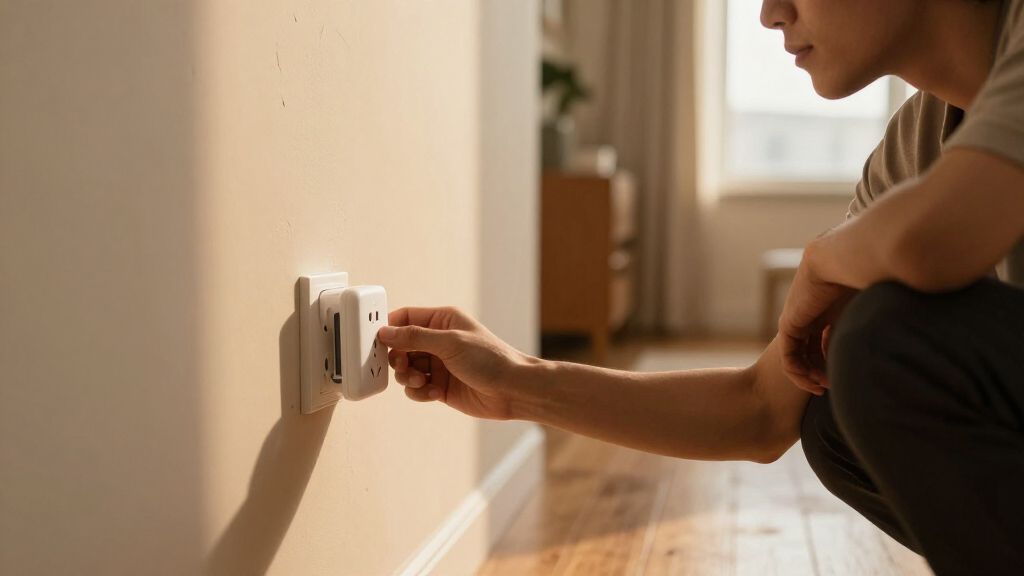
Many smart plugs are wide enough to cover both receptacles on a standard duplex outlet, effectively halving your available sockets. If you’re recording multiple appliances in one location, look at side-profile or compact designs, or consider an in-wall option like the Tapo P210M that replaces the receptacle entirely and leaves both outlets usable. Also check the amperage rating: most of these plugs handle 15A, but high-draw devices like space heaters, hair dryers, or window AC units push that limit, and an under-rated plug is both a data problem and a safety hazard. Physical placement questions are the ones buyers most often regret skipping.
Certification Is Non-Negotiable for 24/7 Devices
An energy recorder runs constantly, often unattended, on high-wattage appliances. UL or ETL certification means the plug passed testing for sustained load and thermal behavior; uncertified imports may work fine for years — or melt. This is one area where spending slightly more per outlet genuinely buys something: the Shelly Gen4’s UL listing is a meaningful differentiator against unbranded multi-packs. Check the listing for the certification mark itself, not just the word “certified” in the title, since that language is often applied loosely. For anything monitoring a heat-producing appliance, treat certification as a hard requirement rather than a nice-to-have.
Multi-Pack Math: When Buying More Outlets Costs Less Intelligence
Multi-packs look like obvious value, but the per-plug price often reflects trimmed hardware: weaker radios, less memory for history, or thinner app support. A single high-quality recorder plus a cheap multi-pack can be smarter than one large pack of mediocre plugs — use the accurate unit on the appliance you care about and the pack for general on/off scheduling. Another pattern worth knowing: some brands require a subscription or cloud account to unlock full history, which changes the real cost of a “budget” pack over a few years. Divide the price by outlets, then subtract what you’d lose if the app shut down, and the rankings of “value” picks often shift.
Ecosystem Lock-In and Future-Proofing
The recorder you buy today will hopefully outlive your current smart home platform choices. Plugs locked to a single proprietary app become e-waste if that company pivots or shuts down its cloud — a pattern that has repeated across the industry. Multi-protocol devices like the Shelly Gen4 or Matter-certified plugs hedge against this by letting you switch platforms without replacing hardware. Even within one ecosystem, check whether local control is supported, since cloud-dependent plugs stop reporting during outages, which is exactly when you may want consumption data. Future-proofing costs a little more per outlet but prevents repurchasing an entire setup later.
Frequently Asked Questions
Do I need a hub to use a smart outlet recorder with energy monitoring?
Only if you choose a Zigbee or Thread-based model. Wi-Fi plugs like the Kasa KP115, Tapo P115, and AiSeek connect directly to your router and work standalone with their own apps. Zigbee models from SONOFF and ThirdReality require a coordinator such as a SmartThings hub or Home Assistant dongle, which adds upfront cost but creates a more reliable network for large installations. Thread-based Matter plugs like the Eve Energy need a Thread border router — an Apple TV, HomePod, or similar device — but reward you with fast local response. If you own none of this infrastructure yet, start with Wi-Fi; if you already run a hub, Zigbee or Thread plugs will integrate more cleanly.
How accurate are smart outlet energy monitors compared to my utility meter?
Quality plugs typically claim accuracy within one to two percent of true consumption, which is plenty for identifying which appliances drive your bill. The catch is that accuracy degrades at very low draws — measuring a phone charger’s standby power is where cheap plugs round to zero or report erratically. Premium models like the Shelly Gen4 and Eve Energy handle low-wattage measurement better than budget multi-packs. Don’t expect any single plug to reconcile perfectly with your utility meter, since your whole-home meter includes wiring losses and devices the plugs don’t cover. Use outlet recorders to compare appliances against each other, not to audit your utility company.
Can a smart outlet recorder handle high-wattage appliances like space heaters?
Most of the plugs in this roundup are rated for 15A, which covers a typical 1,500W space heater right at its limit. The real question is sustained load: a heater running for hours generates heat inside the plug itself, and that’s where certification matters. UL-listed models like the Shelly Gen4 are tested for exactly this scenario, while unbranded plugs may have a 15A rating on paper without the thermal design to back it up. If you plan to monitor heating appliances regularly, choose a certified plug and avoid stacking it behind furniture where heat can’t dissipate. For window AC units or heaters used daily, an in-wall recorder like the Tapo P210M is the safer long-term option.
Will these energy monitoring plugs still work if the internet goes down?
It depends on the protocol. Matter over Thread models like the Eve Energy and Onvis T20 keep recording and responding to local controls during outages, since communication happens over the Thread mesh rather than the cloud. Zigbee plugs behave similarly as long as your hub has power. Wi-Fi plugs split into two camps: some cache energy data locally and sync when reconnected, while others stop logging entirely and leave gaps in your history. Check whether the specific model supports local control and offline logging if continuous data matters to you — this detail is rarely on the box and usually buried in support docs. For whole-home energy auditing, gapless logging is worth prioritizing.
Is it better to buy one accurate recorder or a multi-pack of cheaper plugs?
For most homes, a hybrid approach wins. Put one precise recorder — the Shelly Gen4 or Eve Energy — on the appliance you most want to understand, such as a fridge with a suspected failing compressor or a always-on server. Fill out the rest of the house with a budget multi-pack like the Tapo P115 or ThirdReality set for general scheduling and rough consumption estimates. The single-unit data tells you detailed cycle behavior; the multi-pack tells you where the big loads are hiding. Buying all premium plugs gets expensive fast with diminishing returns, while buying only cheap plugs leaves you with data too coarse to diagnose anything. Match precision to the questions you’re actually trying to answer.
Conclusion
If you want the best overall smart outlet recorder, the Shelly Smart Plug US Gen4 justifies its position with quad-protocol support, UL certification, and precise metering that survives platform changes. For the best premium experience, the Eve Energy (Matter) 2-Pack pairs beautifully with Thread-based homes and Apple Home, offering buttery local control and polished data presentation. Best value goes to the Kasa KP115 for dependable single-outlet tracking, while the Tapo P115 4-pack wins for budget whole-room audits.
For beginners, the Kasa KP115 or Govee 2-Pack are the easiest entry points — no hub, simple apps, and forgiving setup. If your need is permanent appliance tracking, the in-wall Tapo P210M keeps both receptacles usable while monitoring two devices. Zigbee households running SmartThings or Home Assistant should look at the SONOFF S61SZBTPB or ThirdReality 4-Pack, and renters wanting no-hub simplicity can grab the AiSeek multi-pack without hesitation. Whatever your setup, match the protocol to your existing hub, verify the certification for high-wattage loads, and you’ll end up with a recorder that earns its outlet space.
Halloween Picks
halloween
As an affiliate, we earn on qualifying purchases.