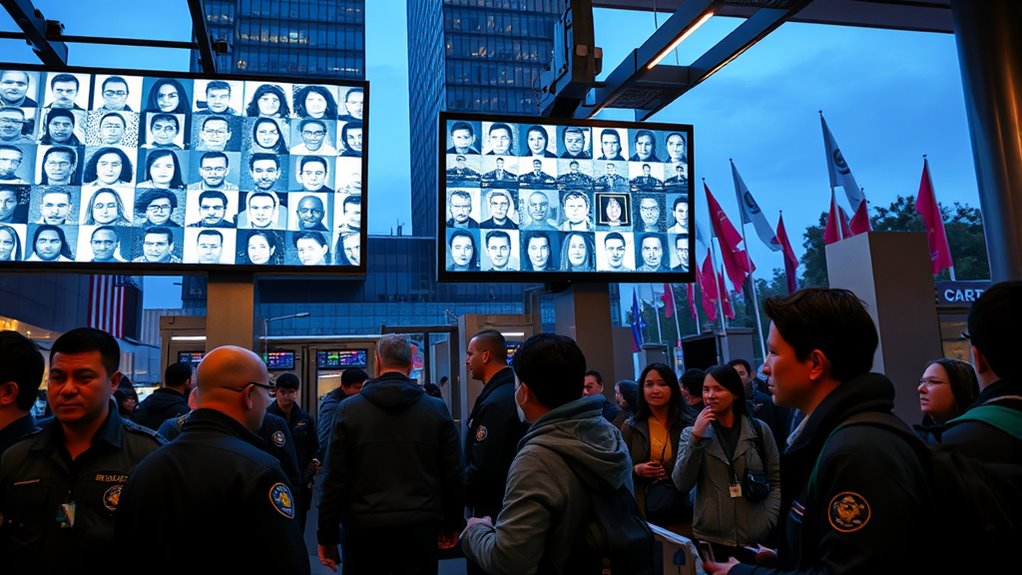
Homeland Security is expanding its facial recognition program to improve border security and process travelers faster. While new technology makes identification more accurate and efficient, it also raises privacy concerns. Many worry about mass surveillance and misuse of biometric data without proper safeguards. These protests highlight the need for transparency and strict regulation. If you want to understand how these changes balance security with privacy rights, there’s more to explore below.
Key Takeaways
- Homeland Security is expanding facial recognition technology to improve border security and streamline traveler processing.
- The expansion faces public protests due to privacy concerns and fears of mass surveillance.
- Critics highlight risks of data breaches, misuse, and erosion of individual privacy rights.
- Authorities emphasize the need for safeguards, transparency, and regulatory oversight to protect personal data.
- The debate centers on balancing enhanced security measures with respecting civil liberties and privacy protections.
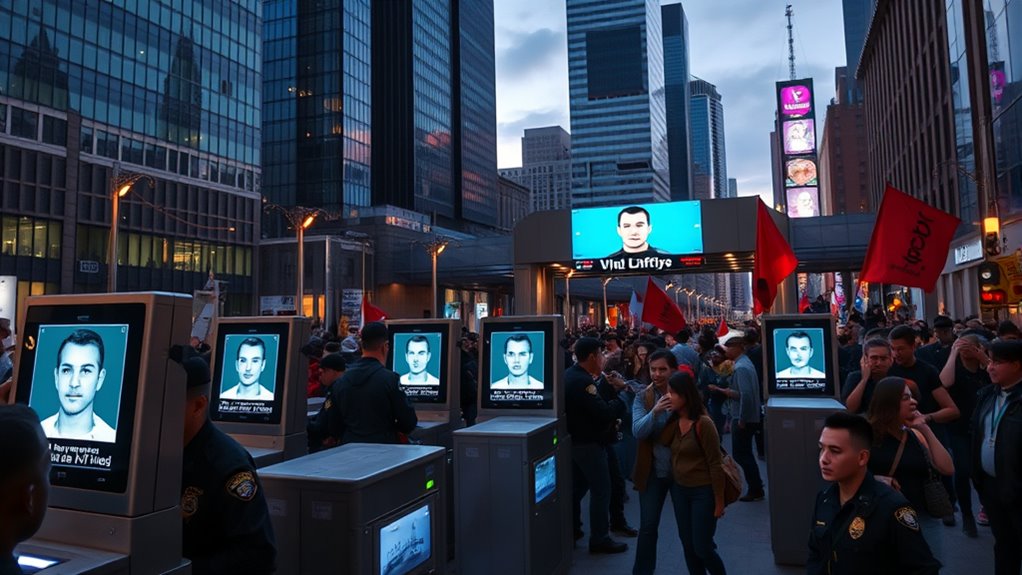
Homeland Security is expanding its facial recognition program, aiming to enhance national security and streamline border security efforts. This move leverages recent technological advancements that allow for faster, more accurate identification of individuals crossing borders or entering sensitive areas. However, while these innovations promise increased safety, they also raise significant privacy concerns. Critics worry about how personal data is collected, stored, and used, especially given the potential for misuse or unauthorized surveillance. As a person concerned about your rights, you might wonder how this expansion impacts your privacy and what safeguards are in place to prevent abuse.
The technological advancements driving this expansion are impressive. Modern facial recognition systems can now analyze hundreds of facial features in real time, matching them against vast databases almost instantaneously. This progress means border agents can verify identities more efficiently than ever before, reducing wait times and increasing security. These systems are also becoming more sophisticated in handling different lighting conditions, angles, and facial expressions, improving accuracy and minimizing false positives. As a result, border control processes are becoming more streamlined, allowing authorities to manage large volumes of travelers with greater precision.
Despite these benefits, privacy concerns are at the forefront of public debate. Critics argue that expanding facial recognition programs risks infringing on individual liberties, especially if data is collected without explicit consent. People worry that this technology could be used for mass surveillance, tracking citizens and non-citizens alike, beyond its intended border security purpose. The potential for government overreach increases as databases grow and tracking capabilities expand, raising fears about the erosion of privacy rights. Many advocate for strict regulations and transparency, demanding clear guidelines on data usage, retention, and access controls to prevent abuses.
Privacy risks rise as facial recognition expands without clear consent or strict oversight.
Furthermore, there’s concern about the security of the data collected. If not properly protected, biometric information could be vulnerable to hacking or unauthorized sharing. Once your facial data is stored in a government database, it becomes susceptible to misuse, especially if oversight and accountability are lacking. Privacy advocates highlight the importance of implementing robust safeguards and conducting regular audits to ensure data is used solely for security purposes and not for unwarranted surveillance or commercial interests.
Ultimately, your perspective as an individual is shaped by balancing national security benefits with privacy rights. While the technological advancements make border security more effective, they also demand increased transparency, accountability, and legal protections to prevent privacy violations. As Homeland Security expands its facial recognition program, it’s essential for policymakers and the public to stay vigilant, ensuring that the pursuit of safety doesn’t come at the expense of fundamental privacy rights.
Frequently Asked Questions
How Does Facial Recognition Technology Improve National Security?
Facial recognition technology improves national security by enhancing identification accuracy and speeding up biometric authentication processes. You benefit from technological accuracy, which helps authorities identify suspects quickly and prevent threats. This system enables real-time analysis at borders and public events, making it harder for wrongdoers to evade detection. By streamlining security checks, facial recognition plays a vital role in protecting citizens and maintaining safety across various environments.
What Are the Specific Privacy Concerns Raised by the Program?
Did you know that over 80% of Americans worry about data privacy? The program raises significant privacy concerns, mainly about civil liberties and how personal data is collected and stored. You might feel uneasy about government surveillance expanding without clear limits, risking misuse or wrongful identification. These issues threaten your privacy rights, prompting fears that facial recognition could lead to unwarranted tracking and erosion of civil liberties.
How Will Data Security Be Maintained for Facial Recognition Data?
You can trust that data security will be maintained through strong measures like data encryption and strict access controls. Encryption ensures your facial recognition data stays protected from unauthorized access, while access controls limit who can view or modify this sensitive information. Homeland Security implements these protocols to safeguard your data, making sure it remains confidential and secure against cyber threats or breaches.
Are There Any Legal Challenges to Expanding This Program?
Think of legal hurdles as hurdles in a race—you need to clear them to move forward. Currently, expanding the facial recognition program faces privacy lawsuits and legal challenges that could slow progress. These challenges question whether the program respects privacy rights and complies with existing laws. While some courts may impose restrictions, advocates argue it enhances security. You should stay alert to legal developments that could impact this expansion.
How Will Public Feedback Influence the Program’s Development?
Your public feedback plays a vital role in shaping the program’s development by encouraging privacy balancing and promoting public transparency. When you voice your concerns or support, officials can adjust practices to better respect privacy rights while maintaining security. Your input helps create a more open dialogue, ensuring the program aligns with community values and legal standards, ultimately fostering trust and accountability in its implementation.
Conclusion
As you see, expanding facial recognition can improve security, but it also raises serious privacy concerns. Imagine a traveler being wrongly flagged at an airport, leading to delays or worse. This highlights that while technology can help protect us, it must be balanced with respecting individual rights. You should stay informed and voice your opinions, ensuring that security measures serve everyone fairly without infringing on personal privacy.