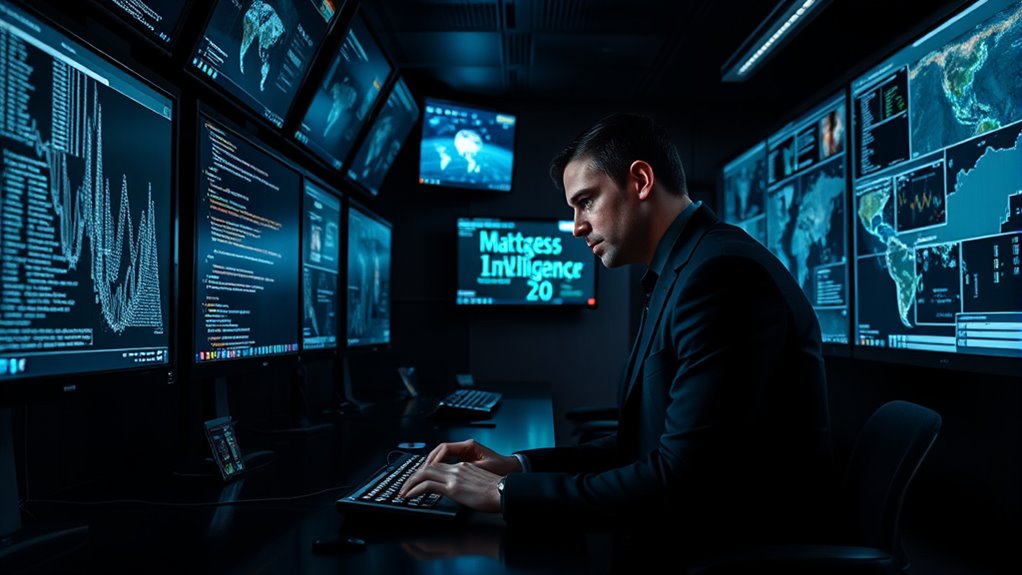

Counterintelligence in the U.S. involves detecting, investigating, and stopping spies and cyber threats from stealing secrets or damaging national security. Agencies monitor behaviors, communications, and suspicious activities to identify double agents and foreign operatives. They use surveillance, psychological profiling, covert operations, and cyber defenses to protect sensitive information. Behind the scenes, they gather evidence and deploy strategies to neutralize threats. If you’re curious about how these methods keep us safe, there’s more to uncover ahead.
Key Takeaways
- U.S. counterintelligence agencies use behavioral analysis, surveillance, and psychological profiling to identify suspicious individuals.
- They detect unusual communication patterns and contacts to uncover potential espionage activities.
- Covert operations and cyber defenses help trace cyberattacks and infiltrations by foreign spies.
- Double agents provide insider information, aiding agencies in uncovering clandestine networks.
- Continuous investigation, interrogation, and cybersecurity measures protect sensitive information from espionage threats.

What exactly is counterintelligence, and why does it matter? At its core, counterintelligence is the effort to prevent espionage, sabotage, and other clandestine activities aimed at compromising national security. It’s about protecting sensitive information, infrastructure, and personnel from foreign spies and malicious actors. In today’s digital age, cyber espionage has become a major threat, with hackers and foreign governments attempting to infiltrate computer networks to steal classified data. This makes counterintelligence more complex and essential than ever, as it involves both traditional espionage tactics and sophisticated cyber defenses. Effective counterintelligence also relies on behavioral analysis to identify suspicious individuals and activities that may indicate espionage efforts. Spies don’t always operate openly. They often blend into the fabric of society, sometimes working as double agents—individuals who pretend to serve one country while secretly working for another. These double agents can be especially dangerous because they may provide false information, sabotage operations from within, or leak secrets at critical moments. Detecting and neutralizing double agents requires meticulous investigation, psychological profiling, and a keen understanding of human behavior. Counterintelligence agencies focus on identifying suspicious activities, such as unusual communication patterns or unexplained contacts, that hint at infiltration. Cyber espionage is a significant concern because it allows adversaries to access sensitive information without physical intrusion. They use malware, phishing, and other hacking techniques to breach secure networks. Once inside, they can siphon off data related to military plans, technological innovations, or diplomatic strategies. To counter this, agencies deploy advanced cybersecurity measures, monitor network traffic for anomalies, and conduct covert operations to trace the origin of cyberattacks. They also work closely with private sector partners, knowing that much critical infrastructure is privately owned and vulnerable to cyber threats. In the fight against espionage, the U.S. relies heavily on intelligence operatives who gather evidence, analyze threats, and develop strategies to thwart foreign agents. When a spy is uncovered, agencies conduct thorough interrogations and surveillance to understand how they operated and who else might be involved. Sometimes, they turn to double agents themselves, who can provide insider information about enemy networks, their plans, and weaknesses. This delicate game, involving deception, trust, and countermeasures, demands constant vigilance.

CyberSecurity Monitoring Tools and Projects: A Compendium of Commercial and Government Tools and Government Research Projects
As an affiliate, we earn on qualifying purchases.
As an affiliate, we earn on qualifying purchases.
Frequently Asked Questions
How Do Counterintelligence Agencies Identify Insider Threats?
You can identify insider threats through threat detection techniques that monitor unusual behavior, access patterns, and data movements. Counterintelligence agencies analyze employee activities, scrutinize communications, and use advanced analytics to flag suspicious actions. By staying alert to signs of insider threats, they protect sensitive information and prevent potential breaches. Your awareness and vigilance are essential in spotting these threats early and maintaining national security.
What Technological Tools Are Most Effective in Counterintelligence Efforts?
Think of technological tools as your vigilant guardians in counterintelligence. Cyber surveillance tracks digital footprints, catching spies slipping up online, while biometric analysis acts like a fingerprint scanner on steroids, verifying identities instantly. These tools are your frontline defenses, revealing hidden threats before they strike. By harnessing cyber surveillance and biometric analysis, you turn the tide against spies, making it nearly impossible for them to operate undetected.
How Do Spies Typically Evade Detection During Investigations?
You might think spies are easy to catch, but they often evade detection by using disguise techniques to hide their identities and employ covert communications to stay in touch without revealing their plans. They carefully blend into their environment, avoid patterns, and switch methods frequently. By staying unpredictable and using secure channels, they make it difficult for investigators to track them down, increasing their chances of remaining undetected.
What Legal Boundaries Limit Counterintelligence Operations?
You’ll find that legal boundaries, like privacy restrictions and legal constraints, are enormous barriers in counterintelligence. They limit how far you can go in surveillance, searches, and data collection. These laws protect citizens from overreach, but they also restrict your ability to act swiftly against spies. So, you must navigate these legal limits carefully, balancing national security needs with individual rights—sometimes feeling like fighting an invisible, unbreakable wall.
How Does Counterintelligence Collaborate With International Agencies?
You work with international agencies through diplomatic negotiations and intelligence sharing, building trust and establishing protocols. These collaborations enable you to exchange crucial information, track espionage activities, and identify threats across borders. By maintaining open communication channels, you strengthen global counterintelligence efforts, making it harder for spies to operate undetected. This teamwork is essential in safeguarding national security and staying ahead of foreign intelligence operations.
As an affiliate, we earn on qualifying purchases.
Conclusion
As you step back into the shadows, imagine the silent watchmen behind the scenes, their eyes sharp and unblinking, scanning every whisper and shadow. With each carefully placed clue and every hidden trap, they keep the nation’s secrets safe, like a fortress guarded by unseen sentinels. You can almost hear the quiet hum of their vigilance, always ready to catch a spy slipping through the cracks, ensuring your safety in a world full of unseen threats.
PowerShell Automation and Scripting for Cybersecurity: Build Security Tools, Automate Threat Detection, and Strengthen Defense Systems with PowerShell
As an affiliate, we earn on qualifying purchases.
As an affiliate, we earn on qualifying purchases.
As an affiliate, we earn on qualifying purchases.