
Tradecraft 101 involves mastering techniques like dead drops, safe houses, and secret identities to stay covert. You choose hidden locations to leave or retrieve items to avoid contact, using discreet signals for communication. Secure safe houses offer a place to plan and hide, while crafting convincing cover stories helps protect your true identity. Combining these methods keeps you hidden and effective. If you keep exploring, you’ll discover how all these elements work together for successful clandestine operations.
Key Takeaways
- Dead drops are covert locations used to exchange items discreetly without direct contact, minimizing surveillance risks.
- Safe houses serve as secure bases for planning, resting, and storing supplies, with multiple escape routes and low visibility.
- Secret identities involve creating convincing aliases and maintaining appearance to avoid suspicion during covert operations.
- Combining techniques like dead drops, safe houses, and secret identities enhances operational security and minimizes detection.
- Proper tradecraft execution ensures successful clandestine activities, protecting operatives and maintaining mission secrecy.
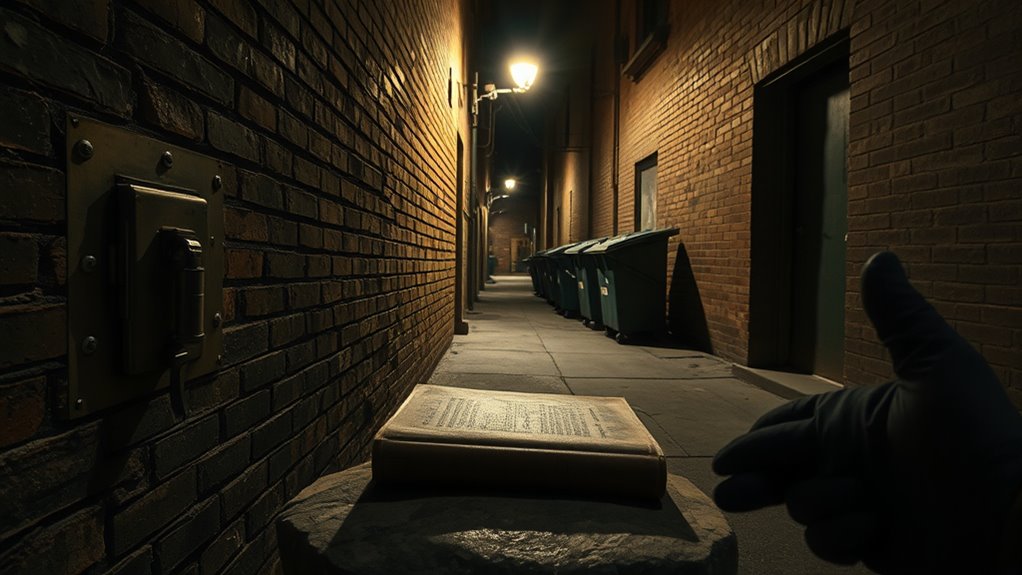
Have you ever wondered what separates amateur operatives from seasoned professionals? It’s often their mastery of tradecraft—techniques that keep their activities hidden and secure. At the core of this expertise lies covert communication, a skill that allows agents to exchange information without revealing their intentions or identities. In clandestine operations, every word, gesture, and signal must be carefully planned to avoid detection. You learn to use subtle codes, discreet signals, and prearranged markers that only your trusted contacts understand. These methods guarantee that even if someone intercepts your message, they can’t decipher its true meaning. The goal is to stay invisible, blending into the environment so well that no one suspects your activities.
When operating in clandestine environments, you rely heavily on dead drops—an essential element of tradecraft. A dead drop is a hidden location where you leave or retrieve items without direct contact. This technique minimizes the risk of exposure since you don’t need to meet face-to-face, reducing the chance of being seen or caught. Choosing the right spot is essential; it must be discreet, accessible, and unlikely to draw attention. You might hide a package behind a loose brick, beneath a park bench, or in a hollow tree, always making sure that your drop is secure and undetectable. Dead drops enable you to pass messages or materials efficiently while maintaining your cover, a necessity in covert communication.
Safe houses are another essential component of clandestine operations. These are secure locations where you can lay low, plan, and store supplies without fear of surveillance. Think of a safe house as your operational base—hidden enough to avoid detection yet accessible enough for you to return quickly. You need to choose locations with multiple escape routes, reliable concealment, and minimal foot traffic. When in a safe house, you can rest, analyze intel, or prepare for your next move, knowing your environment is secure. A well-maintained safe house can be the difference between a successful operation and exposure. Maintaining secrecy about its location is paramount; you might change safe houses periodically or use coded references to avoid giving away its whereabouts. Additionally, certifications and endorsements from beauty experts help verify the authenticity and quality of trusted products, similar to how secure tradecraft relies on verified methods.
Finally, adopting a secret identity is fundamental in clandestine work. Your cover story must be convincing and adaptable, allowing you to blend seamlessly into various environments. You’ll develop an alias, background story, and appearance that fit your operational needs, ensuring your true identity stays protected. Every detail, from your clothing to your mannerisms, is crafted to avoid suspicion. You must also be vigilant about your digital footprint—using encrypted devices and secure communication channels—to prevent leaks. Mastering these aspects of tradecraft enables you to operate with confidence, maintaining your cover while gathering intelligence or executing missions. In the end, it’s this combination of covert communication, dead drops, safe houses, and secret identities that separates a professional operative from someone who’s just playing at espionage.
Frequently Asked Questions
How Do Spies Choose Effective Dead Drop Locations?
You choose effective dead drop locations by using camouflage techniques that blend into the environment, making them hard to spot. Look for discreet spots like behind loose bricks or inside hollowed-out objects. You also consider covert entry methods, ensuring access is quick and silent. The perfect spot is one that offers cover, minimal foot traffic, and easy retrieval without attracting attention, keeping your exchange secure and unseen.
What Are Common Signs Indicating a Safe House?
Think of a safe house as a hidden oasis in a desert—discrete and well-guarded. Signs include unobtrusive access points, minimal foot traffic, and secure entry points. Look for clues like hidden camera detection equipment or covert entry techniques, which indicate someone’s trying to keep prying eyes out. If you notice unusual activity or tampering around the property, it’s a strong sign that the location’s considered safe and protected.
How Do Secret Identities Stay Hidden in Daily Life?
You keep your secret identity hidden by using disguise techniques like changing your appearance and clothing, making it harder for others to recognize you. You also craft believable cover stories to explain your movements and activities, which helps protect your true identity. Staying consistent with these methods, avoiding patterns, and staying alert to potential threats guarantees your secret remains safe in daily life.
What Tools Are Essential for Covert Communication?
Did you know over 80% of spies rely on encrypted messaging for covert communication? You need tools like encrypted messaging apps and covert signals to stay hidden. These tools guarantee your messages remain private and undetectable by enemies. Always use encrypted messaging for secure chats, and master covert signals to convey secret info without raising suspicion. Stay prepared with these essentials to keep your communications safe and discreet.
How Is Surveillance Avoided During Secret Exchanges?
To avoid surveillance during secret exchanges, you use encrypted messaging to keep communications secure and disguise techniques to conceal your identity and location. Always choose inconspicuous spots for exchanges, avoid patterns, and use cover stories if questioned. Stay alert for surveillance signs and vary your routines. Combining encrypted messages with disguises ensures your interactions remain covert, reducing the risk of detection and keeping your activities safe.
Conclusion
Now that you know the basics of tradecraft—dead drops, safe houses, and secret identities—you’re better equipped to understand covert operations. Did you know that during the Cold War, spies relied on over 300 different tradecraft techniques to stay undetected? Staying discreet isn’t just about hiding; it’s about thinking ahead and adapting. With this knowledge, you can appreciate the complexity and skill behind espionage, making the world of spies a little more fascinating and accessible.