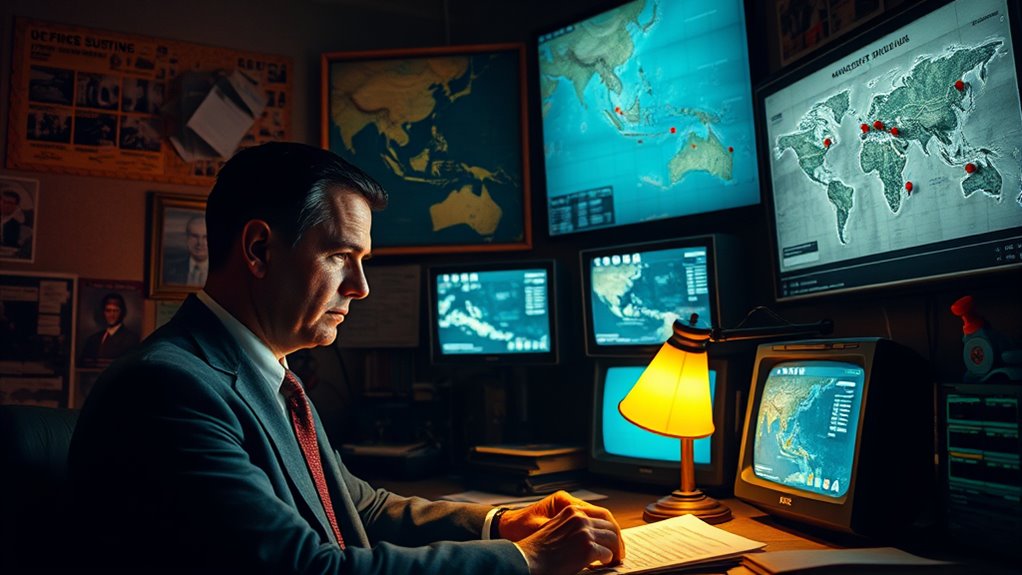

During the Cuban Missile Crisis, spy networks and covert diplomacy played crucial roles in preventing nuclear war. Intelligence operatives gathered vital clues about Soviet missile sites in Cuba, helping you detect the threat early. Secret communications kept diplomatic channels open, allowing you to explore solutions without escalating tensions. While some flaws existed, these covert efforts proved essential in managing the crisis. If you want to understand how these strategies combined to avert disaster, there’s more to uncover.
Key Takeaways
- Spy networks in Cuba and the USSR provided critical early intelligence on missile sites and troop movements.
- Confirmed intelligence revealed Soviet missile capabilities, shaping U.S. response strategies.
- Covert diplomatic backchannels enabled secret negotiations, preventing miscommunication and escalation.
- Challenges included delayed responses and risks of misinterpretation within secret communications.
- Overall, intelligence efforts and discreet diplomacy averted nuclear war, highlighting their crucial role in crisis management.
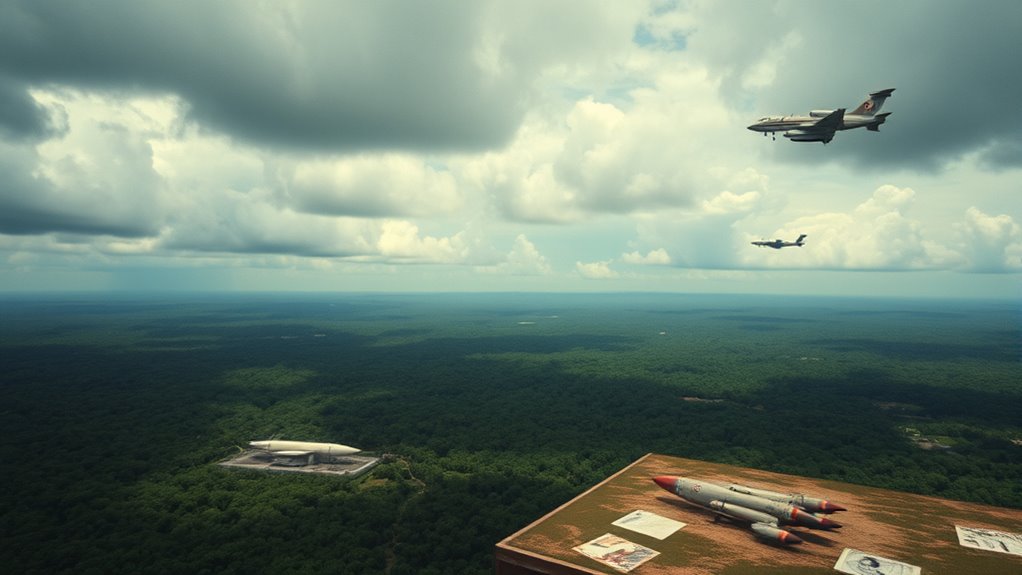
Have you ever wondered how close the world came to nuclear war during the Cold War? It’s a question that lingers as you consider the tense moments of the Cuban Missile Crisis. At the heart of this standoff were covert spy networks and diplomatic backchannels that shaped the course of events. Before the world knew about the missiles in Cuba, intelligence agencies had already begun piecing together clues through their spy networks. These secret operatives, operating in Cuba and the Soviet Union, gathered essential information about missile sites and troop movements. Their efforts weren’t perfect, but they provided the first hints that something serious was unfolding. It was through these clandestine channels that the United States learned about the missile installations, which were capable of striking most of the Eastern U.S. in minutes. Without these spy networks, the U.S. might have remained blind to the Soviet plans, potentially leading to a different, more dangerous outcome. Once the intelligence was confirmed, the U.S. government faced a delicate challenge: how to address the threat without provoking an all-out war. Diplomatic backchannels became indispensable during this period, offering a discreet way to communicate with Soviet leaders away from the public eye. These secret discussions allowed both sides to explore options, de-escalate tensions, and avoid misunderstandings that could escalate into conflict. Behind the scenes, diplomats and intelligence officials worked tirelessly, exchanging messages that weren’t always in the public record but were essential to preventing catastrophe. The use of diplomatic backchannels proved to be a double-edged sword, sometimes delaying responses but ultimately enabling negotiations that a direct confrontation might have prevented. As the crisis intensified, these covert lines of communication helped keep the dialogue open, even when public statements suggested otherwise. They allowed for a controlled exchange of offers, warnings, and concessions, giving leaders the space to maneuver without immediate repercussions. This careful diplomacy, combined with the intelligence from spy networks, helped steer the standoff toward resolution. The success of these efforts was not without flaws—missed signals, miscommunications, and sometimes overconfidence in intelligence accuracy created risks. But ultimately, it was the combination of sharp espionage and discreet diplomacy that kept the world from plunging into nuclear war. As you reflect on those tense days, it’s clear that the spy networks and diplomatic backchannels played a pivotal role in navigating one of history’s most dangerous moments, demonstrating how secrecy and strategic communication can make all the difference when humanity faces annihilation. Modern intelligence gathering methods continue to evolve, building on the lessons learned during critical moments like the Cuban Missile Crisis.
Frequently Asked Questions
How Did Intelligence Failures Influence the Crisis Outcome?
Your intelligence failures, like missing signs of Soviet missile build-up, led to misjudgments during the crisis. Misinformation campaigns and unclear diplomatic signals caused confusion, making it harder to assess true intentions. These errors delayed vital responses, escalating tensions. If intelligence had been more accurate and transparent, you might have avoided some of the brinkmanship, potentially leading to a quicker resolution and preventing the dangerous standoff from escalating further.
What Role Did Covert Operations Play During the Crisis?
During the Cuban Missile Crisis, covert operations, including Cuban infiltration and covert sabotage, played a pivotal role. You might not realize, but these efforts helped gather essential intelligence and disrupt Soviet plans. By supporting clandestine activities, you could influence the situation behind the scenes, creating pressure and confusion. These covert actions contributed to the diplomatic resolution, showcasing how secret operations can shape major international events.
Were There Any Missed Warning Signs Prior to the Crisis?
You might not realize it, but there were missed signals and warning lapses before the crisis erupted. Intelligence agencies overlooked or underestimated signs of Soviet missile buildup in Cuba, which could’ve given earlier alerts. These warning lapses meant policymakers didn’t grasp the full threat until it was imminent, limiting their options. Recognizing these missed signals highlights how vital timely intelligence is to prevent such dangerous surprises.
How Did Technological Limitations Impact Intelligence Gathering?
Technological limitations, like primitive satellite surveillance and signal interception, hindered your ability to gather accurate intelligence during the crisis. Satellite technology wasn’t advanced enough to provide detailed images, and signal interception often missed critical communications or was easily disrupted. These limitations meant you had to rely on imperfect data, which sometimes delayed or obscured warning signs, making it harder to anticipate Soviet actions and respond effectively.
What Lessons Were Learned to Improve Future Intelligence Efforts?
You learn that intelligence reforms and improved crisis preparedness are essential for future success. By analyzing past failures, you see the need for better technology, more reliable sources, and faster communication. These lessons push you to develop more sophisticated intelligence methods and stronger inter-agency cooperation. As a result, you become better equipped to anticipate threats, respond swiftly, and prevent crises from escalating, ensuring national security and global stability.
Conclusion
As you reflect on the Cuban Missile Crisis, you see how intelligence served as both a hero and a warning, echoing Icarus’s flight—bold yet perilous. Just as hubris led to downfall, overconfidence in secrets can blind you to hidden dangers. The crisis reminds you that even in moments of triumph, humility and vigilance are essential. Like Pandora’s box, once opened, the stakes can never truly be contained. Stay alert; history’s lessons linger.