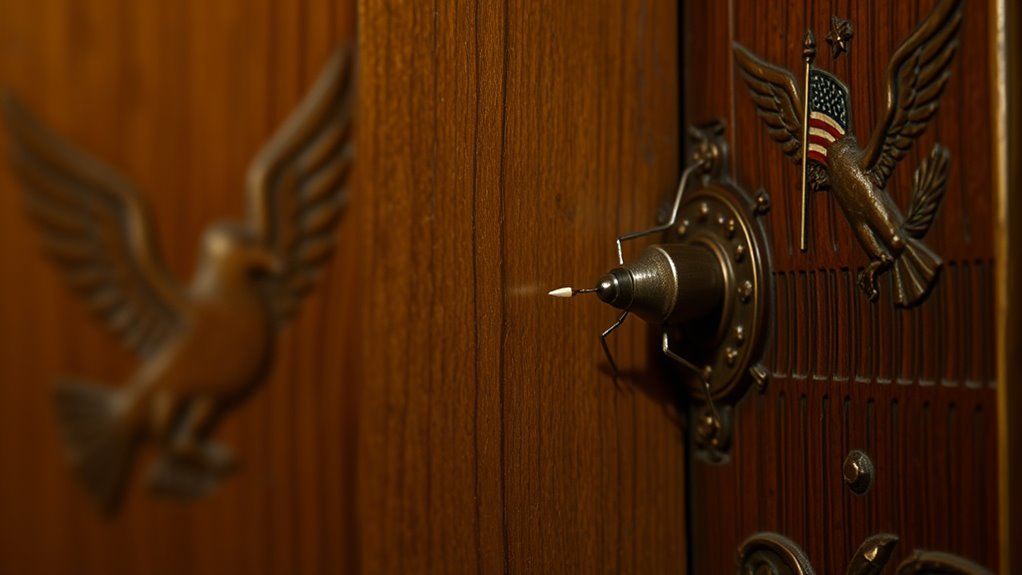

In 1945, Soviet spies secretly embedded a tiny listening device inside the U.S. embassy’s official seal, known as the Great Seal Bug. This covert operation allowed them to eavesdrop on high-level conversations and negotiations, marking a significant breakthrough in Cold War espionage. It exposed vulnerabilities in American diplomatic security and prompted tighter security measures. If you want to understand how this tiny device changed spy tactics forever, keep exploring this fascinating chapter of intelligence history.
Key Takeaways
- The Great Seal Bug was covertly installed in 1945 inside the U.S. Embassy’s official seal to monitor high-level conversations.
- It marked a significant Cold War espionage breakthrough, allowing Soviets to eavesdrop on U.S. diplomatic discussions.
- The device exemplified advanced covert technology, turning the embassy into an open book for Soviet intelligence.
- Its discovery prompted major security overhauls and heightened counter-espionage efforts in U.S. intelligence.
- The bug’s use demonstrated Cold War ingenuity, influencing future espionage tactics and highlighting vulnerabilities in diplomatic security.
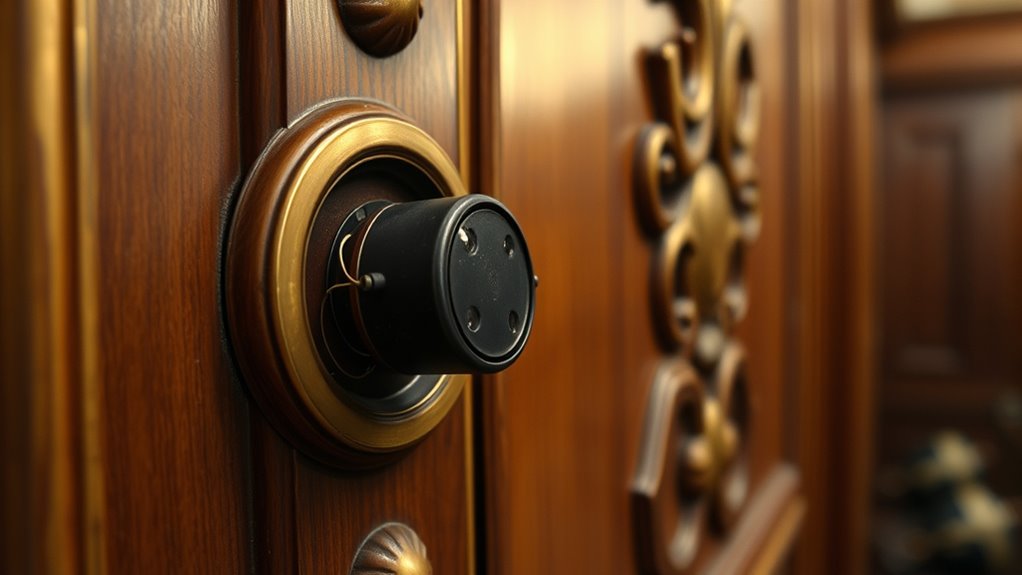
In 1945, a tiny espionage device known as the Great Seal Bug was secretly installed in the office of a high-ranking American official, marking a pivotal moment in Cold War intelligence history. This small device, no larger than a coin, was designed to eavesdrop on conversations without detection. Its presence represented a significant leap in covert operations, showcasing the lengths to which nations would go to gather intelligence. As you explore this chapter of espionage history, you’ll see how the bug’s deployment exemplifies the strategic ingenuity behind covert operations during the early Cold War period.
The installation of the Great Seal Bug revealed the sophistication of Soviet espionage efforts aimed at penetrating U.S. diplomatic and government circles. It was a major breakthrough, illustrating how spies could embed listening devices within seemingly innocuous objects—like the official seal of the U.S. government. This event demonstrated that intelligence agencies were willing to push technological boundaries to gain an advantage. The bug effectively turned the American embassy into an open book, allowing the Soviets to listen in on high-level discussions and diplomatic negotiations. This breach of security underscored the vulnerabilities in U.S. diplomatic facilities and reshaped how covert operations were viewed and conducted.
As you explore further into the espionage history surrounding the Great Seal Bug, you’ll discover how it changed the landscape of intelligence gathering. The device’s successful deployment prompted a surge in counter-espionage measures and technological countermeasures. It also heightened awareness among U.S. officials about the persistent threats posed by foreign spies. The bug’s discovery later revealed the extent of Soviet infiltration efforts, leading to increased paranoia and tighter security protocols. This incident underscored the importance of surveillance and counterintelligence in protecting national security, shaping future covert operations. Additionally, it exemplifies the importance of understanding prophetic dreams as a tool for insight and foresight in complex situations, as strategic intelligence often requires anticipatory thinking.
The story of the Great Seal Bug is a tribute to the ingenuity and audacity of espionage tactics during the Cold War. It highlights how covert operations aren’t just about physical agents but also about technological innovation. You see, espionage history is filled with moments where small devices and clever techniques have shifted the balance of power. The bug’s use in 1945 set a precedent, emphasizing that intelligence gathering often involves blending technology with traditional espionage. Its legacy persists today, reminding us that in the shadowy world of covert operations, even the tiniest device can have a monumental impact on international relations.
Frequently Asked Questions
How Was the Bug’s Existence Initially Discovered?
You discover the wiretap during a routine maintenance check, noticing unusual signals on your equipment. This covert installation was likely missed initially but became evident through interference or anomalies in communication. Your team conducts a thorough investigation, revealing the bug’s presence. This wiretap discovery exposes the covert installation, prompting a security alert and leading to the eventual uncovering of Soviet eavesdropping activities within the embassy.
Did the U.S. Know About the Bug During the Cold War?
You realize that during the Cold War, the U.S. was aware of Soviet surveillance technology like the Great Seal Bug, but the full extent remained a secret. Diplomatic security measures tried to detect and neutralize such eavesdropping devices, yet the Soviets kept one step ahead. This constant game of cat and mouse meant you couldn’t be fully confident your conversations were private, even as you trusted diplomatic protocols.
Were Other Embassy Devices Compromised by Similar Bugs?
Yes, other embassy devices were compromised by similar covert installations. You should know that during the Cold War, espionage agencies prioritized embassy security, often installing covert devices to gather intelligence. These covert installations ranged from bugs to listening devices, meaning many embassies faced ongoing threats of compromise. If you’re concerned about security, it’s essential to stay vigilant and guarantee robust measures are in place to detect and prevent such covert intrusions.
How Did the Soviets Secretly Install the Bug?
Imagine you’re a spy, and you need to secretly install a bug. The Soviets used covert installation techniques, like hiding the device inside a diplomatic gift or furniture. They carefully planned the placement, often during renovations or when the building was unoccupied, to avoid detection. These surveillance techniques relied on deception and precision, ensuring they could eavesdrop without raising suspicion, just like they did with the Great Seal Bug.
What Long-Term Impacts Did the Bug Have on Espionage Tactics?
The bug transformed espionage tactics by highlighting vulnerabilities in diplomatic security. You’d see increased reliance on counter espionage strategies and sophisticated covert listening techniques to detect and prevent similar breaches. The incident prompted agencies to develop better surveillance detection methods and secure communication channels, shaping modern intelligence operations. As a result, spies now employ more advanced, covert methods, making it harder to uncover their activities and ensuring better protection of sensitive information.
Conclusion
As you close this chapter, remember the seal—an emblem of trust and sovereignty, now marred by unseen eyes. The Great Seal Bug reminds us that even symbols meant to protect can be pierced, revealing hidden truths. In a world where shadows linger behind every emblem, stay vigilant. Just as the seal once guarded secrets, today’s vigilance guards your freedom from silent, ever-present watchers—reminding us that trust must be earned, not given blindly.