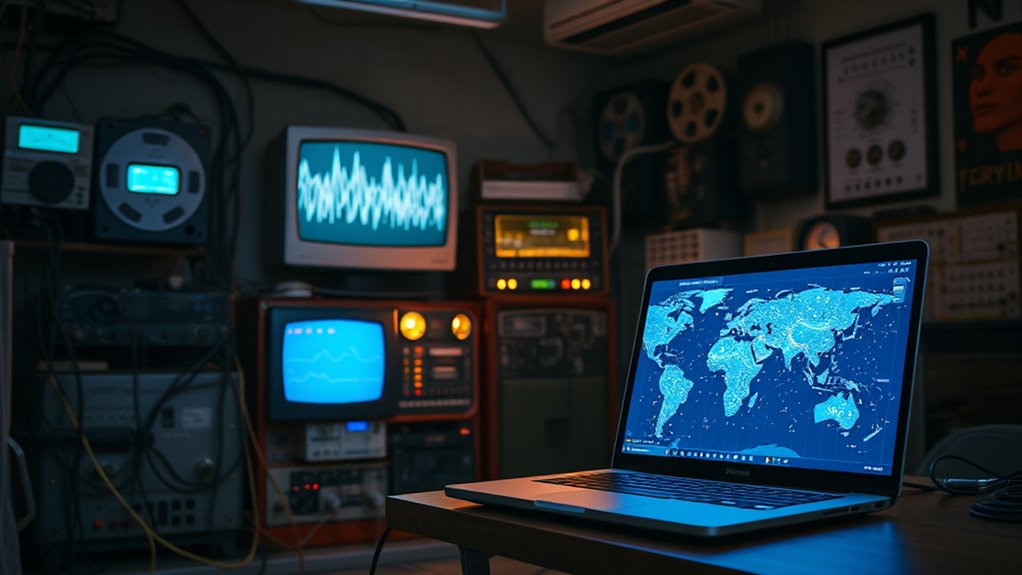

The evolution of American surveillance starts with simple wiretaps and manual techniques, focusing mainly on law enforcement needs. As technology advanced, authorities adopted sophisticated electronic devices, allowing for more precise monitoring and broader scope. The digital age brought internet, mobile, and social media data, creating detailed profiles of individuals. Today, AI and machine learning analyze vast datasets quickly, raising privacy concerns. Continue exploring how this ongoing shift impacts privacy and security in today’s digital landscape.
Key Takeaways
- Surveillance began with manual wiretaps and physical methods, focusing on law enforcement needs with minimal technology.
- Advancements introduced electronic devices, enhancing monitoring precision and scope, raising privacy concerns.
- Digital technologies like the internet and smartphones enabled detailed data collection, fueling privacy debates.
- AI and machine learning analyze large datasets rapidly, improving threat detection but increasing privacy and ethical issues.
- Ongoing challenges include balancing security with personal privacy, with limited oversight over evolving surveillance practices.
Have you ever wondered how American surveillance has evolved over the years? It’s a story shaped by technological advancements and the ongoing debate over privacy concerns. In the early days, surveillance was relatively straightforward—law enforcement relied on wiretaps and physical surveillance to monitor suspects. These methods seemed intrusive at the time but were limited in scope and scope. As technology advanced, so did the tools used for surveillance. The introduction of more sophisticated electronic monitoring, such as wiretapping devices, allowed authorities to listen in on conversations with greater precision and less risk of detection. However, these practices quickly raised privacy concerns among the public, who worried about government overreach and the erosion of personal freedoms.
With the advent of digital technology, surveillance took a dramatic leap forward. The rise of the internet, mobile phones, and computers created new possibilities for monitoring. Agencies gained access to vast amounts of data—emails, social media posts, and location tracking—making it possible to build detailed profiles of individuals with unprecedented accuracy. This shift brought about intense debates about privacy, with many feeling that their personal information was vulnerable to misuse or unwarranted government scrutiny. The government justified these measures as necessary for national security, especially after events like 9/11. Still, the balance between security and privacy remained a contentious issue, fueling public skepticism and calls for stricter oversight. The development of cybersecurity vulnerabilities during these times highlighted the importance of protecting sensitive information from malicious actors.
In recent years, technological advancements like artificial intelligence and machine learning have transformed surveillance once again. These tools enable analysts to sift through enormous datasets rapidly, identifying patterns and anomalies that might indicate threats. While these innovations have improved law enforcement efficiency, they’ve also intensified privacy concerns. People worry about the potential for mass surveillance, data breaches, and the lack of transparency around how their information is used. The government and private companies now collect and analyze data at an astonishing scale, often with little oversight. As a result, Americans are increasingly concerned about their personal privacy being sacrificed in the name of security. The evolution of surveillance, driven by technological progress, continues to challenge the boundaries between safety and privacy, raising questions that remain unresolved in the digital age.
Spytec Pro-10G Small and Portable Bug & Wiretap Detector with Detection for Analog & Digital Devices Up to 40 Feet

As an affiliate, we earn on qualifying purchases.
As an affiliate, we earn on qualifying purchases.
Frequently Asked Questions
How Has Public Opinion Influenced Surveillance Policy Changes?
Public opinion plays a vital role in shaping surveillance policy shifts. When you voice concerns about privacy and government overreach, policymakers often respond by tightening regulations or adding safeguards. Conversely, support for increased security can lead to expanded surveillance powers. Your feedback, protests, and voting choices influence lawmakers, pushing them to adapt policies that reflect the evolving views of the public, ensuring surveillance practices align with societal values.
What Are the Legal Limits of Modern Surveillance Techniques?
You should know that 60% of Americans prioritize privacy, which shapes legal limits on surveillance. Modern techniques are restricted by laws requiring data encryption and oversight mechanisms, like warrants and review boards. These measures aim to balance national security with individual rights. However, courts continue to interpret these limits, ensuring agencies don’t overstep. Staying informed about these boundaries helps protect your privacy amid evolving surveillance practices.
How Do Surveillance Practices Vary Across Different U.S. States?
You’ll notice that surveillance practices differ across states due to state-specific policies and regional surveillance priorities. Some states have strict laws limiting data collection, while others permit broader surveillance activities. For example, California emphasizes privacy protections, whereas Texas allows more extensive monitoring. These variations reflect regional attitudes toward security and privacy, meaning your surveillance experience can vary markedly depending on where you are. Stay informed about local policies to understand your privacy rights better.
What Role Do International Partnerships Play in U.S. Surveillance?
International partnerships substantially enhance your nation’s surveillance capabilities through intelligence sharing and cooperation. These alliances allow you to access crucial data, monitor global threats, and strengthen security efforts. By working closely with allies, you benefit from shared expertise and technology, creating a more extensive security network. This collaboration helps you stay ahead of evolving risks, ensuring a safer environment while subtly respecting the delicate balance of privacy and security.
How Is Privacy Protected Amid Increasing Surveillance Capabilities?
You can safeguard your privacy amid increasing surveillance by advocating for strong data encryption and supporting privacy legislation. Encryption guarantees your data stays secure from unauthorized access, while legislation enforces rules that limit government overreach and protect individual rights. Staying informed about these protections helps you understand your rights and encourages policies that balance security with privacy, ensuring your personal information remains safe even as surveillance capabilities grow.
Conclusion
As you see, American surveillance has evolved from simple wiretaps to a vast, complex web of AI-powered monitoring. It’s like watching a silent shadow grow ever closer, blending into every corner of your life. While technology advances, remember that your privacy is the fragile thread holding your freedom. Stay aware, because in this game of unseen eyes, only vigilance can keep the darkness at bay. Your awareness is the light guiding the way.