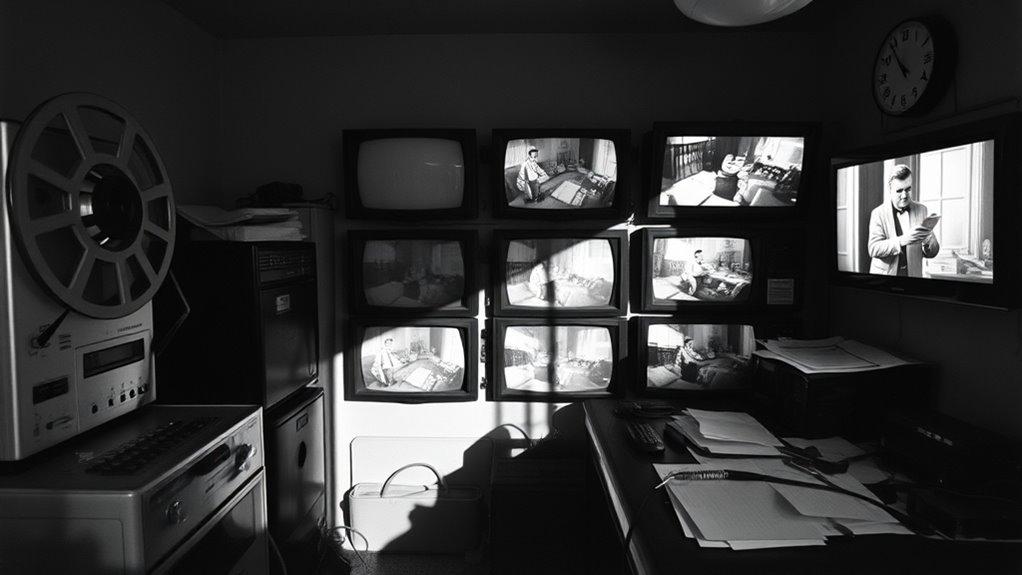
During the Cold War, the CIA secretly spied on Americans at home through Operation CHAOS, targeting anti-war activists, civil rights protesters, and dissenters. This covert program operated without proper oversight, often gathering information without warrants and violating constitutional rights. It created a climate of fear and mistrust, exposing government overreach. If you want to understand how this historical surveillance influences today’s privacy debates, there’s more to discover here.
Key Takeaways
- Operation CHAOS was a secret CIA program during the Cold War targeting domestic political activists and dissenters.
- The CIA collected information on Americans involved in anti-war, civil rights, and protest movements without warrants.
- Surveillance practices bypassed constitutional protections, raising concerns about government overreach and privacy violations.
- The program operated covertly with little oversight, leading to a significant erosion of individual civil liberties.
- Lessons from Operation CHAOS highlight the importance of transparency and safeguards to prevent future abuses of power.
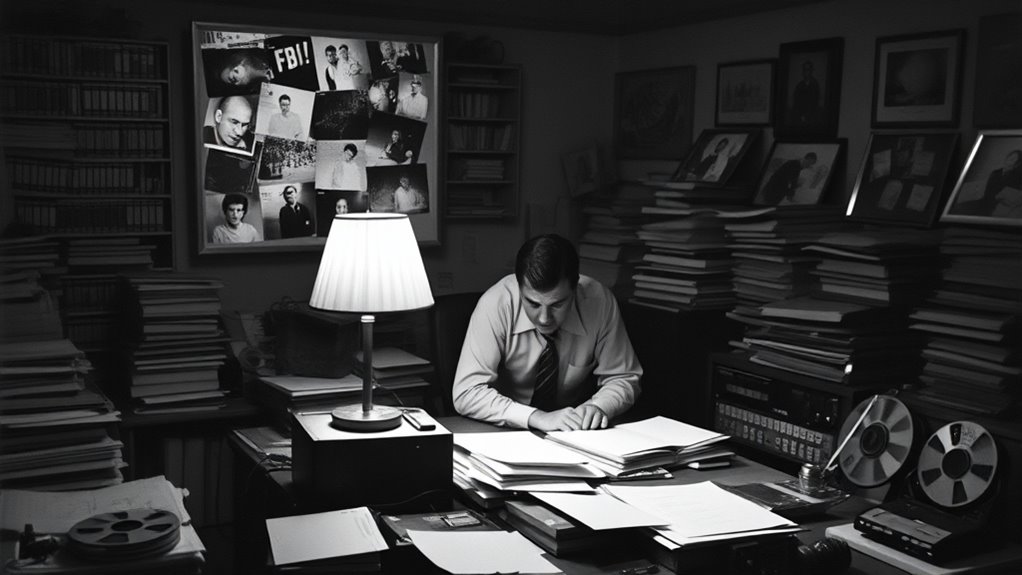
Have you ever wondered if the government was spying on its own citizens? It’s a question that has haunted many, especially when stories of covert operations come to light. During the Cold War era, the CIA launched a secret program called Operation CHAOS, aimed at monitoring and disrupting domestic political activism. This was a clear case of government surveillance that extended deep into American lives, often without their knowledge or consent. The operation targeted anti-war protesters, civil rights activists, and other dissenters, raising serious concerns about how far the government could go in surveilling its own people.
During the Cold War, the CIA’s Operation CHAOS targeted domestic activists, raising concerns about government overreach and privacy violations.
Operation CHAOS exemplifies the tension between national security interests and civil liberties. While governments argue that surveillance is necessary to protect the nation from external threats, it’s vital to remember that such actions can erode individual freedoms. When the CIA spied on Americans at home, they bypassed the constitutional protections designed to shield citizens from unwarranted searches and seizures. The program operated in secrecy, with little oversight, which meant that citizens’ right to privacy was often sacrificed in the name of national security. This kind of government surveillance created a chilling effect on free speech and political activism, as people began to fear being watched or targeted simply for expressing their views.
The extent of Operation CHAOS’s spying activities became known years later, revealing a disturbing pattern of government overreach. The CIA collected information not just on foreign enemies but also on domestic groups, often without probable cause or proper warrants. This intrusive monitoring blurred the lines between national security and civil liberties, raising questions about the limits of government power. The revelations prompted debates about the need for safeguards and transparency to prevent future abuses.
You might think that such surveillance is a thing of the past, but the issues it raises are still relevant today. Modern technology makes government surveillance easier and more pervasive, often without your knowledge. The lessons of Operation CHAOS serve as a reminder that when authorities operate unchecked, civil liberties tend to suffer. It is crucial to understand how government surveillance practices have evolved over time to better protect individual rights. Protecting your rights means demanding transparency and accountability from those in power. The history of covert operations like Operation CHAOS highlights the importance of balancing security with personal freedoms—something that remains a challenge for governments worldwide. Knowing this history helps you understand why vigilance is necessary to prevent future overreach and defend the civil liberties that form the cornerstone of a free society.

SaiTech IT 5 Pack RFID Blocking Card, One Card Protects Entire Wallet Purse, NFC Contactless Bank Debit Credit Card Protector ID ATM Guard Card Blocker–(Black)
- RFID and NFC Blocking: Protects contactless cards from theft
- Jamming Chip Technology: Creates a secure jamming signal without batteries
- Wide Protection Range: Effective up to 2.4 inches for full wallet coverage
As an affiliate, we earn on qualifying purchases.
As an affiliate, we earn on qualifying purchases.
Frequently Asked Questions
Were Any Prominent American Figures Targeted During Operation CHAOS?
You should know that during Operation CHAOS, prominent political figures and celebrity targets were indeed monitored. The CIA aimed to gather intelligence on individuals involved in anti-war protests and political activism. You might be surprised to learn that some high-profile figures, including activists and possibly public figures, were targeted to understand their influence. This operation shows how deeply the government once looked into the personal lives of Americans for political reasons.
How Did the CIA Justify Spying on American Citizens?
You might think the CIA’s domestic surveillance was unjustified, but they argued it was necessary for domestic intelligence. They justified spying on Americans by claiming it helped prevent foreign threats and maintain national security. Despite objections, they believed their surveillance justified their actions, even though it overstepped traditional boundaries. Their aim was to gather critical intelligence, but many see it as a breach of privacy and constitutional rights.
Were There Any Legal Consequences for Operation CHAOS?
You might wonder if there were legal repercussions for Operation CHAOS. In reality, there were limited consequences; Congress held hearings to investigate the program, but no significant legal penalties were imposed on the CIA. The agency faced criticism and increased oversight, but the lack of strong legal repercussions meant Operation CHAOS largely remained unofficial and unpunished. This lack of accountability allowed similar covert activities to continue in later years.
Did Operation CHAOS Lead to Reforms in Intelligence Oversight?
Operation CHAOS prompted significant intelligence reforms, increasing oversight and emphasizing public accountability. As a result, Congress implemented new laws demanding greater transparency from intelligence agencies, including tighter controls over domestic spying activities. You should know that these reforms aimed to prevent abuses like Operation CHAOS from happening again, ensuring that intelligence efforts stay within legal boundaries and that the public remains informed and protected from unwarranted surveillance.
How Much Did the Public Know About Operation CHAOS at the Time?
At the time, your awareness of the extent of domestic surveillance was limited, as authorities kept much under wraps. The public only caught glimpses of covert activities, which gradually emerged through leaks and investigations. While some suspected government overreach, full details remained hidden, making it difficult for you to grasp how deeply the CIA was monitoring citizens. Overall, public awareness stayed minimal until revelations eventually surfaced, sparking widespread concern.

Blink Outdoor 4 – Wireless smart security camera, two-year battery life, 1080p HD day and infrared night live view, two-way talk. Sync Module Core included – 5 camera system
- Battery Life: Up to two years of operation
- Video Quality: 1080p HD live view
- Night Vision: Infrared night vision
As an affiliate, we earn on qualifying purchases.
As an affiliate, we earn on qualifying purchases.
Conclusion
As you close this chapter, remember that Operation CHAOS was like a shadow lurking in your own home, a silent storm brewing behind the curtains. It’s a reminder that even in the brightest days, darkness can seep through cracks, hiding in plain sight. Stay vigilant, for the true power lies in knowing the unseen forces that try to watch over you. Like a lighthouse in fog, awareness guides you safely through the unseen waters.
privacy screen filter for monitors
As an affiliate, we earn on qualifying purchases.
As an affiliate, we earn on qualifying purchases.
As an affiliate, we earn on qualifying purchases.