
AI tools are transforming immigration security by speeding up identity checks with facial recognition and biometric data. While these methods boost accuracy and help prevent fraud, they also raise privacy concerns, like mass surveillance and data breaches. Balancing security with civil liberties is challenging, especially since biases can lead to unfair targeting. If you want to see how experts recommend managing these risks and protecting your rights, keep exploring further.
Key Takeaways
- AI enhances immigration security through rapid identity verification but raises concerns over mass surveillance and privacy infringement.
- Biometric data collection and storage pose security risks if not properly encrypted and managed.
- Facial recognition biases can lead to misidentification, affecting innocent individuals’ privacy rights and fairness.
- Strict oversight and transparency are essential to balance AI-driven security with civil liberties.
- The debate centers on whether the security benefits of AI vetting outweigh potential privacy violations.

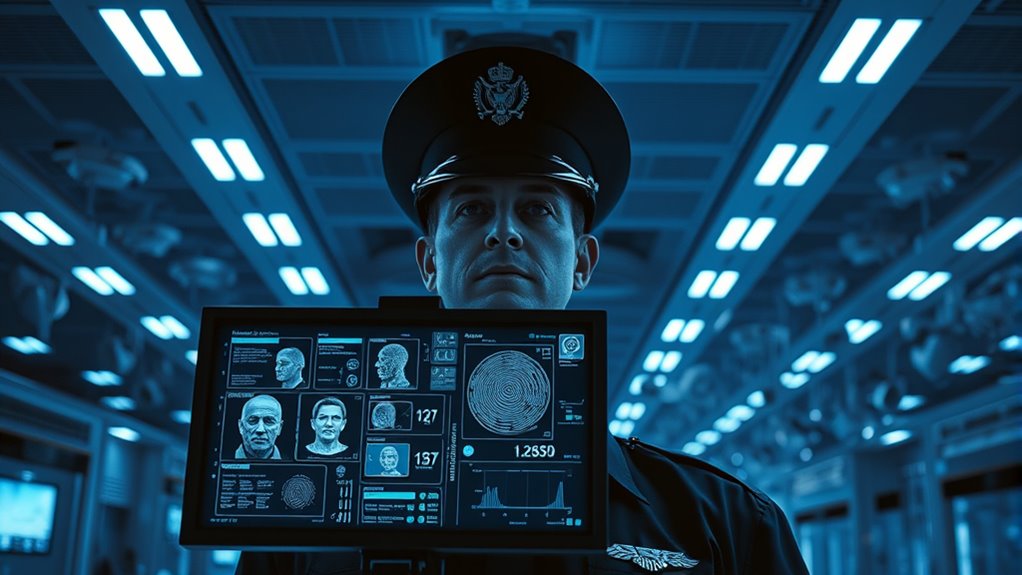
As concerns over security threats grow, authorities are turning to artificial intelligence to enhance the vetting process. This shift aims to make immigration screenings faster, more accurate, and more thorough. One of the key tools in this effort is facial recognition technology, which allows officials to verify identities quickly by matching live images against vast databases of known individuals. When you undergo biometric checks, your face becomes a digital fingerprint that can be cross-referenced in seconds, helping prevent identity fraud and detect individuals on watchlists. Alongside facial recognition, data encryption plays a critical role in safeguarding the sensitive information collected during these processes. Encryption ensures that personal data remains confidential and protected from cyberattacks or unauthorized access, which is crucial given the volume of biometric and personal information processed.
However, as you might expect, this technological reliance raises significant privacy concerns. While facial recognition can streamline security checks, it also enables constant surveillance, potentially infringing on your right to privacy. Governments and agencies may track your movements or monitor your identity without your explicit consent, leading to fears of mass surveillance and misuse of data. Even with robust data encryption, the storage and handling of biometric information pose risks. If a breach occurs, unencrypted or poorly protected data can be exploited, exposing your personal details or biometric identifiers to malicious actors. This possibility prompts debates about whether the benefits of enhanced security outweigh the potential erosion of privacy rights. Additionally, the accuracy and fairness of AI systems are critical factors, especially considering known issues with bias in facial recognition technology, which can undermine trust and lead to injustices.
Privacy risks increase as biometric data storage and handling can be exploited if security measures fail.
You’re also likely to question the accuracy and fairness of these AI-driven systems. Facial recognition technology has been criticized for racial and gender biases, which can lead to false positives or misidentifications. Such errors might result in innocent individuals being flagged or subjected to unnecessary scrutiny, raising concerns about discriminatory practices and due process. As authorities implement these advanced tools, they must balance security needs with safeguarding individual rights, ensuring transparency and accountability in their use.
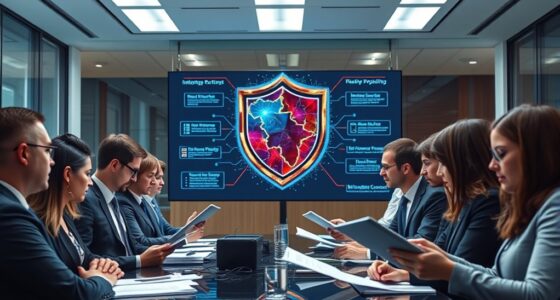
In embracing AI for extreme vetting, you should recognize that the technology’s promise of improved security comes with real challenges. While facial recognition and data encryption offer powerful solutions, they also demand strict oversight to prevent misuse and protect your civil liberties. As these systems become more prevalent, the conversation will continue around how to harness AI’s potential responsibly—keeping you safe without compromising your fundamental rights to privacy and due process. Recognizing the importance of technology’s role in security systems helps inform the ongoing debate about balancing safety with civil rights.
Frequently Asked Questions
How Accurate Is AI in Predicting Potential Security Threats?
AI can be quite accurate in predicting potential security threats, but it’s not perfect. You should know that algorithm biases can skew results, leading to false positives or negatives. Additionally, data privacy concerns mean that sensitive information might be misused or exposed. While AI helps streamline security efforts, you must remain aware of its limitations and the importance of protecting individual privacy rights.
What Are the Legal Consequences of AI Misidentification?
Misidentification by AI can turn your privacy concerns into a legal minefield. If an AI system wrongly flags you, you could face wrongful detention or legal action, raising questions of legal accountability. Authorities might be held responsible for errors, but you might also struggle to prove your innocence. This legal chaos underscores the importance of clear accountability protocols, ensuring that AI mistakes don’t trample on your rights and privacy.
Can Individuals Appeal Ai-Based Immigration Decisions?
Yes, you can appeal AI-based immigration decisions, but privacy concerns and fairness issues often complicate the process. You should request a review if you believe the AI misidentified or unfairly judged you. Keep in mind that the appeal procedures might vary, and authorities may not always provide clear explanations. Staying informed about your rights and advocating for transparency can help ensure your case is fairly reconsidered.
How Is Biometric Data Protected During AI Processing?
Biometric data is protected through data encryption, privacy safeguards, and strict access controls. You can trust that your biometric information is encrypted to prevent unauthorized access, stored securely with privacy safeguards, and only accessible to authorized personnel. These measures create a layered defense, ensuring your biometric data remains confidential during AI processing. You’re kept safe from misuse while supporting efficient immigration security checks, balancing privacy rights with security needs.
What Are the International Implications of Ai-Driven Vetting?
You should consider that AI-driven vetting has significant international implications, sparking an ethics debate about fairness and privacy. Countries might face diplomatic impact if they perceive the technology as intrusive or biased, risking trust and cooperation. You need to recognize that differing national standards on privacy and security could complicate global collaboration, making it essential to balance security benefits with respecting international privacy rights to avoid diplomatic conflicts.
Conclusion
As you navigate this digital maze, remember that AI is a double-edged sword—cutting through threats but risking your privacy. Like a tightrope walker balancing between safety and freedom, you must decide how much of yourself you’re willing to sacrifice for security. The future of immigration vetting is a delicate dance, where technology’s promise can easily become a leash. Stay vigilant, and make certain that in pursuing safety, you don’t lose sight of your rights.