

The US favors flexible, industry-driven approaches that encourage innovation and voluntary transparency, relying on ethical hacking and non-binding guidelines. The EU emphasizes strict regulation, requiring companies to explain AI decisions and prevent harm proactively. China prioritizes government control, rapid development, and strategic growth, with less focus on transparency. Each region reflects its values—trust and innovation, safety and rights, or control and growth. Continue exploring to see how these strategies shape AI’s future globally.
Key Takeaways
- The US favors voluntary, industry-led guidelines emphasizing innovation and transparency, with limited binding regulation.
- The EU enforces strict, precautionary rules requiring explainability, risk classification, and human oversight of AI systems.
- China prioritizes government control, data sharing, and strategic growth, with less focus on transparency and more on societal stability.
- US policies promote self-regulation and ethical hacking, while the EU embeds ethics into regulation; China aligns standards with state policies.
- Regional priorities reflect differing values: US for flexibility, EU for safety and rights, China for control and rapid development.
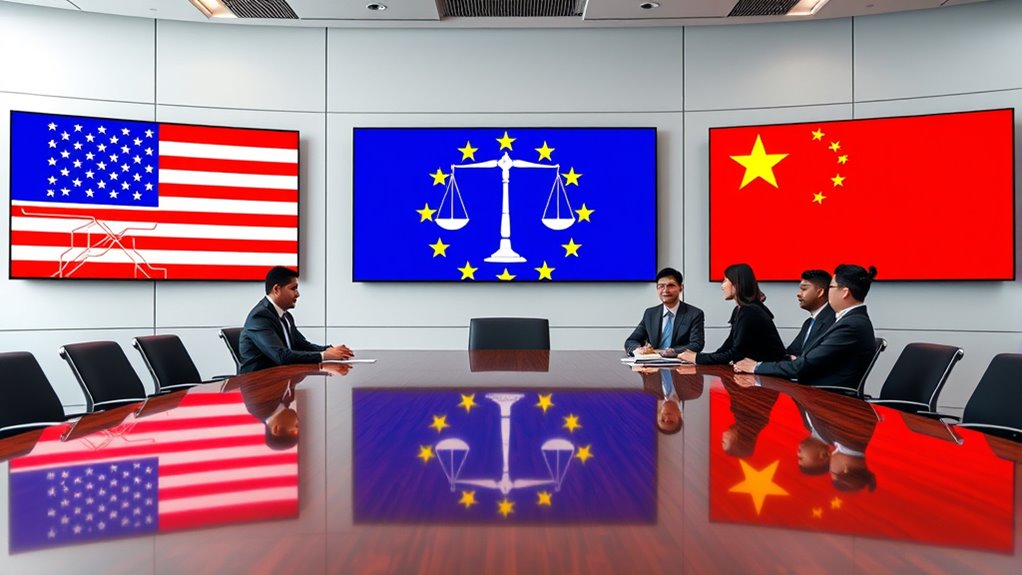
As artificial intelligence continues to advance rapidly, governments worldwide are racing to establish effective regulations. You might wonder how different regions approach this challenge, especially regarding core issues like algorithm transparency and ethical standards. In the US, the focus tends to be on fostering innovation while implementing voluntary guidelines. The government emphasizes transparency by encouraging companies to disclose how their algorithms make decisions, but there’s no strict requirement to do so. This approach aims to strike a balance between encouraging technological growth and addressing potential risks. Ethical standards in the US are often left to industry self-regulation, with some agencies proposing frameworks that promote fairness, accountability, and privacy. However, these are usually non-binding, leaving gaps in oversight. Additionally, the US increasingly recognizes the importance of ethical hacking to identify vulnerabilities and strengthen security measures within AI systems. Recognizing the importance of regulatory frameworks, some US agencies are beginning to explore more formalized approaches to AI oversight, though these are still in development. Moreover, fostering public trust is a key aspect of the US strategy to ensure societal acceptance of AI technologies, even if regulatory measures remain flexible. Furthermore, ongoing discussions about international cooperation reflect an understanding that AI’s global impact requires collaborative efforts to establish effective standards. In contrast, the European Union adopts a more extensive and precautionary approach. They prioritize algorithm transparency by proposing regulations that compel companies to provide clear explanations of how AI systems operate, especially when decisions significantly impact individuals’ lives. The EU’s AI Act aims to create strict guidelines that classify AI applications based on risk levels, with high-risk systems subject to rigorous oversight. Ethical standards are embedded into their regulatory framework, emphasizing human oversight, non-discrimination, and respect for fundamental rights. The EU’s approach reflects a desire to prevent harm proactively and promote trustworthy AI, even if it means slower deployment of certain technologies. Meanwhile, China’s approach centers on government control and strategic development. You’ll notice that China emphasizes national security, social stability, and economic growth through AI regulation. The government mandates that companies align their AI systems with state interests, often requiring extensive data sharing and compliance with government standards. Algorithm transparency isn’t prioritized in the same way as in the EU; instead, the focus is on ensuring that AI operates within the parameters set by authorities. Ethical standards are often aligned with state policies, emphasizing social harmony and collective benefits over individual rights. This approach allows China to rapidly develop and deploy AI technologies but raises concerns about oversight, privacy, and potential misuse. Each region’s approach reflects its unique priorities and values. The US values innovation and flexibility, the EU emphasizes safety and fundamental rights, and China prioritizes control and strategic growth. As you consider the future of AI regulation, understanding these differing philosophies helps you grasp how global policies might evolve and influence the development and deployment of artificial intelligence worldwide.

AI Laptop Docking Station with Dual 4K Monitor, Language Translator & Voice Transcription Dock, TOPOINT 7-in-1 USB C Hub 100W PD Charging for MacBook Dell HP, Home Office Remote Work Business Travel
- 3-in-1 Functionality: Docking, voice recording, AI tools
- Dual 4K Monitor Support: Supports two 4K@60Hz HDR displays
- Enhanced Productivity: Extended and duplicate display modes
As an affiliate, we earn on qualifying purchases.
As an affiliate, we earn on qualifying purchases.
Frequently Asked Questions
How Do Cultural Differences Influence AI Regulation in These Regions?
Cultural differences shape how regions approach AI regulation. Your region’s cultural values influence regulatory philosophies, emphasizing safety, privacy, or innovation. For example, in the US, a focus on market freedom leads to flexible regulations. The EU prioritizes privacy and ethical standards, reflecting its cultural values. Chinese approaches often align with state control and societal stability. These cultural influences directly impact how strict or lenient AI regulations are in each region.
What Are the Potential Economic Impacts of Each Regulatory Approach?
Imagine a world where your business thrives because of smart regulation. The US’s emphasis on innovation incentives might boost market competitiveness, encouraging rapid growth and technological breakthroughs. Meanwhile, the EU’s cautious approach could slow innovation but ensure stability, possibly limiting short-term gains. China’s strict rules may foster a controlled environment, potentially attracting investment but risking reduced competitiveness. Your success depends on steering these diverse regulations to capitalize on opportunities.
How Are Small Startups Affected by These Varying Regulations?
You might find that varying regulations impact your startup funding opportunities and innovation hurdles differently. In strict environments like the EU, you could face more compliance costs, slowing growth. In the US, flexible rules might boost funding but lead to higher risks. Chinese regulations can be unpredictable, affecting your ability to innovate smoothly. Overall, regulatory differences shape your startup’s ability to scale, secure funding, and navigate innovation challenges effectively.
What Role Does Public Opinion Play in Shaping AI Policies?
Public opinion plays a crucial role in shaping AI policies because your engagement can influence policymakers‘ decisions. When you voice your concerns or support for certain regulations, it helps prioritize issues like privacy and safety. Active public engagement increases awareness and can sway policy influence, ensuring that AI development aligns with societal values. Your feedback encourages transparency, accountability, and responsible AI innovation, making your voice a essential part of the policymaking process.
How Might Future Technological Advancements Alter Current Regulations?
Imagine your regulatory framework as a ship steering stormy seas; technological evolution is the wind pushing it forward. As innovations surge, you’ll need to adapt regulations swiftly to stay afloat. Future advancements could introduce new risks or opportunities, prompting regulatory adaptation. Staying flexible and proactive ensures your policies keep pace, guiding safe and responsible AI development amid rapid change. You lead this journey, steering through innovation’s unpredictable tides.

Trust.: Responsible AI, Innovation, Privacy and Data Leadership
As an affiliate, we earn on qualifying purchases.
As an affiliate, we earn on qualifying purchases.
Conclusion
As you explore these regulatory landscapes, you’ll notice each region gently balances innovation with caution, guiding AI’s growth with distinct yet thoughtful measures. The US favors flexibility, the EU emphasizes safeguards, and China blends progress with oversight. While their paths differ, all aim to foster a future where AI serves society harmoniously. By understanding these approaches, you’re better equipped to appreciate the subtle dance shaping AI’s responsible evolution across the globe.

AI Hacking Tools – Essentials for Ethical Hacking (Exam: 312-50): 1st Edition – 2025
As an affiliate, we earn on qualifying purchases.
As an affiliate, we earn on qualifying purchases.

Machine Learning for High-Risk Applications: Approaches to Responsible AI
As an affiliate, we earn on qualifying purchases.
As an affiliate, we earn on qualifying purchases.