

Intelligence oversight bodies play a crucial role in safeguarding civil liberties by monitoring agency actions, but their effectiveness often falls short. Limited authority, political interference, and a lack of transparency weaken their ability to hold agencies accountable. Resources and independence are essential for success, yet many oversight groups struggle against these obstacles. To truly understand how these bodies can better protect your rights and where they fall short, there’s more to uncover beyond this overview.
Key Takeaways
- Effectiveness depends on independence, transparency, and adequate resources to monitor and hold intelligence agencies accountable.
- Political interference and limited authority often undermine oversight bodies’ ability to prevent abuses.
- Reforms and increased transparency are essential to adapt oversight to digital surveillance and data collection challenges.
- Oversight success varies globally, with some agencies more effective due to stronger legal frameworks and public trust.
- Citizens’ support and continuous reforms are crucial for maintaining oversight effectiveness and safeguarding civil liberties.
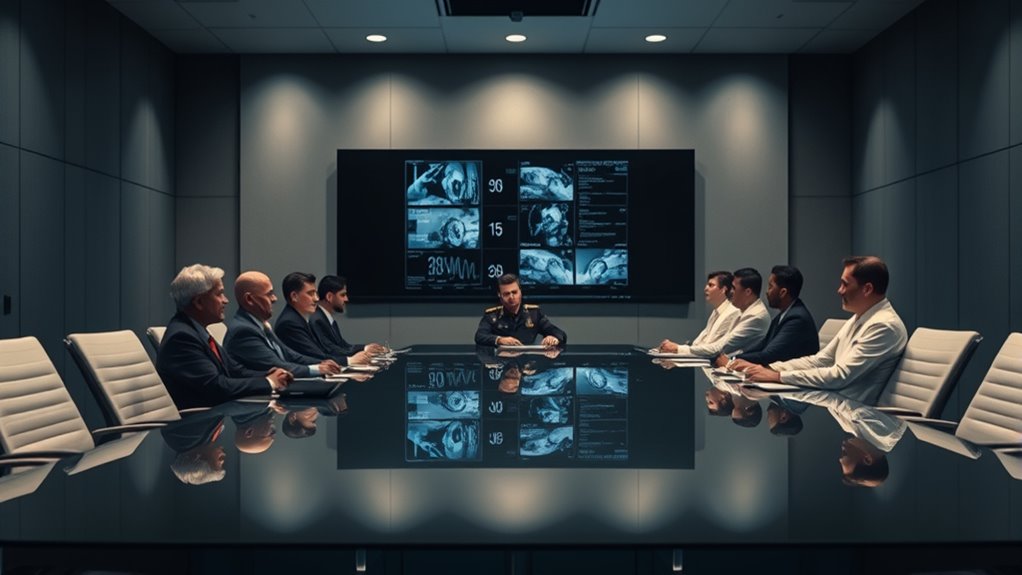
Have you ever wondered who keeps an eye on those in power? “Watching the Watchers” explores the essential role of oversight agencies and watchdog organizations that monitor government and corporate actions. These bodies are tasked with ensuring transparency, preventing abuse, and holding powerful entities accountable. But their effectiveness often depends on how well they can navigate complex political landscapes and resist pressures to become ineffective or compromised. Surveillance accountability is a core challenge. When intelligence agencies conduct surveillance, oversight bodies must verify that these activities stay within legal and ethical boundaries. Without proper oversight reforms, there’s a risk that surveillance becomes unchecked, leading to privacy violations and erosion of civil liberties. Reforms aim to strike a balance—empowering watchdogs to scrutinize surveillance practices while safeguarding national security interests. In recent years, calls for oversight reforms have grown louder, especially following revelations of mass data collection and secret surveillance programs. These reforms seek to clarify the scope of oversight authority, improve transparency, and ensure independent review. Yet, implementation remains uneven. Some oversight agencies are hampered by limited resources, lack of authority, or political interference, which diminishes their capacity to hold governments or corporations accountable effectively. You might wonder if these agencies truly serve as watchdogs or merely rubber-stamp government policies. Success depends on their independence, transparency, and the public’s trust. When oversight bodies operate with genuine authority and are protected from political pressure, they can uncover misconduct, expose abuses, and push for necessary reforms. Additionally, providing adequate funding and resources is crucial for their effectiveness in carrying out thorough investigations. Conversely, if they are sidelined or ignored, abuses continue unchecked. The ongoing debate revolves around how best to strengthen these agencies through oversight reforms—whether by granting more powers, increasing transparency, or ensuring political independence. Ultimately, the effectiveness of intelligence oversight bodies hinges on their ability to adapt to new threats and challenges while maintaining accountability. They must evolve alongside technological advances, such as digital surveillance and data mining, which complicate oversight efforts. Your role as a citizen involves supporting transparency initiatives and demanding accountability from those entrusted with surveillance powers. Strong oversight reforms are crucial for ensuring that watchdogs can fulfill their purpose without overreach or neglect. Without continuous improvement and vigilance, the very institutions meant to protect democratic values risk becoming ineffective or even counterproductive. The question remains: can oversight agencies truly keep government and corporate actors in check, or do they need further reform to serve as true guardians of accountability? The path forward depends on your engagement and the ongoing commitment to transparency, oversight accountability, and meaningful reforms.

Tapo 2K Indoor/Outdoor Pan/Tilt Wired Security Camera – Baby Monitoring, Person & Baby Cry Detection, 360° Motion Tracking, Night Vision, No-Subscription Local Storage or Optional Cloud, C216 (2-Pack)
- High-Resolution 2K Live View: Detailed 3MP clarity with zoom
- Indoor/Outdoor Durable Design: IP65-rated, weatherproof for versatile placement
- AI-Powered Detection Alerts: Person, motion, and baby cry notifications
As an affiliate, we earn on qualifying purchases.
As an affiliate, we earn on qualifying purchases.
Frequently Asked Questions
How Do Oversight Bodies Gain Access to Classified Intelligence Information?
You gain intelligence access through a rigorous clearance process, requiring classified clearance levels that match the sensitivity of the information. Oversight bodies are granted access via secure channels, following strict protocols and legal authority. They review classified intelligence to make certain proper use, and this access is tightly controlled, with regular audits and oversight to prevent misuse. Your role involves maintaining confidentiality while ensuring transparency and accountability in intelligence operations.
What Legal Protections Do Oversight Officials Have Against Retaliation?
In the days of yore, your oversight role is shielded by legal immunity and whistleblower protections, ensuring you can’t be easily retaliated against. These protections help you speak out without fear of reprisal, safeguarding your position when exposing misconduct. While not absolute, they provide a strong legal shield, encouraging transparency and accountability. You can act confidently, knowing laws are in place to protect you from retaliation for doing your duty.
How Often Are Oversight Reports Made Available to the Public?
You’ll find that oversight reports are typically made available to the public periodically, with the report frequency varying depending on the agency or country. Many prioritize public transparency by releasing summaries or full reports regularly, such as annually or semi-annually. This consistent reporting helps guarantee accountability, allowing citizens and officials to stay informed about intelligence activities. The frequency aims to balance transparency with national security considerations.
What Are the Most Common Challenges Oversight Bodies Face?
Like a ship battling stormy seas, oversight bodies face turbulent challenges. Bureaucratic inertia often slows progress, making change feel like pushing a boulder uphill. Resource limitations act as anchor weights, restricting thorough investigations and oversight. These hurdles can cause oversight to drift off course, reducing effectiveness. Overcoming bureaucratic resistance and securing better resources are essential steps to keep these bodies afloat and guarantee they effectively check intelligence agencies.
Can Oversight Bodies Independently Initiate Investigations Into Intelligence Agencies?
Yes, oversight bodies can independently initiate investigations into intelligence agencies, thanks to their independent authority and investigative powers. You have the ability to scrutinize agency activities without needing prior approval from other government branches. This independence guarantees accountability and transparency, allowing oversight bodies to act swiftly when suspicions arise. However, their effectiveness depends on legal frameworks, political support, and the willingness to exercise these powers confidently.
![ESET Small Business Security | 2025 Edition | 5 Devices | 1 Year | Small Business Software | Server Protection | VPN | Ransomeware | Privacy | IOT Protection | Digital Download [PC/Mac/Android]](https://m.media-amazon.com/images/I/51OF1HkmEdL._SL500_.jpg)
ESET Small Business Security | 2025 Edition | 5 Devices | 1 Year | Small Business Software | Server Protection | VPN | Ransomeware | Privacy | IOT Protection | Digital Download [PC/Mac/Android]
- Server Protection: Protects Windows servers and network storage
- Ransomware Shield: Blocks ransomware and malware threats
- Anti-Theft: Tracks and manages lost or stolen devices
As an affiliate, we earn on qualifying purchases.
As an affiliate, we earn on qualifying purchases.
Conclusion
Ultimately, your confidence in intelligence oversight bodies hinges on whether they truly hold power or just peek behind the curtain. If they’re only window dressing, they’re playing a dangerous game—like a fox guarding the henhouse. When oversight is genuine and transparent, it acts as a check that keeps the system honest. But if they’re just going through the motions, you’re left in the dark, trusting the watchers without knowing if they’re watching out for you or themselves.

Everybody Has Something to Hide: Why and How to Use Signal to Preserve Your Privacy, Security, and Well-Being
As an affiliate, we earn on qualifying purchases.
As an affiliate, we earn on qualifying purchases.

Windows Hello Fingerprint Reader for Windows 11 10, Offline Physical Security Vault for PC, USB Biometric Fingerprint Scanner, 360° Touch Secure Login & Data Encryption Device for Laptop Sliver
- Offline Physical Vault: Secure offline biometric data storage
- Fast 0.1s Unlock: Instant fingerprint recognition from any angle
- 360° Touch Sensor: High-sensitivity capacitive fingerprint scanner
As an affiliate, we earn on qualifying purchases.
As an affiliate, we earn on qualifying purchases.