

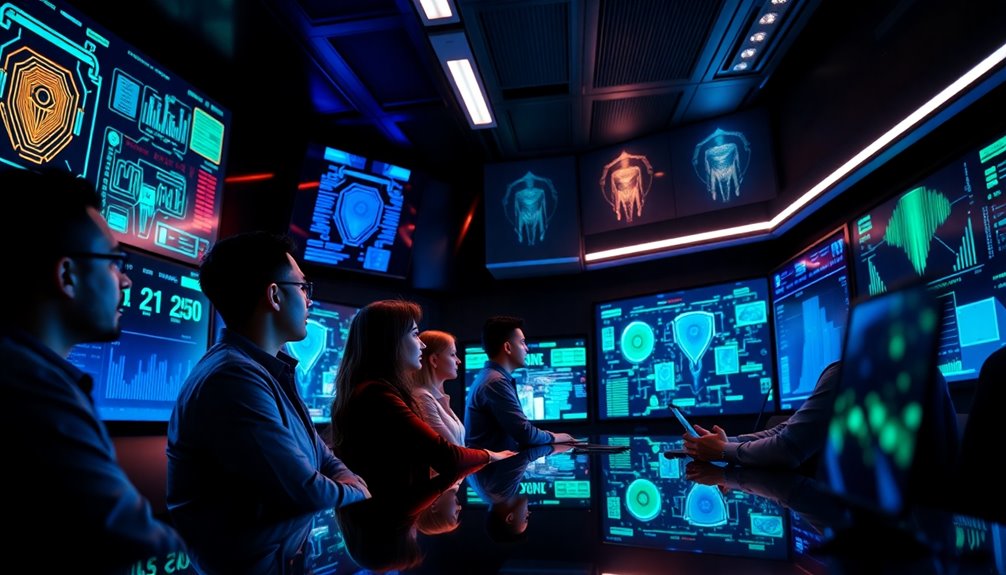
As cyber threats become increasingly sophisticated, leveraging artificial intelligence (AI) in cybersecurity is no longer just an option—it’s a necessity. You need to understand that AI simulates human intelligence, allowing systems to analyze massive amounts of data, identify patterns, and detect anomalies in real-time. This capability is crucial as traditional methods struggle to keep pace with the complexity of modern cyber attacks.
AI-powered systems excel at threat detection. They can identify intricate attack patterns and respond swiftly to novel threats, minimizing potential damage. By using predictive insights, AI helps you assess risks before they become liabilities, enabling proactive risk management. This forward-thinking approach is vital for maintaining robust security in your organization. Additionally, AI algorithms can analyze customer sentiment to enhance service offerings, further supporting your overall security strategy.
AI-powered systems enhance threat detection, enabling proactive risk management and swift responses to emerging cyber threats.
Moreover, AI automates incident response processes, which means you can mitigate threats faster and more efficiently. Instead of relying solely on manual interventions, AI streamlines tasks like patch management and vulnerability prioritization based on potential impact. This not only saves time but also reduces the chances of human error—an often overlooked factor in cybersecurity breaches.
The market for AI in cybersecurity is booming. Valued at $17 billion in 2022, it’s projected to reach an astounding $102 billion by 2032. This growth indicates a strong trend toward integrating AI into cybersecurity frameworks, reinforcing its importance in today’s digital landscape.
You can leverage AI applications for various purposes, including threat management and anomaly detection, using pattern recognition to identify unusual activity that may signal a potential attack. AI systems continuously learn from new data, improving their accuracy in identifying vulnerabilities. This capability allows for real-time responses, such as blocking malicious traffic before it causes harm.
By quantifying financial risks, AI aligns cybersecurity measures with broader business goals, making it easier for you to justify investments in security technologies. Looking ahead, AI-enhanced tools will continue to evolve. Future systems, incorporating machine learning and neural networks, will act autonomously, similar to self-driving cars. This transformation will help you tackle sophisticated threats that conventional systems may overlook. AI algorithms utilize data patterns to make predictions and decisions, further enhancing threat detection processes.
Government agencies, like CISA, are already adopting AI to enhance their cybersecurity capabilities. They promote principles such as secure-by-design software development and collaborate internationally to establish best practices.
As you embrace AI in your cybersecurity strategy, remember that it’s not just a tool—it’s a critical partner in your defense against the ever-evolving landscape of cyber threats.
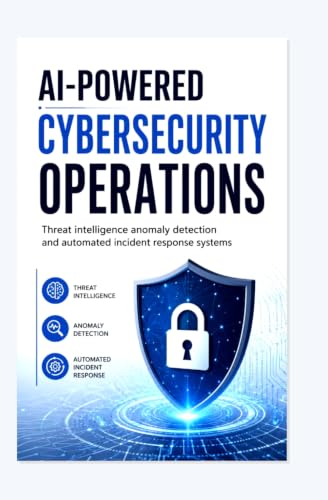
AI-POWERED CYBERSECURITY OPERATIONS: Threat intelligence anomaly detection and automated incident response systems
As an affiliate, we earn on qualifying purchases.
As an affiliate, we earn on qualifying purchases.