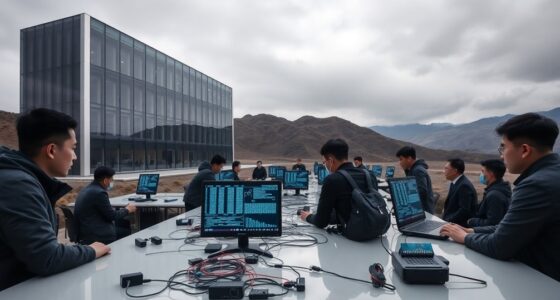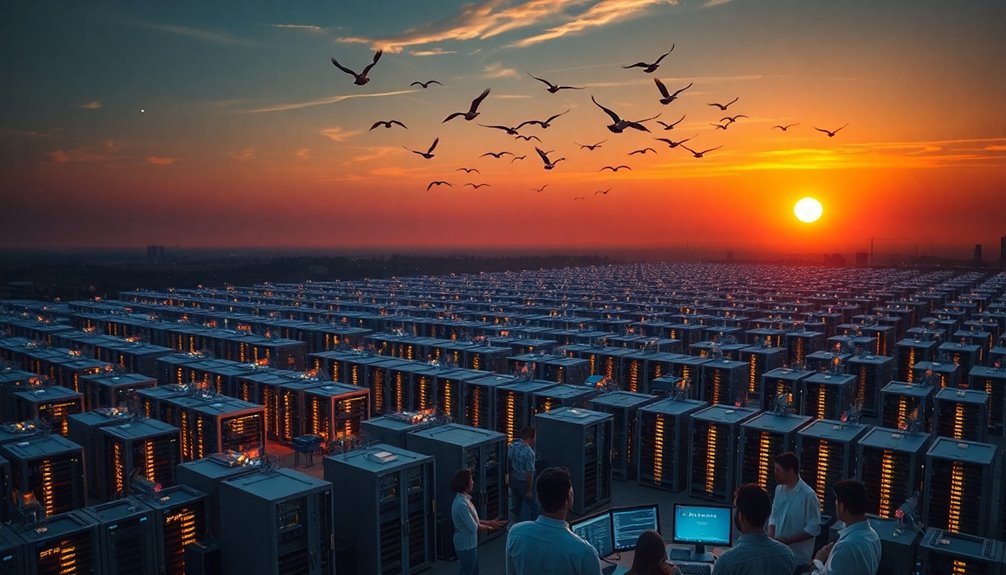


As the global demand for data centers surges, you may wonder how this rapid growth is reshaping the industry. The data center market is projected to hit a staggering $1 trillion by 2027, largely driven by advancements in AI and related technologies.

Get privacy and security gear delivered free — and shop member deals
- Fast, free delivery on millions of items
- Access to Prime Big Deal Days deals on October 6–7
- Prime Video, Amazon Music and more included
The data center market is set to reach $1 trillion by 2027, fueled by AI advancements and surging global demand.
With about 11,800 data centers in operation worldwide as of March 2024, you can see how the landscape is evolving. The U.S. stands out with 5,381 facilities, representing over 40% of the global market share. However, this growth comes at a significant cost: data centers consumed 7.4 GW of power in 2023, marking a 55% increase from the previous year.
Your interest in data center capacity is timely; global demand is expected to rise at an annual rate of 19-22% through 2030. This surge in demand isn’t just for new centers but also for increased power. By 2028, the energy consumption of data centers is projected to grow at approximately 16% annually, with GenAI-related computing leading the charge, expected to account for 60% of total growth in power demand.
Hyperscalers, the giants of the industry, will drive around 60% of this growth from 2023 to 2028. Training advanced AI models, such as ChatGPT, consumes significant energy, often exceeding 80 kW per rack. With Nvidia’s latest chips potentially requiring even higher densities, the push for AI-ready data centers is more crucial than ever.
The average demand is escalating at a remarkable 33% annually, while inferencing workloads are skyrocketing at 122%. However, these developments pose challenges. By 2030, data centers could account for up to 12-13% of the U.S. power grid’s output, necessitating innovative approaches to energy efficiency. AI-ready capacity demand is expected to rise 33% annually, making up 70% of total demand by 2030.
The average power density in data centers has more than doubled over the past two years, reaching 17 kW per rack, which highlights the urgent need for sustainable operations. You might find it concerning that the rapid growth could lead to a supply deficit unless capacity is expanded swiftly.
The U.S. alone risks a shortfall of over 15 GW by 2030, with vacancy rates in major markets hitting record lows. The call for unity in addressing these infrastructure challenges is clear. Hyperscalers and other industry players must collaborate and invest heavily to meet this relentless demand, ensuring a balanced and sustainable future for data centers in a world that increasingly relies on digital infrastructure.
high density data center racks
As an affiliate, we earn on qualifying purchases.
As an affiliate, we earn on qualifying purchases.
Fall Picks
fall essentials
As an affiliate, we earn on qualifying purchases.