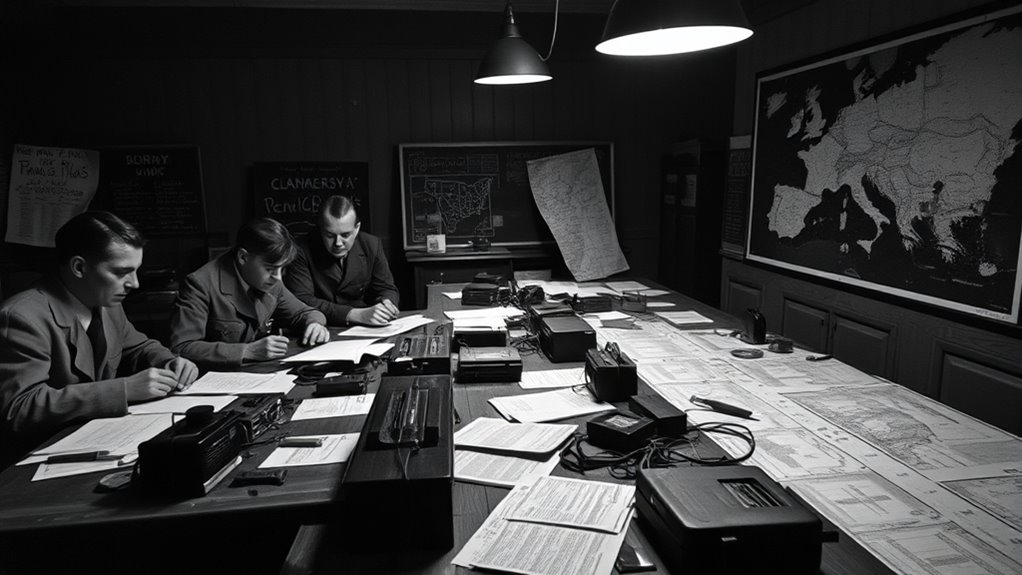

The journey from the OSS to the CIA marks the birth of America’s powerful intelligence empire. During WWII, the OSS focused on covert operations, espionage, and secure communication. After the war, the CIA was created to formalize these efforts, expanding into signals intelligence and clandestine activities worldwide. This evolution shifted from wartime improvisation to a sophisticated, permanent agency built on technological advances in cryptography and secrecy. Stay with us to uncover how these changes shaped U.S. intelligence today.
Key Takeaways
- The OSS was created during WWII to coordinate espionage and sabotage against Axis powers, emphasizing secrecy and covert operations.
- Advances in cryptography during WWII improved secure communication and intelligence gathering, laying groundwork for future agencies.
- Post-war, the OSS evolved into the CIA in 1947, formalizing and expanding U.S. intelligence efforts globally.
- The CIA inherited OSS’s focus on covert activities, signal intelligence, and cryptography, evolving into a structured, permanent agency.
- Modern intelligence relies on technological advances from OSS era, maintaining capabilities in cryptography, signals, and covert operations.
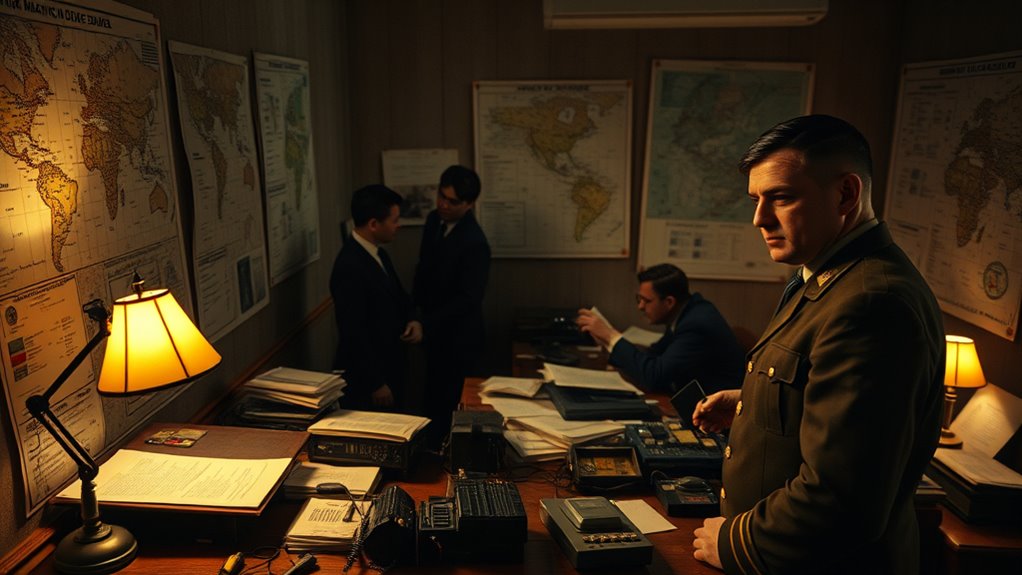
Have you ever wondered how the Office of Strategic Services (OSS) evolved into today’s Central Intelligence Agency (CIA)? It’s a story rooted in the rapid development of intelligence techniques and the need for secrecy during wartime. The OSS was created during World War II to coordinate espionage, sabotage, and other covert operations against the Axis powers. As the war progressed, the importance of secure communication grew exponentially. This led to a cryptographic evolution—advances in code-making and code-breaking that became central to intelligence work. Cryptography transformed from simple cipher methods into sophisticated systems that kept sensitive information safe from enemy interception. These cryptographic improvements were essential because they allowed agents to communicate covertly, ensuring that strategic plans and intelligence reports reached their destinations without compromise.
Meanwhile, the OSS’s reliance on covert operations laid the groundwork for a more permanent intelligence structure. These covert activities, often secret and risky, proved invaluable for gaining strategic advantages and gathering intelligence behind enemy lines. But after the war, it became clear that the U.S. needed a dedicated agency to handle intelligence matters systematically. The shift wasn’t just about creating a new organization; it was about institutionalizing a culture of secrecy, analysis, and covert action. When the CIA was officially established in 1947, it inherited the OSS’s focus on covert operations and cryptographic expertise, but it also expanded these efforts into a broader intelligence apparatus. The CIA’s role grew to include signal intelligence, human espionage, and clandestine activities worldwide.
The evolution from OSS to CIA reflects a change from ad hoc wartime intelligence to a permanent, structured intelligence empire. The CIA’s development was driven by technological advances in cryptography and a strategic emphasis on covert operations. These elements allowed the agency to operate discreetly and effectively in a complex global landscape. You can see this legacy today in the CIA’s ability to conduct covert missions, intercept communications, and analyze signals from enemies and allies alike. The cryptographic evolution continues to be essential, with new encryption techniques and cyber intelligence becoming central to modern espionage. The foundation laid by the OSS’s wartime efforts has grown into a sophisticated intelligence network capable of shaping world events from behind the scenes. So, the story from OSS to CIA is really about how technological, strategic, and organizational changes transformed American intelligence into a powerful, secretive force. Additionally, cryptographic techniques have played a crucial role in maintaining the security and integrity of communications across decades of evolving threats.
Full Stack Python Security: Cryptography, TLS, and attack resistance

A comprehensive guide to Python security, covering cryptography, TLS, and attack resistance techniques.
As an affiliate, we earn on qualifying purchases.
As an affiliate, we earn on qualifying purchases.
Frequently Asked Questions
How Did OSS Influence Modern Intelligence Agencies?
You see, OSS heavily influenced modern intelligence agencies through its innovative espionage techniques and organizational restructuring. Its emphasis on covert operations, signals intelligence, and undercover work set a standard for agencies like the CIA. You can trace many of today’s methods and structures back to OSS’s pioneering efforts, which shaped how intelligence work is conducted worldwide. This legacy guarantees agencies stay adaptable, secretive, and efficient in their missions.
What Were the Key Challenges Faced During the Transition From OSS to CIA?
Imagine you’re managing a high-stakes covert op during the 1940s, and suddenly, you face Agency restructuring. The key challenges include integrating diverse intelligence units into a unified CIA, overcoming bureaucratic resistance, and establishing clear oversight. You must balance secrecy with accountability while adapting to new technologies and Cold War tensions. These hurdles test your leadership, requiring strategic coordination to ensure seamless intelligence flow and national security.
Who Were the Main Architects Behind the Cia’s Formation?
You should know that the main architects behind the CIA’s formation were intelligence pioneers like Allen Dulles and policymakers such as President Harry Truman. These policy architects envisioned a centralized intelligence agency, building on OSS’s legacy. Dulles played an essential role in shaping operational strategies, while Truman authorized the establishment. Together, they combined vision and authority, transforming intelligence efforts into a permanent, organized national security institution.
How Did International Relations Shape the Evolution of America’s Intelligence Empire?
Did you know that during the Cold War, over 60% of U.S. intelligence operations focused on diplomatic espionage? International relations heavily shaped America’s intelligence evolution, as Cold War dynamics pushed the CIA to adapt quickly, prioritize covert missions, and expand its global reach. You can see how diplomatic tensions and alliances drove innovation in espionage techniques, making the intelligence empire a crucial tool in maintaining American influence worldwide.
What Covert Operations Defined the Early Cia’s Reputation?
You see, the early CIA built its reputation through daring covert operations like espionage scandals and covert sabotage. Operations such as the 1953 Iran coup and the Guatemala invasion showcased their ability to influence foreign governments secretly. These actions established a reputation for boldness and clandestine influence, demonstrating their willingness to engage in covert sabotage and espionage to protect American interests worldwide.
Conclusion
So, here you are, witnessing the grand evolution from OSS to CIA, a true demonstration to America’s knack for turning secret agents into household names—sort of like a spy-themed makeover show. As you marvel at this “empire,” remember, behind every cloak-and-dagger moment, there’s probably a team secretly laughing at how they turned espionage into a national pastime. Welcome to the world where secrets are currency, and transparency is just a myth we gladly buy into.