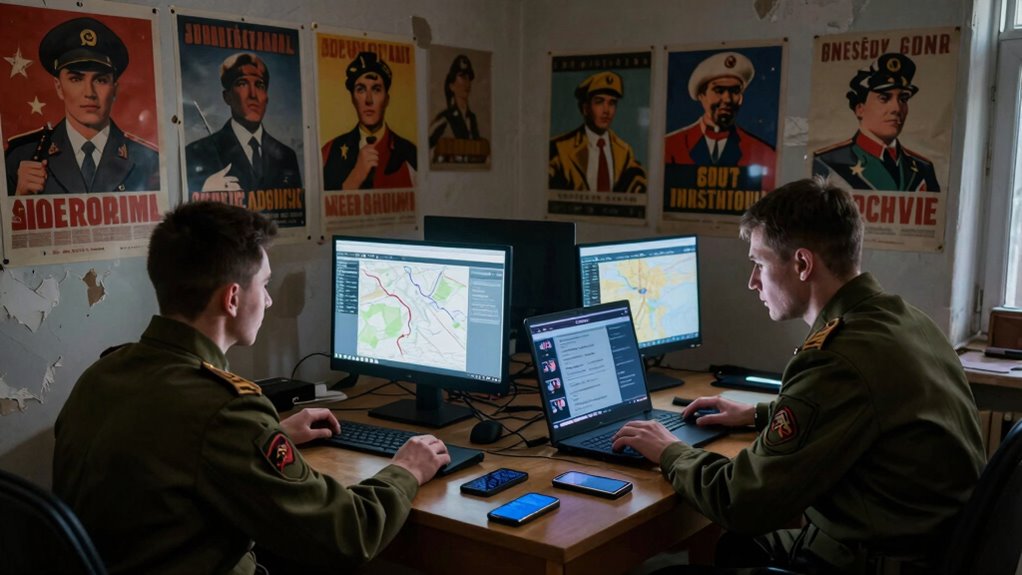

Soviet active measures laid the foundation for modern influence tactics by using propaganda, infiltration, and psychological warfare to shape public opinion and undermine opponents. Today, these methods have evolved into sophisticated disinformation campaigns on digital platforms, combining cyber espionage with social media manipulation. The core principles of covert influence and perception shaping remain intact, now amplified by technology. If you look deeper, you’ll see how these strategies continue to influence global events today.
Key Takeaways
- Soviet active measures pioneered propaganda, deception, and infiltration techniques that laid the foundation for modern influence campaigns.
- Digital platforms amplified Soviet strategies, enabling rapid spread of disinformation and increased targeting precision.
- Technological advancements integrated cyber espionage with traditional disinformation, creating multi-layered influence operations.
- Core principles like perception management and covert intelligence gathering remain consistent in contemporary tactics.
- Modern influence playbooks adapt Soviet methods with sophisticated tools, making disinformation more effective and harder to detect.
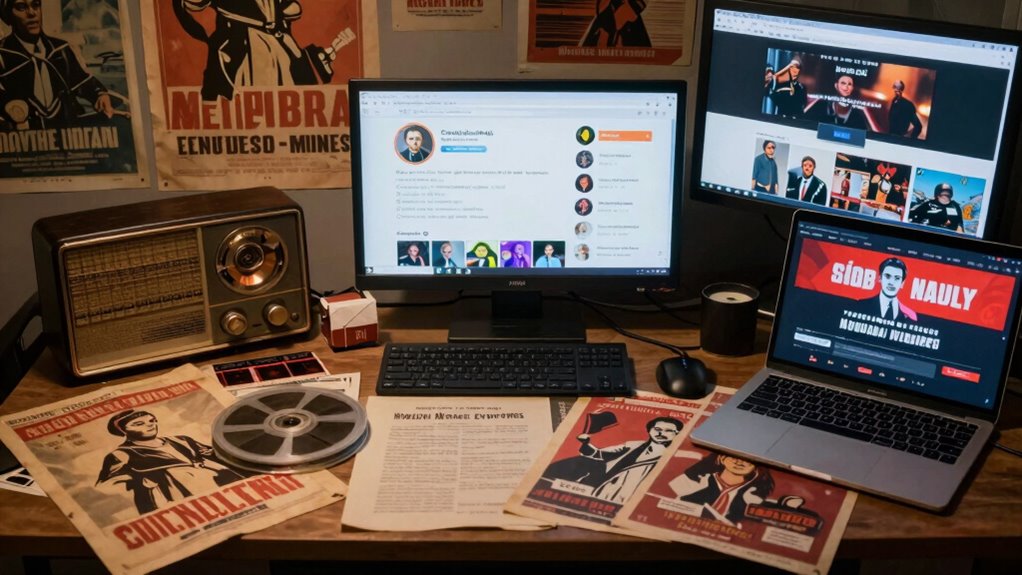
Disinformation campaigns have also been a cornerstone of Soviet influence efforts. Back then, they spread false narratives through propaganda, infiltrate media outlets, and manipulate public perceptions to serve Soviet interests. These campaigns aimed to undermine rival ideologies, create distrust, and influence elections or policy decisions. Fast forward to today, and you see the same principles at work but amplified by digital platforms. Social media and online forums now serve as battlegrounds for disinformation, enabling rapid dissemination of false or misleading information to large audiences. These campaigns are designed to sow discord, shape public opinion, and destabilize adversaries from within. The proliferation of digital platforms has allowed these tactics to evolve into complex, multi-layered operations that are harder to detect and counter. What’s striking is how these tactics have become more sophisticated and integrated into the strategies of modern states. The Soviets laid the groundwork with their focus on psychological warfare and covert operations, and today’s actors build on that foundation with advanced technology. They combine cyber espionage with disinformation, creating a layered approach that’s difficult to counter. You can see this in recent elections, international conflicts, and geopolitical tensions, where state-sponsored operations try to influence outcomes by manipulating information and stealing secrets. Recognizing the importance of information warfare helps to understand the full scope of these influence campaigns. A deeper understanding of disinformation techniques reveals how they are tailored to exploit vulnerabilities in digital environments. Understanding this evolution helps you recognize the continuity in influence tactics. The core principles remain the same: gather intelligence covertly, spread disinformation to shape perceptions, and exploit vulnerabilities in the digital age. These evolving tactics demonstrate the necessity for robust countermeasures and awareness of information manipulation techniques used by adversaries. The methods have become more refined, but the goal stays consistent—expand influence, weaken adversaries, and secure strategic advantages. The legacy of Soviet active measures lives on, now embedded in an era dominated by cyber warfare and information manipulation, shaping global geopolitics in ways that are often invisible but profoundly impactful.
PowerShell Automation and Scripting for Cybersecurity: Build Security Tools, Automate Threat Detection, and Strengthen Defense Systems with PowerShell
As an affiliate, we earn on qualifying purchases.
As an affiliate, we earn on qualifying purchases.
Frequently Asked Questions
How Did Soviet Tactics Adapt After the Cold War Ended?
After the Cold War, Soviet tactics adapted by transforming disinformation networks into more sophisticated tools of covert propaganda, blending traditional espionage with modern digital strategies. You might notice these tactics now involve social media manipulation, fake news, and targeted messaging to influence public opinion subtly. Instead of overt operations, they focus on covert methods that create confusion, sow discord, and sway perspectives without direct confrontation, making influence campaigns more deniable and harder to trace.
What Modern Countries Still Employ Soviet-Style Influence Operations?
You should realize that Russia remains a powerhouse of influence operations, employing tactics that seem straight out of a Cold War playbook. They actively use cyber espionage and propaganda dissemination to sway public opinion and destabilize rivals. Countries like China and North Korea also adopt similar Soviet-style influence strategies, blending cyber tools and information warfare to extend their reach. These nations continue to master influence campaigns, shaping global narratives to serve their interests.
How Do Social Media Platforms Facilitate These Influence Campaigns?
You see social media platforms facilitate influence campaigns by exploiting algorithm vulnerabilities, which prioritize sensational content and engagement. This makes it easier for misinformation to spread rapidly, often without users realizing its origin. By creating fake profiles, spreading false narratives, and amplifying divisive topics, influence operatives manipulate public opinion. The platforms’ algorithms inadvertently support these efforts, making it challenging to distinguish genuine information from coordinated influence campaigns.
Are There Legal Measures to Counteract Influence Operations Today?
Yes, there are legal measures in place today to counteract influence operations. You can rely on legal frameworks that address disinformation, cybercrimes, and election interference. Countermeasures strategies include strengthening regulations on social media platforms, increasing transparency, and prosecuting those who spread false information. These efforts aim to protect democratic processes and guarantee accountability, helping you stay informed and secure against malicious influence campaigns.
How Can Individuals Identify and Resist Influence Campaigns?
Sure, because who doesn’t love falling for disinformation tactics and psychological manipulation? To spot influence campaigns, stay skeptical of sensational headlines or emotional appeals. Cross-check facts with reputable sources, and question the motives behind messages. Remember, it’s a game of deception—so, stay alert, think critically, and don’t let emotional triggers override your judgment. The best defense? a cautious mind and a healthy dose of skepticism.
Conclusion
As you see, today’s influence tactics are like a shadowy army born from Soviet playbooks, silently weaving through your screens and conversations. What once seemed like simple propaganda has now transformed into a relentless tidal wave, threatening to drown truth itself. You can’t ignore the subtle, yet formidable, evolution of these strategies—it’s as if the very fabric of your reality is being subtly reshaped by an unseen, unstoppable force. Stay vigilant; this battle isn’t over.



![Computer-Aided Language Development in Nonspeaking Children (1968) [pdf]](https://aiespionage.net/wp-content/uploads/2026/06/computer-aided-language-development-in-nonspeaking-children-1968-pdf-featured-560x300.jpg)