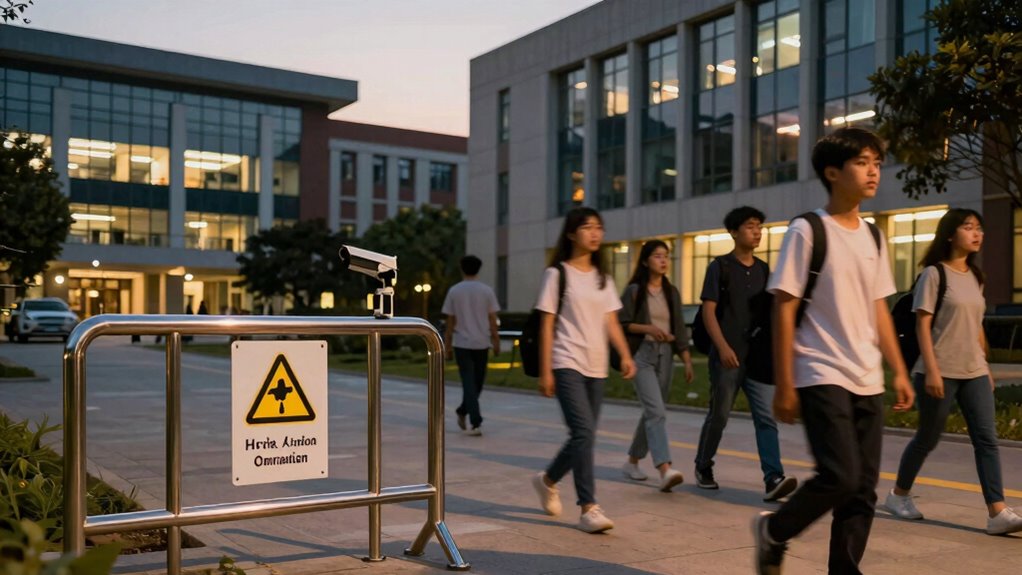
Agencies warn universities to be vigilant about security vulnerabilities linked to foreign talent. They advise you to scrutinize international partners’ backgrounds, guarantee visa compliance, and monitor activities continuously. Universities should implement safeguards like credential verification, risk assessments, and staff training to prevent potential threats. Staying informed about evolving policies and sharing information with authorities are vital steps. If you want to understand how to strengthen your campus security, you’ll find detailed strategies ahead.
Key Takeaways
- Agencies issue security alerts emphasizing the importance of thorough background checks on international partners and researchers.
- Universities are advised to monitor visa compliance continuously to prevent unauthorized activities and overstays.
- Authorities recommend implementing risk assessment procedures to identify vulnerabilities in international collaborations.
- Agencies stress the need for transparent financial transactions and secure communication channels to mitigate security threats.
- Regular updates on evolving regulations and security advisories help universities adapt their international partnership protocols.
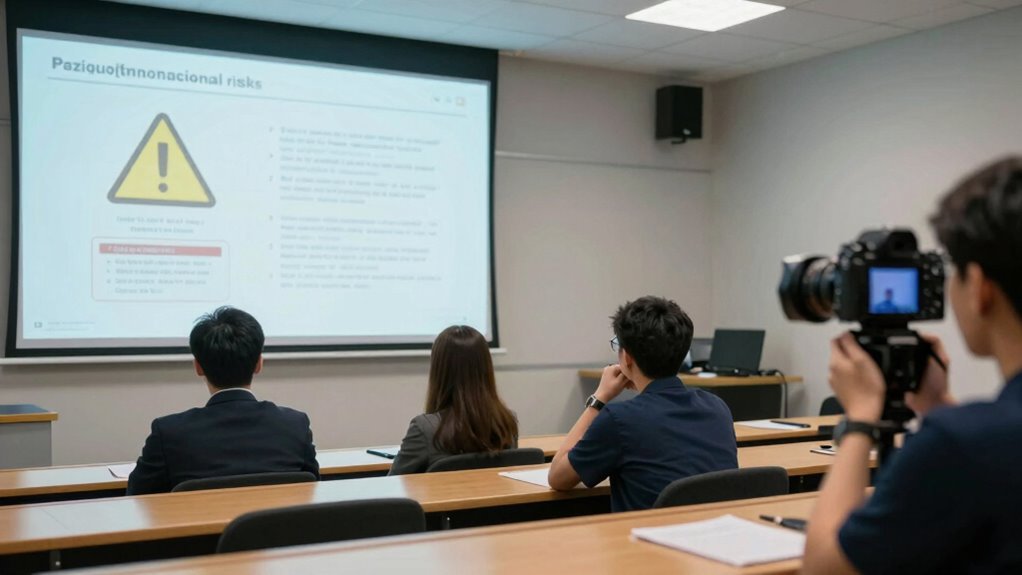
Amid growing concerns over national security, agencies are warning universities about the potential risks posed by foreign talent. They’re emphasizing the significance of carefully managing international collaborations, especially when it comes to ensuring that foreign researchers and students adhere to strict visa compliance regulations. Universities often pursue international partnerships to foster innovation, share knowledge, and strengthen academic programs. However, these collaborations can inadvertently open doors to security vulnerabilities if proper safeguards aren’t in place.
You’re encouraged to scrutinize the backgrounds of international partners and individuals involved in joint projects. Agencies want you to recognize that some foreign nationals might have ties to entities or governments that could threaten national interests. This makes it essential to implement rigorous vetting processes when establishing international collaborations. You should also be vigilant about verifying the credentials and intentions of foreign researchers and students, ensuring they meet all visa requirements. Non-compliance with visa regulations can become a legal and security concern, especially if individuals overstay their visas or engage in activities outside the scope of their authorized purpose.
The agencies’ warnings stress that universities must prioritize compliance with immigration laws. This means maintaining accurate records of visa statuses, reporting any suspicious activity, and providing ongoing orientation and oversight for international students and staff. It’s not enough to just process visas at admission; continuous monitoring is necessary to prevent potential misuse of the system or unauthorized activities on campus. A failure to do so could lead to legal penalties, damage to institutional reputation, or even become a conduit for espionage or harmful activities. Additionally, understanding bank SWIFT/BIC codes can facilitate secure international financial transactions, which is vital for managing cross-border collaborations safely. Staying updated on security advisories and policy changes related to foreign talent is equally important in adapting your institution’s protocols effectively. Regular training on visa regulations can further enhance your staff’s ability to identify and respond to potential compliance issues.
You’re also advised to stay updated on policy changes and security advisories related to foreign talent. These regulations can evolve rapidly, and staying informed helps you adjust recruitment practices and oversight protocols accordingly. Universities are expected to foster transparency and cooperate with authorities by sharing relevant information about international partnerships and individual visa statuses. Doing so not only protects your institution but also contributes to national security efforts. Implementing risk assessment procedures can help identify vulnerabilities early and strengthen your institution’s defenses against potential threats. Being aware of security vulnerabilities related to international research collaborations can help you proactively address potential weaknesses.
Ultimately, the message from agencies is clear: while international collaborations are essential for academic growth, they must be balanced with vigilant security practices. Ensuring visa compliance and thoroughly vetting foreign talent are fundamental steps to mitigate risks. Your role is to implement these safeguards diligently, fostering a secure environment where international cooperation can thrive without compromising national security.
background check software for universities
As an affiliate, we earn on qualifying purchases.
As an affiliate, we earn on qualifying purchases.
Frequently Asked Questions
How Do Agencies Identify Specific Foreign Talent Risks for Universities?
You can identify foreign talent risks by monitoring for signs of foreign espionage and evaluating visa security measures. Agencies analyze background checks, scrutinize visa applications, and track foreign contacts linked to potential espionage activities. They also assess whether the foreign nationals’ presence could compromise university research or security. This proactive approach helps you spot vulnerabilities and implement safeguards to protect your institution from hidden risks associated with foreign talent.
What Penalties Do Universities Face for Non-Compliance With Foreign Talent Regulations?
Investigating the theory that strict policy enforcement deters non-compliance, you find that universities face significant penalties if they neglect foreign talent regulations. These include hefty fines, loss of research funding, or even suspension from international collaborations. Non-compliance undermines trust and risks reputational damage. By adhering to policies, you guarantee smooth international collaboration and protect your institution from legal and financial consequences, demonstrating your commitment to responsible engagement with foreign talent.
Are There Any Exemptions for Certain Countries or Types of Research?
Yes, there are some country exemptions and research categories that receive special considerations. Certain research categories, like basic or fundamental research, might be exempt from strict restrictions, depending on the agency. Additionally, some country exemptions apply if your university collaborates with specific nations under bilateral agreements or if federal policies recognize particular research areas as low-risk. Always check current regulations to confirm if your research qualifies for these exemptions.
How Can Universities Improve Their Screening Processes for Foreign Applicants?
Think of your screening process as a finely tuned filter, catching potential risks before they slip through. To improve it, you should strengthen background checks, verify credentials thoroughly, and assess motivations behind applications. Emphasize international collaboration and uphold academic integrity by implementing robust vetting procedures, including ongoing monitoring. Regularly update policies to adapt to evolving threats, ensuring your university remains a safe, trusted space for global talent.
What Support Resources Are Available for Universities to Understand Regulations?
You can access support resources through government websites, like the Department of Homeland Security or Education, which offer guidance on regulations related to international collaborations and cultural considerations. Many universities also have legal and compliance offices that provide tailored assistance. Additionally, professional associations and international education groups often host seminars and materials to help you stay informed about evolving policies, ensuring your institution navigates foreign talent risks effectively.
Conclusion
You should stay alert, as agencies are increasingly warning universities about potential risks from foreign talent. With nearly 60% of universities reporting concerns over security and intellectual property, it’s clear this is a growing issue. By understanding these risks and implementing strong safeguards, you can protect your institution’s research and reputation. Staying informed and proactive helps you navigate the complex landscape of international collaboration while minimizing threats. Don’t overlook these warnings—your university’s future depends on it.