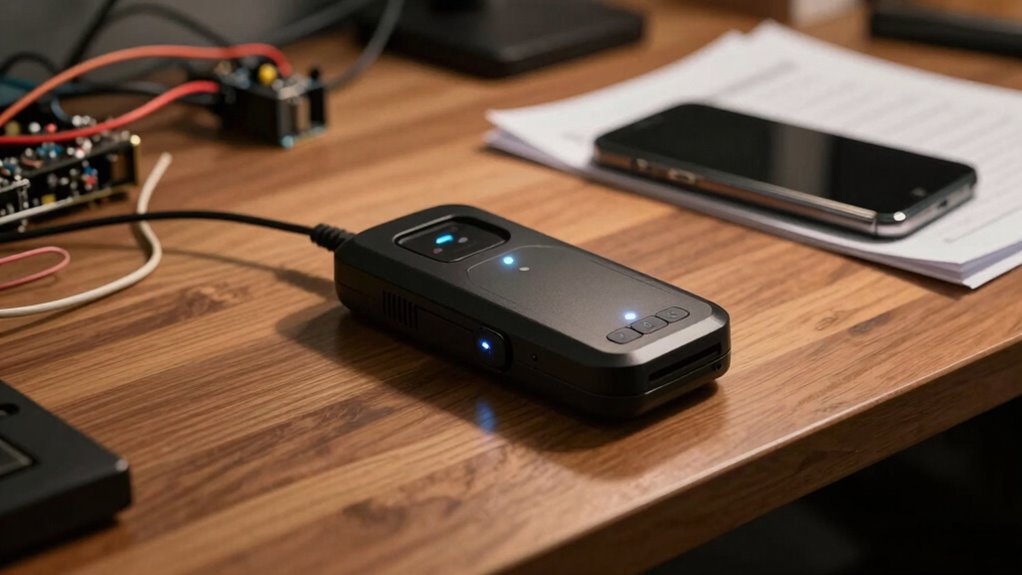

Bug detectors can find active wireless signals from devices like hidden cameras, microphones, Wi-Fi, Bluetooth, or RF transmitters. However, they can’t detect passive devices that don’t emit signals, such as wired-in or dormant equipment. Devices that use advanced encryption or switch off hide signals effectively. Since some bugs are hardwired and silent, they may stay undetected. Knowing these limits helps you better protect your privacy—there’s more to discover if you keep exploring.
Key Takeaways
- Can detect wireless signals from active devices like Wi-Fi cameras and microphones.
- Cannot find passive or wired-in devices that do not emit wireless signals.
- May miss discreet, dormant, or signal-jamming devices designed to be undetectable.
- False positives can occur from household electronics such as routers or printers.
- Effectiveness depends on device sensitivity, range, and proper interpretation of signals.
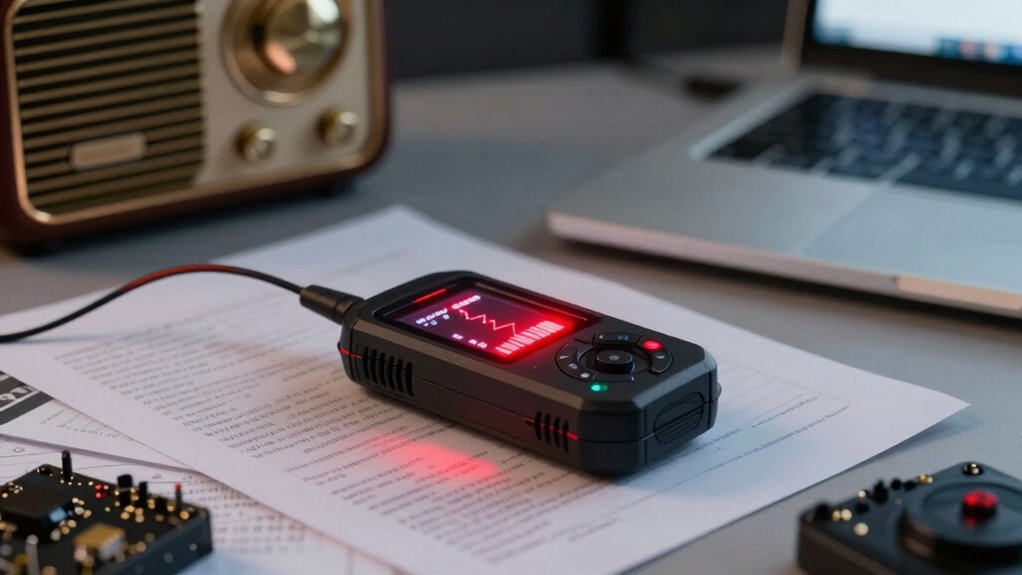
Bug detector devices are popular tools for anyone concerned about privacy invasions or surveillance, but it’s important to understand their limitations. When you’re scanning a room for hidden bugs, these devices primarily detect wireless signals emitted by electronic spying equipment. Many covert devices rely on transmitting data via wireless signals, such as Wi-Fi, Bluetooth, or RF frequencies. If a hidden camera or microphone is actively transmitting, a good bug detector can identify these signals, alerting you to the presence of a potential bug. However, it’s crucial to realize that not all hidden devices rely on transmitting signals. Some are hardwired directly into power sources or are passive, meaning they don’t emit any wireless signals at all. In those cases, a basic bug detector might not pick them up, and you could be left unaware of the surveillance.
Bug detectors work best with active wireless signals but may miss passive or wired devices.
When it comes to hidden cameras, bug detectors can be quite effective if the cameras are transmitting live footage wirelessly. They can detect the signals from wireless cameras by scanning for unusual radio frequency emissions. If you suspect a camera is nearby, running a bug detector that scans for common camera frequencies can help you locate it. But many hidden cameras are now designed to be discreet and may not emit detectable signals, especially if they’re connected to a wired power source or use advanced encryption and signal-jamming techniques. In such cases, even the most sophisticated bug detector might not find them. It’s also important to remember that some passive devices do not emit signals at all, which makes detection even more challenging. Additionally, some devices can switch off or hide their signals when they detect a scan, adding to the difficulty of detection. Understanding the limitations of bug detectors can help you set realistic expectations when trying to safeguard your privacy. Furthermore, advancements in surveillance technology continue to evolve, making detection increasingly complex. Staying informed about the latest detection methods and technological advancements can help improve your chances of identifying covert surveillance.
You should also be aware that bug detectors aren’t foolproof. They can sometimes produce false positives by picking up signals from harmless devices like Wi-Fi routers, wireless printers, or other household electronics. This means you need to interpret findings carefully and not jump to conclusions just because your device detects a signal. Furthermore, some bug detectors may have limitations based on their sensitivity and the range they can scan. If a bug is hidden in a distant part of the building or behind walls, it might be outside the detector’s reach. Understanding these limitations can help you better evaluate what your bug detector can realistically accomplish.
Ultimately, bug detector devices are useful tools, but they aren’t infallible. They excel at finding active wireless signals from transmitting devices, especially hidden cameras or bugs that rely on RF signals. Still, passive or wired-in devices often slip past detection. To truly safeguard your privacy, use bug detectors as part of a broader security approach rather than relying solely on them. Employing additional methods, like physical searches and professional security assessments, can significantly enhance your privacy protection.
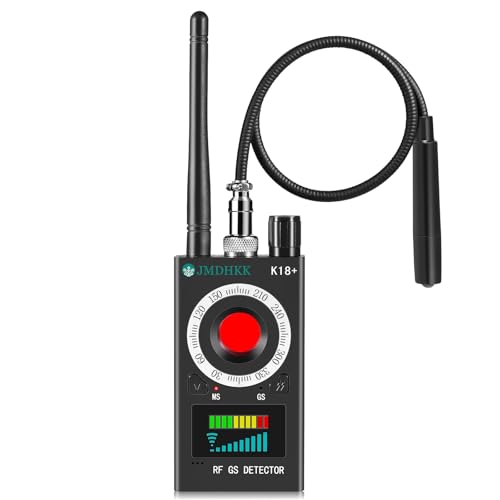
JMDHKK K18+ Hidden Camera Detector, Spy Camera Finder, Bug Detector, Magnetic Field Detector, Listening Device Detector – Privacy Protection Tool for Home, Office, Hotel, and Travel Security(Black)
- Hidden Camera Detection: Identifies concealed cameras in sensitive areas
- Bug Detection & Privacy: Detects bugs without emitting signals
- Magnetic Object Detection: Finds magnetic items used in surveillance
As an affiliate, we earn on qualifying purchases.
As an affiliate, we earn on qualifying purchases.
Frequently Asked Questions
Can Bug Detectors Find Hidden Cameras in Clothing?
Yes, bug detectors can find hidden cameras in clothing, but it depends on the device and the concealment method. Clothing concealment can hide small cameras, making detection tricky. For effective hidden camera detection, use a high-quality bug detector that scans for radio frequency signals or lens reflections. Keep in mind, some advanced hidden cameras are harder to detect, so combining multiple detection methods improves your chances of finding concealed devices.
Are Bug Detectors Effective Against Wireless Listening Devices?
Bug detectors can be effective against wireless listening devices if you understand their limitations. They detect signals from wireless interference and can sometimes identify signal jamming attempts. However, sophisticated devices might use encryption or frequency hopping, making detection harder. You should use a high-quality bug detector and stay aware of potential false positives caused by other electronic devices. Regularly scanning your environment helps guarantee your privacy remains protected.
How Often Should I Test My Bug Detector’s Functionality?
You should test your bug detector’s functionality monthly to guarantee it’s reliable. Studies show that device calibration can drift over time, reducing effectiveness, especially if batteries are weak. Regular checks help catch issues early, so replace batteries as needed and recalibrate your device periodically. This routine keeps your bug detector working at its best, giving you peace of mind about its ability to detect hidden devices when you need it most.
Can Bug Detectors Detect Digital or Encrypted Bugs?
Bug detectors typically struggle to detect digital or encrypted bugs because digital encryption shields the content, making signals indistinguishable from normal digital noise. Additionally, strong signal interference from other electronic devices can mask or mimic bugs, reducing detection accuracy. While some advanced bug detectors claim to identify digital or encrypted bugs, their effectiveness varies. You should always choose a high-quality device and regularly test its functionality to stay protected.
Do Bug Detectors Work Equally Well Indoors and Outdoors?
Bug detectors work differently indoors and outdoors because environmental interference and signal strength variability affect their effectiveness. Indoors, walls and electronic devices can block or distort signals, making bugs harder to detect. Outdoors, open space usually provides clearer signals, but environmental factors like trees or buildings can cause interference. You’ll find that bug detectors generally perform better outdoors, but their accuracy still depends on how much environmental interference and signal variability are present.

NEOSIGN Hidden Camera Detector, Anti-Spy Camera Finder RF Signal & WiFi Scanner Hidden Devices Detector for GPS Trackers,5 Levels Sensitivity 4 Modes,Signal Scanner for Hotels,Car, Office, Travel
- Wireless Device Detection: Detects eavesdropping devices with signal alerts
- Pin-Hole Lens Detection: Finds hidden cameras using infrared laser scanning
- Magnetic Field Detection: Detects GPS trackers with audio and visual alerts
As an affiliate, we earn on qualifying purchases.
As an affiliate, we earn on qualifying purchases.
Conclusion
Now that you know what bug detector devices can and can’t find, you’re better equipped to protect your privacy. Remember, these gadgets aren’t foolproof—they can miss some hidden bugs or false alarms. So, do you want to rely solely on technology, or should you also stay vigilant and aware of your surroundings? Staying cautious and informed is your best defense against unwanted eavesdropping. After all, isn’t your privacy worth the extra effort?

AI Hidden Camera Detector, Spy Camera Detectors – for Hotels, Travel, Home & Office: Portable RF Signal Scanner with 5-Level Sensitivity, AI-Powered Anti-Spy Device, GPS Tracker & Bug Detector
- One-Touch Real-Time Alerts: Instant audible and LED alerts during scan
- Portable and Lightweight: Compact, rechargeable design for discreet use
- AI-Powered Detection: Accurately finds hidden cameras, bugs, GPS trackers
As an affiliate, we earn on qualifying purchases.
As an affiliate, we earn on qualifying purchases.

Liretope Hidden Camera Detectors, Advanced Anti-Spy Technology RF Signal GPS Tracker Finder, Wireless Bug Sweeper with Magnetic Detection for Home Office Travel Security, Real-Time Alarm
- One-Touch Control: Switch between silent and loud alarms
- Customizable Scanning: 6 preset modes and 5 sensitivity levels
- Discreet and Public Use: Silent vibration and loud alarms
As an affiliate, we earn on qualifying purchases.
As an affiliate, we earn on qualifying purchases.