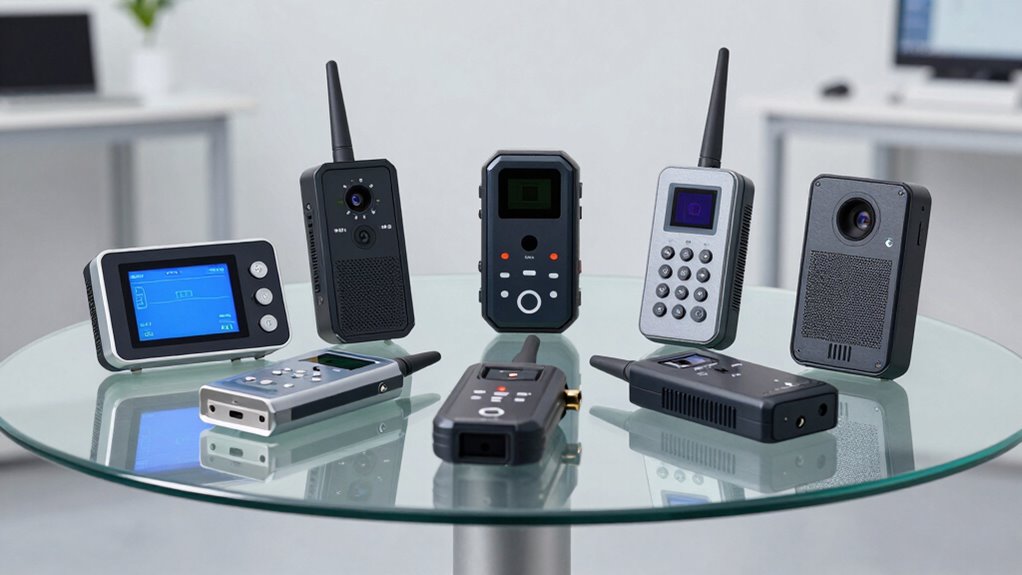

A 7-in-1 Hidden Camera, RF, and GPS Tracker Detector is my best overall pick in this roundup for shoppers who want several detection modes in one device. The 9-in-1 detector is a standout for buyers drawn to broader feature sets, while the portable RF and GPS detector puts easier carrying ahead of extra functions. The main tradeoff is between all-in-one versatility and a simpler device that may be easier to carry and operate. No detector should be treated as proof that a room or vehicle is free of hidden devices. Read on for how the six options differ and which buyer each one suits best.

Get privacy and security gear delivered free with Prime
- Fast, free delivery on millions of items
- Prime Video, Amazon Music and more included
- Member-only deals all year
Key Takeaways
- The 7-in-1 detector is the most balanced choice: its camera, RF, and GPS-tracking detection focus makes it a sensible starting point for buyers seeking multiple checks in one unit.
- A larger feature count is not a performance guarantee: the 9-in-1 and 10th-generation pen names signal different product formats and feature claims, not confirmed detection accuracy.
- Portable models serve a distinct purpose: the portable RF and GPS detector favors carrying convenience, while the portable camera and GPS model adds infrared scanning and an alarm.
- The Koilboane 7-in-1 offers a named alternative: it shares the multi-function approach of the overall pick, so buyers should compare its controls and stated detection modes rather than rely on the shared feature count.
- Detection modes matter more than labels: choose based on whether your concern is active RF transmission, camera lenses, GPS trackers, or a mix; these methods do not all find the same things.
| 7-in-1 Hidden Camera, RF, and GPS Tracker Detector |  | Best for Broad RF Coverage | Brand: CountureMode | Model: G007 Pro | Detection frequency range: 1 MHz–8 GHz | VIEW ON AMAZON | See Our Full Breakdown |
| Koilboane 7-in-1 Hidden Camera and Bug Detector |  | Best for Long Travel Days | Brand: Koilboane | Model: S500 | Detection range: 100 MHz–8 GHz | VIEW ON AMAZON | See Our Full Breakdown |
| 9-in-1 Hidden Camera, RF Signal, and GPS Tracker Detector |  | Best for Multi-Mode Checks | Detection functions: Hidden camera, RF signal, magnetic GPS tracker, audio bug, infrared lens, laser, electromagnetic interference, SOS alarm, abnormal motion detection | Sensitivity levels: 6 | Battery capacity: 2000 mAh | VIEW ON AMAZON | See Our Full Breakdown |
| Portable Hidden Camera, RF Signal, and GPS Tracker Detector |  | Best for Small-Room Scans | Detection types: Hidden cameras, wireless signals, GPS trackers, magnetic devices | Sensitivity levels: 6 | Detection coverage: Up to 30 m² | VIEW ON AMAZON | See Our Full Breakdown |
| Portable Hidden Camera and GPS Tracker Detector with Infrared Scan and Alarm |  | Best for Discreet Checks and Bag Alarms | Color: Black | Weight: 27.22 g | Power source: Battery powered | VIEW ON AMAZON | See Our Full Breakdown |
| 10th-Generation Hidden Camera and Bug Detector Privacy Pen |  | Best Compact Travel Pick | Detection frequency range: 1 MHz–10 GHz | Detection modes: RF signal, wireless camera, magnetic field, anti-theft alarm | Weight: 1.32 oz | VIEW ON AMAZON | See Our Full Breakdown |
| rf detector for hidden device | Sensitivity levels | Weight | Battery capacity |
|---|---|---|---|
| 7-in-1 Hidden Camera | 6 | 2 oz | — |
| Koilboane 7-in-1 Hidden Camera | 5 | 24 g | 800 mAh |
| 9-in-1 Hidden Camera | 6 | — | 2000 mAh |
| Portable Hidden Camera | 6 | — | — |
| Portable Hidden Camera and GPS | — | 27.22 g | — |
| 10th-Generation Hidden Camera | — | 1.32 oz | 2,000 mAh |
More Details on Our Top Picks
7-in-1 Hidden Camera, RF, and GPS Tracker Detector
The CountureMode G007 Pro is the strongest fit here for buyers who prioritize a stated, broad RF range: 1 MHz–8 GHz reaches lower frequencies than the Koilboane S500, whose range starts at 100 MHz. Its six sensitivity levels let you adjust alerts for different rooms and surroundings, while sound, vibration, and flashing LED options make it easier to choose between audible checks and quieter scans. At 2 oz, it is also travel-friendly. The tradeoff is that the product description gives conflicting 6-in-1 and 7-in-1 function counts, and it does not state battery runtime. Unlike the 9-in-1 detector, this model provides a defined frequency range, but neither spec alone establishes detection accuracy.
Pros:- Stated 1 MHz–8 GHz detection frequency range
- Six sensitivity levels for adjusting scans
- Sound, vibration, and flashing LED alerts
- Light 2 oz body and a two-year warranty
Cons:- Product copy conflicts on whether it has six or seven functions
- Battery runtime is not specified
Best for: Travelers and vehicle owners who want a portable detector with a clearly stated wide RF frequency range and multiple alert styles.
Not ideal for: Buyers who need a verified list of functions or a known scan runtime; the function count conflicts and battery duration is not provided.
- Brand:CountureMode
- Model:G007 Pro
- Detection frequency range:1 MHz–8 GHz
- Sensitivity levels:6
- Alert types:Sound, vibration, flashing LED
- Battery:1 lithium polymer battery, included
- Weight:2 oz
- Warranty:2 years
Our verdict“Choose the G007 Pro if a stated broad RF range and flexible alerts matter more than a clearly documented function list or runtime.”
Koilboane 7-in-1 Hidden Camera and Bug Detector
The Koilboane S500 stands out for buyers who want battery details they can plan around: its 800 mAh rechargeable battery is rated for up to 25 hours of operation and 30 days of standby. That makes it a more clearly documented travel choice than the CountureMode G007 Pro, which lists no runtime. The S500 combines wireless, infrared, and magnetic GPS detection, with five sensitivity levels and beep or vibration alerts; mute and vibration settings can help keep a room check discreet. Its stated RF range begins at 100 MHz, so the G007 Pro has the broader published low-frequency coverage. The S500’s compact 24 g form is convenient, but no accuracy results are supplied, and the charging connector and included accessories are unspecified.
Pros:- Battery rated for up to 25 hours of operation and 30 days of standby
- Combines infrared, wireless signal, and magnetic GPS detection
- Vibration and mute settings support discreet checks
- Compact 24 g design
Cons:- Published detection range starts at 100 MHz, above the CountureMode G007 Pro’s 1 MHz
- No detection accuracy or performance results are stated
- Charging connector and included accessories are not specified
Best for: Frequent travelers who want a lightweight rechargeable detector with a stated operating duration and quieter vibration alerts.
Not ideal for: Buyers who need a specified lower RF detection threshold, documented performance testing, or clear details about charging accessories.
- Brand:Koilboane
- Model:S500
- Detection range:100 MHz–8 GHz
- Sensitivity levels:5
- Weight:24 g
- Dimensions:0.63 × 0.83 × 3.46 in
- Battery capacity:800 mAh
- Operating and standby time:Up to 25 hours operating; up to 30 days standby
- Charging time:2.5 hours
Our verdict“Pick the S500 for a compact travel detector with a stated long operating time, not for the broadest published RF range.”
9-in-1 Hidden Camera, RF Signal, and GPS Tracker Detector
This 9-in-1 model is aimed at buyers who want several inspection methods in one device: its listed functions include RF signal, magnetic GPS, infrared lens, and motion detection, along with audio-bug and electromagnetic-interference checks. The combination is broader on paper than the Koilboane S500’s stated function set, and its vibration, buzzer, and strobe alerts offer options for quiet or visible warnings. A 2000 mAh battery is rated for up to eight hours of scanning, with up to 50 days of standby. The main drawback is a lack of an RF detection range, making direct coverage comparisons with the CountureMode G007 Pro impossible. Its claims about reducing false alarms are also not independently supported in the supplied details, so I would treat the function count as breadth, not proof of accuracy.
Pros:- Lists RF, magnetic GPS, infrared lens, motion, and other detection functions
- Vibration, buzzer, and strobe alert options
- 2000 mAh battery rated for up to eight hours of scanning
- Charging time listed as within one hour
Cons:- No detection frequency range or coverage specification is provided
- False-alarm reduction claim is not independently substantiated in the product details
- Eight hours of stated scanning may be limiting for extended inspection sessions
Best for: Privacy-conscious users who want one handheld unit with multiple listed inspection modes and visual lens-scanning features.
Not ideal for: Buyers who need a specified RF frequency range or independently documented detection performance before choosing a detector.
- Detection functions:Hidden camera, RF signal, magnetic GPS tracker, audio bug, infrared lens, laser, electromagnetic interference, SOS alarm, abnormal motion detection
- Sensitivity levels:6
- Battery capacity:2000 mAh
- Scanning time:Up to 8 hours
- Standby time:Up to 50 days
- Charging time:Within 1 hour
- Material:ABS
- Drop-test height:1 meter
- Alerts:Vibration, buzzer, strobe
Our verdict“Choose this model for its wide mix of listed scan modes, but prefer the G007 Pro if a defined RF range is your priority.”
Portable Hidden Camera, RF Signal, and GPS Tracker Detector
This portable detector is the clearest match for a buyer who wants a stated area limit: its listed coverage is up to 30 m², making it easier to frame as a room-by-room inspection tool than the CountureMode G007 Pro, which gives a frequency range but no area figure. It combines wireless, camera, GPS, and magnetic-device checks with red-light reflection scanning, an extendable antenna, and a built-in LED light. Six sensitivity levels give users some control over how strongly it responds during a scan. The tradeoff is that the 30 m² coverage figure does not explain detection conditions or accuracy, and battery life and charging time are absent. Compared with the Koilboane S500, this model offers a coverage figure but less battery information, so it suits planned short checks better than travel days with no charging access.
Pros:- Lists coverage of up to 30 m²
- Red-light reflection scan can assist with checking camera lenses
- Six sensitivity levels
- Extendable antenna and built-in LED light
Cons:- Coverage is limited to up to 30 m² per the supplied details
- Battery life and charging time are not specified
- No detection frequency range or accuracy results are provided
Best for: People checking compact hotel rooms, offices, or other small spaces who want a stated coverage area and lens-reflection scanning.
Not ideal for: Travelers who need a known runtime or buyers scanning large spaces; its stated coverage is up to 30 m² and battery details are missing.
- Detection types:Hidden cameras, wireless signals, GPS trackers, magnetic devices
- Sensitivity levels:6
- Detection coverage:Up to 30 m²
- Additional features:Red-light reflection scan, extendable antenna, LED light
- Power:Rechargeable battery
- Portability:Compact, lightweight design
Our verdict“Choose this detector for small, defined spaces and lens-reflection checks, but not when runtime or large-area coverage is a must.”
Portable Hidden Camera and GPS Tracker Detector with Infrared Scan and Alarm
This detector has a useful split purpose: alongside wireless, infrared, and magnetic-field scanning, it offers silent detection and an alarm mode for doors or luggage. That makes it more suited to discreet personal checks and basic bag security than the CountureMode G007 Pro, whose alert options focus on sound, vibration, and flashing LED rather than a stated door-or-luggage alarm. Its pocket-sized 27.22 g body and claimed up to 25 hours of battery life also favor carrying it between locations. The limitation is sparse technical detail: unlike the Koilboane S500, it has no stated RF range, battery capacity, or charging time, and the battery type is not identified. I would choose it for its quiet mode and alarm function, not when comparing detectors by documented RF coverage.
Pros:- Combines wireless signal, infrared, and magnetic-field detection
- Silent detection mode for discreet checks
- Alarm mode is listed for doors or luggage
- Lightweight at 27.22 g with up to 25 hours of stated battery life
Cons:- No detection range or accuracy details are provided
- Battery type and charging time are unspecified
- Listed Wi-Fi connectivity does not clarify how the device connects or what it enables
Best for: Travelers who want a pocketable device for discreet checks and a separate alarm mode for luggage or doors.
Not ideal for: Buyers comparing RF performance by frequency range or needing a specified battery type, capacity, and charging time.
- Color:Black
- Weight:27.22 g
- Power source:Battery powered
- Connectivity:Wi-Fi
- Special feature:Built-in AM antenna
- Usage:Indoor and outdoor
- Battery life:Up to 25 hours
- Detection methods:Wireless signal, infrared scan, magnetic-field detection
Our verdict“Pick this model if silent scans and a luggage or door alarm matter more than detailed RF and battery specifications.”
10th-Generation Hidden Camera and Bug Detector Privacy Pen
For a buyer who wants a detector that can disappear into a travel kit, this 1.32-ounce pen-style option has a more portable profile than the 7-in-1 Hidden Camera, RF, and GPS Tracker Detector. Its stated 1 MHz–10 GHz range and modes for RF signals, wireless cameras, and magnetic fields cover several kinds of checks, while adjustable sensitivity lets users tune response rather than rely on a single setting. Sound and vibration alerts are useful when a quiet check matters. The tradeoff is that the description gives no measured detection accuracy or independent test results, so the broad range should not be read as proof that it will find every device. Its 2,000 mAh battery is rated for up to 60 days of intermittent use, not continuous scanning; buyers wanting a clearly specified runtime should factor in that distinction. Type-C charging and a one-hour fast-charge claim add convenience, though this pen is best viewed as a portable screening tool, not a guarantee of privacy.
Pros:- Lightweight 1.32-ounce design suits travel and compact storage
- Lists RF, wireless-camera, and magnetic-field detection modes
- Sound and vibration alerts support quieter checks
- Type-C charging and up to 60 days of intermittent-use battery life
Cons:- No independent test results or measured detection accuracy are provided
- The 60-day battery claim applies to intermittent use, with no continuous runtime stated
- The product details do not explain how detection modes distinguish relevant devices from other signals
Best for: Frequent travelers who want a lightweight, discreet RF and magnetic-field screening tool with vibration alerts and several detection modes.
Not ideal for: Buyers seeking independently verified detection accuracy or a stated continuous-use runtime, since neither is supplied in the product details.
- Detection frequency range:1 MHz–10 GHz
- Detection modes:RF signal, wireless camera, magnetic field, anti-theft alarm
- Weight:1.32 oz
- Battery capacity:2,000 mAh
- Charging:Type-C; 1-hour fast charging
- Battery life:Up to 60 days on intermittent use
- Alerts:Sound and vibration
- Warranty:2 years
Our verdict“Choose this pen-style detector for portable, multi-mode screening, but skip it if verified accuracy or continuous-use battery figures are priorities.”

How We Picked
I compared the six options through the needs implied by finding hidden devices: which detection methods each product claims to cover, whether its format seems suited to room or vehicle checks, and how many separate functions a buyer must learn to operate. I also weighed practical factors such as portability, alarm or infrared features, and whether the product description communicates a clear use case. A high mode count alone did not earn a higher place, since feature labels do not establish detection range, accuracy, or ease of interpreting alerts.
The 7-in-1 Hidden Camera, RF, and GPS Tracker Detector ranks first as the clearest all-rounder among the listed options. The 9-in-1 model offers a broader stated feature set, but that label alone does not show why it would be more dependable. Portable models rank well for buyers who need a device to carry, while the infrared-and-alarm model has a more specific appeal. The Koilboane shares a multi-function profile with the lead pick, and the privacy pen has a distinct compact format, but both require buyers to check the details of their controls and claimed modes before choosing.
Factors to Consider When Choosing Rf Detector For Hidden Devices
Before choosing an RF detector for hidden devices, separate the problem you need to solve from the features printed on the package. RF, lens, infrared, and GPS-related checks address different signals or physical clues, so a device with several labels may still leave gaps. I would begin with where you plan to search, what type of device concerns you, and how much time you can spend learning the controls.
Match the Detection Method to the Suspected Device
RF detection looks for radio transmissions, so it may help locate an active wireless device but cannot identify every hidden camera or tracker. A camera operating without a wireless connection may not produce an RF signal for a detector to find. Lens or infrared features use different approaches and have their own limits, while GPS-related claims can refer to different kinds of tracking checks. A common mistake is to assume that a multi-mode label means every device type is covered equally well. Start with your main concern, then treat secondary modes as added tools rather than guarantees. If the product description does not explain what each mode detects, do not infer more from the mode count than the maker states.
Prioritize Usability Over a High Feature Count
Clear controls and interpretable alerts can matter more than a long list of functions. A detector that offers multiple modes may require you to select each one and understand different alert patterns, which can slow a careful search. Before buying, check whether the instructions explain sensitivity, signal strength, and how to distinguish a possible lead from nearby electronics. It is easy to mistake ordinary wireless activity for a hidden device if alerts lack context. Buyers new to this equipment may prefer fewer, clearly described modes over the broadest advertised bundle. A more feature-rich model makes sense only if you are willing to learn how its separate checks work.
Choose a Format for the Places You Will Search
Portability changes how readily you can conduct repeat checks, particularly when you move between rooms, vehicles, or temporary accommodation. A compact device or pen-style format may be easier to carry, but a small form does not prove that its detection functions are as capable as those in a larger unit. Larger multi-function designs may be more comfortable to operate during a deliberate inspection, though they can be less convenient to pack. Think about where the device will live between searches and whether you need to reach tight spaces or scan a larger area. Avoid choosing by shape alone; confirm how the maker expects the device to be held and used. The best format is the one you can operate steadily and consistently.
Treat Infrared and Alarm Features as Separate Aids
Infrared scanning and audible alarms can add useful cues, but neither should be mistaken for a universal hidden-camera test. Infrared functions may depend on the camera or lighting conditions, and an alarm can tell you that the detector registered something without identifying what caused it. Compare these additions with the specific checks you need rather than treating them as proof of stronger RF detection. In a room with many electronics, alerts may call for follow-up rather than an immediate conclusion. Read the operating guidance for each mode and check whether it describes limits or likely sources of interference. Buyers who only need RF signal checks may have little reason to prioritize extra features they will not use.
Check Signal Conditions and Nearby Electronics
Radio environments can complicate interpretation, especially in places with routers, phones, Bluetooth devices, or other active electronics. A detector may respond to ordinary transmissions, and a quiet reading does not establish that no hidden device is present. For a more controlled check, follow the manufacturer’s instructions, note active devices nearby, and repeat scans from different positions when appropriate. Do not assume that turning off one source removes all possible interference. Buyers should look for clear guidance on sensitivity adjustment and alert interpretation before relying on a device in a busy environment. This matters more than a small difference in the number of advertised modes.
Pay More for Useful Coverage, Not a Bigger Number
Additional modes are valuable only when they address a real need and come with understandable instructions. A buyer checking several kinds of spaces may welcome a multi-function unit, while someone who wants a pocketable tool may prefer a simpler portable design. Compare what each claimed function does, how it is activated, and what limitations are disclosed instead of ranking products by a number such as seven, nine, or ten. Also check practical details such as charging or battery requirements, included accessories, and support materials; these affect readiness but do not prove detection quality. If confidence is especially important, treat a handheld detector as one part of a broader inspection rather than a substitute for professional help. The right purchase is the one whose methods and limits match your situation.
Frequently Asked Questions
Can an RF detector find a hidden camera that is switched off or not transmitting?
Not by RF detection alone. An RF detector looks for radio signals, so a camera that is switched off, recording locally, or not transmitting may not trigger it. Some products pair RF checks with lens or infrared features, but those methods also have limits and do not guarantee discovery. If a device is not transmitting, a signal scan may give you no useful clue. Choose a product based on the methods it actually describes, and do not treat a quiet scan as proof that a space is clear.
Should I choose the 9-in-1 detector over a 7-in-1 model?
Not just because it lists more functions. The 9-in-1 label suggests a broader set of claimed features, but it does not establish better range, clearer alerts, or more accurate detection than either 7-in-1 option. Compare the specific modes, instructions, controls, and intended use instead. If the extra functions are not relevant to your checks, they may add complexity without giving you a practical advantage. I would favor the model whose detection methods and operating guidance are clearer for your needs.
Is a portable detector a better choice for travel than a multi-function unit?
A portable model may be easier to carry, but portability alone does not show how well it detects a particular signal or clue. For frequent trips, consider whether the device is easy to pack, operate, and recharge or power between uses. A multi-function unit may offer more kinds of checks, but you may need more time to learn its modes. Decide whether you value quick access or broader stated coverage more. Check the instructions and power requirements before relying on either format away from home.
Can I use one of these detectors to check both a room and a vehicle?
Many of the listed options claim several detection modes, which may suit checks in different settings, but the product names alone cannot confirm how well each performs in a room or vehicle. A vehicle search may involve different surfaces, objects, and access points than a room inspection. Check the maker’s guidance for handling, range, and the kinds of signals or devices the detector is intended to locate. A portable model can be easier to bring along, while a broader feature set may appeal if you want more kinds of checks. In either setting, interpret alerts as leads to examine rather than proof of a hidden device.
What should I do if the detector alerts near a router or phone?
First, treat the alert as a signal to investigate, not a confirmed discovery. Routers, phones, and other electronics can transmit signals that a detector may register. Follow the device instructions for changing sensitivity or moving closer to the source, and note what ordinary electronics are active nearby. If practical, repeat the scan after accounting for those sources and compare readings from different positions. If you cannot tell whether an alert points to a device of concern, a handheld detector may not provide enough information to resolve the question on its own.
Conclusion
For the best overall, I would start with the 7-in-1 Hidden Camera, RF, and GPS Tracker Detector because it offers the clearest all-rounder profile in this lineup. The best value-style choice is the Koilboane 7-in-1 for shoppers who want a similar multi-function approach and are comfortable comparing the exact controls and modes before buying. The best for beginners is the 7-in-1 overall pick, provided its instructions make its alerts clear; buyers who prefer carrying convenience should instead look at the portable RF and GPS model. For a specific need, the portable camera and GPS detector is the one to examine if infrared scanning and an alarm matter to you, while the privacy pen suits shoppers drawn to a compact format. I would treat the 9-in-1 as a feature-focused alternative, not an automatic upgrade: choose it only if its additional stated modes match your search needs. None of these options can confirm that a space is free of hidden devices, so pick by detection method and usability rather than feature count alone.