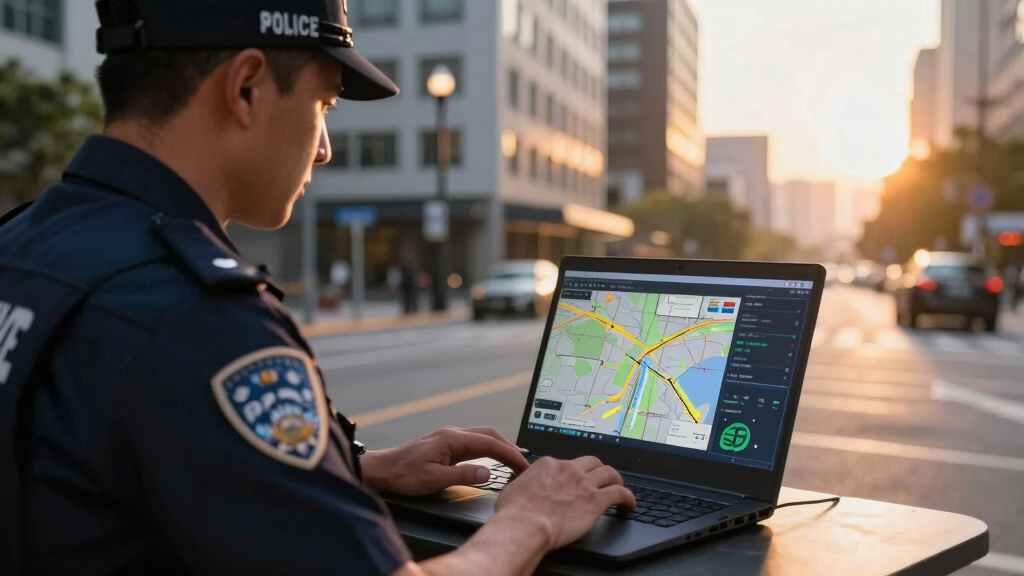

TL;DR
The UK Home Office has officially launched PoliceAI, a £75 million project to develop and deploy artificial intelligence tools in policing. The initiative aims to enhance investigation efficiency and community safety. Key pilots will begin soon, with wider rollout planned for 2027.
The UK Home Office has officially launched PoliceAI, a £75 million initiative to develop and scale artificial intelligence tools for policing across England and Wales. This marks a significant step in integrating AI into law enforcement to enhance efficiency and public safety, affecting all police forces in the region.
The Home Office announced the creation of PoliceAI, a national centre tasked with identifying, testing, and scaling AI tools for police use, supported by a three-year fund of £75 million. The initiative was previously referred to as Police.AI but was rebranded for stylistic reasons. It is part of a broader £140 million investment in AI technology through 2028-29.
Initial focus areas include large-scale pilots aimed at automating digital evidence triage, disclosure, and summarization—processes currently time-consuming for officers. Up to ten police regions will participate in these pilots, with successful practices expected to be adopted nationwide by 2027. The program also plans to expand AI use in redacting audio-visual files, which could save an estimated one million staff hours annually.
Recent case studies cited by the Home Office include AI’s role in reviewing 800 hours of footage in a kidnapping case, which was completed in three hours and contributed to an early guilty plea, and instant translation of half a million e-books of data, leading to the arrest of organized crime gangs. Police minister Sarah Jones highlighted AI’s role in catching offenders and speeding investigations, emphasizing responsible deployment and public consent.
Impact of PoliceAI on UK Policing Operations
The launch of PoliceAI signifies a major shift toward digital modernization in UK policing, aiming to make investigations faster and more accurate. By automating routine tasks, the initiative is expected to free up thousands of officer hours annually, potentially allowing more personnel to focus on community engagement and crime prevention. The project also aims to improve transparency and public trust by establishing a public registry of AI tools used across police forces, with independent testing for accuracy and bias. This move reflects broader efforts to incorporate AI responsibly while addressing concerns about privacy and ethical use.
AI Discovery & Litigation Systems: Automating Evidence Review, Case Analysis, and Legal Strategy with Machine Intelligence

As an affiliate, we earn on qualifying purchases.
As an affiliate, we earn on qualifying purchases.
Background and Development of PoliceAI Initiative
The UK Home Office first proposed the use of AI in policing in January 2026 through its white paper ‘From Local to National: A New Model for Policing,’ which outlined plans for a national police tech centre. The initiative was initially called Police.AI, but the name was changed to PoliceAI for stylistic reasons. The plan included a £140 million investment in AI over several years, with the launch of the PoliceAI centre representing a key milestone.
Previous efforts in AI deployment in UK policing have included projects such as facial recognition algorithms and audio-visual redaction tools. Pilot programs demonstrated AI’s potential to review large data sets rapidly, leading to quicker investigations and arrests. The new centre aims to build on these successes, integrating AI into everyday police work across all regions.
“AI has the potential to transform policing by automating complex tasks and freeing up officers for frontline work.”
— an anonymous researcher
Uncertainties About AI Deployment and Oversight
It is not yet clear how the AI tools will be tested for accuracy and bias beyond initial pilot programs, or how concerns about privacy and ethical use will be addressed on a broader scale. The specifics of public engagement and consent processes remain to be detailed, and the timeline for full nationwide deployment is still provisional.
Upcoming Milestones and Implementation Phases
The first phase involves pilot programs in up to ten police regions, with results expected to inform wider adoption by 2027. The public registry of AI tools is scheduled to launch by autumn 2026, providing transparency and oversight. Further updates on pilot outcomes and policy frameworks are anticipated in the coming months as the initiative progresses.
Key Questions
What specific AI tools will police forces use?
Details about the exact AI tools are still being finalized, but initial focus areas include evidence triage, audio-visual redaction, and data translation technologies.
How will public concerns about privacy be addressed?
The Home Office emphasizes responsible deployment, public transparency via a registry, and independent testing to ensure ethical use and accuracy of AI tools.
When will AI tools be widely used across all police forces?
If pilot programs are successful, full nationwide deployment is planned for 2027, with ongoing evaluation and adjustments.
Will AI replace police officers?
The initiative aims to augment, not replace, officers by automating routine tasks, thereby allowing personnel to focus on community policing and complex investigations.
How much funding is allocated for PoliceAI?
The Home Office has allocated £75 million over three years for PoliceAI, as part of a broader £140 million investment in AI in policing through 2028-29.
Source: Hacker News