
TL;DR

Get privacy and security gear delivered free — and shop member deals
- Fast, free delivery on millions of items
- Access to Prime Big Deal Days deals on October 6–7
- Prime Video, Amazon Music and more included
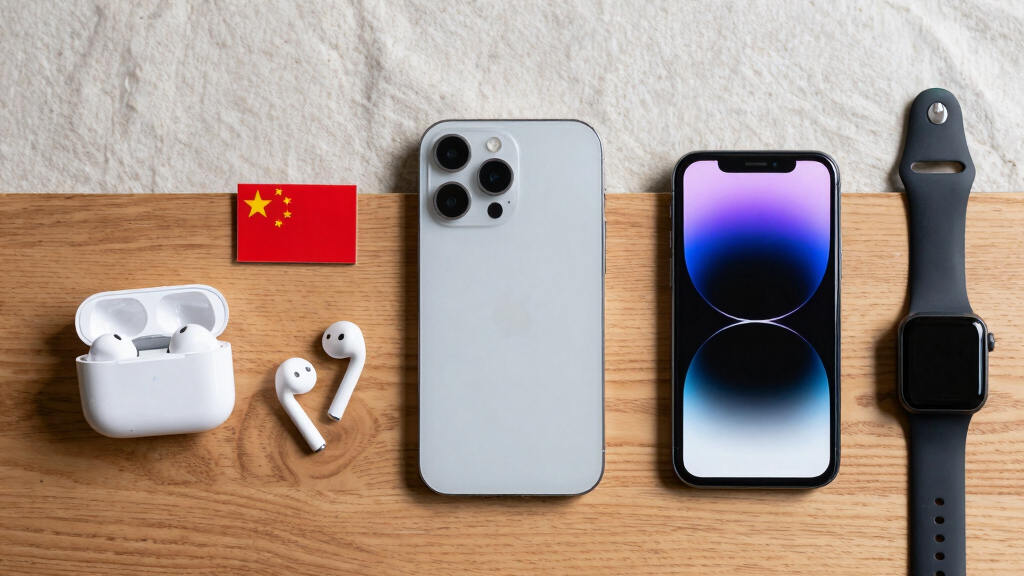
Apple is reportedly lobbying Washington for permission to buy memory chips from China’s CXMT after raising prices on Macs and iPads because of higher memory costs. The episode highlights a wider problem for Europe: the EU has strengths in chip tools and research, but no domestic DRAM or HBM champion.
Apple is reportedly asking Washington for clearance to buy memory chips from China’s CXMT, a company on the Pentagon’s 1260H list, after raising Mac and iPad prices amid a global memory squeeze. The request matters beyond Apple because it shows how even the world’s richest hardware company is searching for supply options, while Europe lacks a comparable memory supplier of its own.
The Financial Times reported that Apple first approached the U.S. Commerce Department more than a month ago and is now speaking with other Trump administration officials. The reported request is for political clearance, not confirmation that CXMT chips are already being used in Apple products.
Investor’s Business Daily reported that Apple raised prices on select Macs and iPads by 17% to 25%, citing higher memory costs, and also increased prices on some home devices while leaving iPhones unchanged. Analysts cited in the report said the hikes may still fall short of fully offsetting higher component costs.
CXMT is not the same as an Entity List ban, according to reports from the FT, MarketWatch and The Verge. But its placement on the Pentagon’s 1260H list creates political and reputational risk for Apple because the U.S. government alleges links between listed companies and China’s military. Apple and the White House had not publicly announced a decision as of June 29, 2026.
Apple greift nach China-Speicher. Europa hat nicht einmal diese Option.
Der Speicher-Engpass legt Amerikas Abhängigkeit offen — und Europas weit brutaler. Apple hat einen heimischen Zulieferer, politisches Gewicht und die China-Option. Europa hat keinen eigenen Speicher, keinen Sitz am Tisch, keinen Hebel auf das, was zählt.
- EU fertigt < 10 % der Halbleiter weltweit
- Praktisch kein DRAM, kein HBM aus Europa
- 3–4 Speicherhersteller weltweit — keiner europäisch
- Reiner Preisnehmer: Speicher ~4× in 3 Quartalen
- ASML: EUV-Monopol — kein Spitzenchip ohne
- Zeiss: Präzisionsoptik, weltweit konkurrenzlos
- imec · CEA-Leti · Fraunhofer: Spitzenforschung
- Infineon, NXP, STMicro: Automotive · Leistung · SiC
Der Engpass ist ein Souveränitätstest — Europa fällt bei der Versorgung durch, hält die Hebelmacht aber in der Hand. Wenn sich selbst Apple nicht freikaufen kann, ist Europas Antwort nicht, sich einzukaufen, sondern zweigleisig: die einzigartigen Engstellen konsequent als Hebel nutzen — und die Abhängigkeit dort senken, wo es ohne Brüssel geht: lokal-first, offene Gewichte, Quantisierung, richtig dimensionierte Hardware. Den 20-%-Traum begraben, das Eigene verteidigen, weniger brauchen.
Europe Lacks Memory Leverage
Apple has options Europe does not. It can lean on Washington, buy from U.S.-based Micron, negotiate with South Korean suppliers Samsung and SK hynix, and seek permission to use a Chinese alternative. Europe has world-class chip assets, but it does not have a homegrown leader in DRAM or HBM, the memory used in PCs, servers and AI accelerators.
That gap matters because memory prices now affect consumer devices, cloud spending, AI infrastructure and industrial electronics. If supply remains tight, European companies that build cars, servers, medical devices or AI systems face higher costs as price takers, while governments have limited ability to redirect supply that is produced mainly outside the EU.
DDR4 memory chips for PC
As an affiliate, we earn on qualifying purchases.
As an affiliate, we earn on qualifying purchases.
How The Supply Squeeze Built
AI data center demand has pulled memory capacity toward high-bandwidth memory and server DRAM, tightening supply for PCs, mobile devices and older industrial parts. The global DRAM market is concentrated around Samsung, SK hynix and Micron, with CXMT emerging as a Chinese challenger but not yet a proven large-scale substitute for the full range of advanced memory needs.
The EU’s own chip policy shows the mismatch. Regulation (EU) 2023/1781, the European Chips Act, created tools for monitoring, crisis response and investment. But the European Court of Auditors said in 2025 that the EU was very unlikely to reach its target of 20% of global chip production by 2030; Le Monde reported the current path pointed closer to 11.7%.
“The EU urgently needs a reality check in its strategy for the microchips sector”
— Annemie Turtelboom, European Court of Auditors member, quoted by The Guardian
Washington Has Not Decided
Several facts remain open. It is not yet clear whether the U.S. administration will approve Apple’s request, whether approval would cover global products or only certain markets, or whether CXMT can meet Apple’s volume and quality needs at scale. It is also unclear whether U.S. lawmakers would try to block or narrow any clearance.
For Europe, the open question is whether policy shifts can reduce exposure before the next shortage. Subsidies and procurement can support selected plants, but they cannot quickly create a European DRAM or HBM producer. Europe’s stronger hand remains in ASML, Zeiss and research centers, not memory supply.
Approval Fight Moves To Washington
The next milestone is a U.S. government decision on Apple’s reported request. A green light could test Washington’s willingness to bend supply-chain policy for a major U.S. company; a rejection would leave Apple more exposed to Micron, Samsung and SK hynix pricing during the shortage.
In Europe, the pressure point is the next semiconductor policy cycle. Watch for whether Brussels shifts more money toward advanced packaging, memory-adjacent technologies and demand reduction, while using ASML and Zeiss as bargaining power in a supply chain where memory remains largely outside Europe’s control.
Key Questions
What did Apple reportedly ask Washington for?
Apple is reportedly seeking U.S. clearance to buy memory chips from CXMT, a Chinese DRAM maker. The request has been reported by the Financial Times and has not been publicly approved.
Is Apple banned from buying CXMT chips?
Reports say Apple is not automatically barred from buying from CXMT, because the company is on the Pentagon’s 1260H list, not the Commerce Department Entity List. The issue is political, reputational and security-related.
Why is Europe more exposed than Apple?
Apple has supplier choices and political access. Europe has leading chip-tool assets, including ASML and Zeiss, but no major domestic DRAM or HBM producer.
Could ASML offset Europe’s memory gap?
ASML gives Europe bargaining power because its EUV tools are needed for advanced chips. But that does not create European memory supply in the short term.
Will this lower Mac and iPad prices?
That is unknown. Approval could give Apple another supply option, but memory prices, contract terms and product pricing would still depend on market conditions.
Source: Thorsten Meyer AI
Fall Picks
fall essentials
As an affiliate, we earn on qualifying purchases.