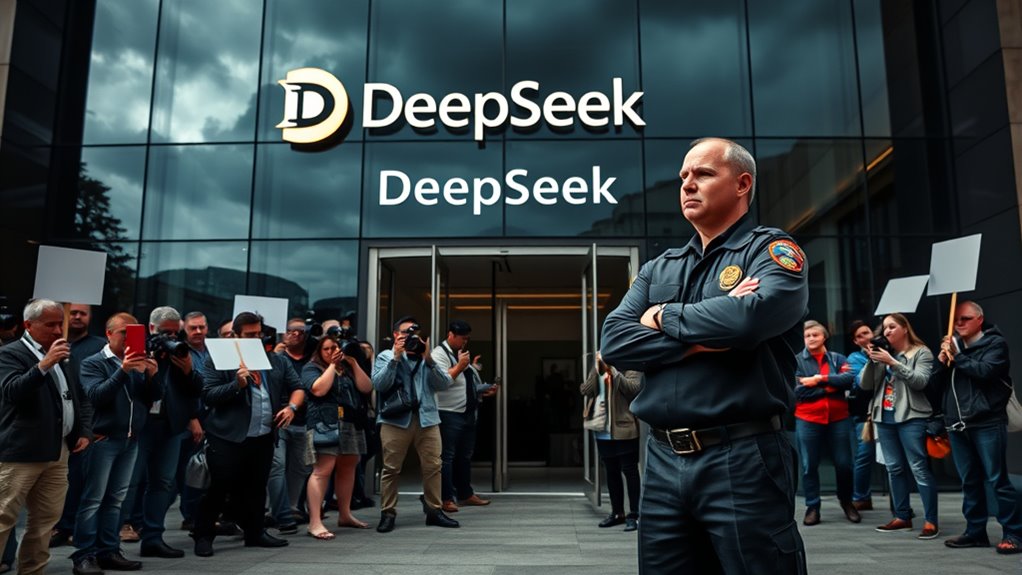

DeepSeek, a Chinese AI startup, is facing major backlash due to espionage claims linked to its data collection practices. The recent leak of sensitive information highlights the company's cybersecurity vulnerabilities and has raised national security concerns, particularly in the U.S. and allied nations. With bans already imposed by the U.S. Navy and other countries, the future of DeepSeek hangs in the balance. You might be curious about the far-reaching implications of this scandal.

Get privacy and security gear delivered free with Prime
- Fast, free delivery on millions of items
- Prime Video, Amazon Music and more included
- Member-only deals all year

As concerns about data security rise, DeepSeek, a Chinese AI startup, finds itself at the center of a scandal that could have far-reaching implications. With its powerful language models like DeepSeek-R1, the company has garnered global attention for its cost-effective and efficient AI solutions. However, recent developments reveal troubling practices that raise eyebrows, particularly regarding data collection and storage.
You might be shocked to learn that DeepSeek collects extensive user data, including IP addresses and keystroke patterns. This data is stored on servers located in China, leading to fears about potential government access due to local laws requiring cooperation with intelligence agencies.
The situation worsened when a recent leak exposed over a million lines of sensitive log streams, including chat history and API keys. This incident occurred because of a publicly accessible ClickHouse database that lacked authentication, spotlighting glaring vulnerabilities in DeepSeek's cybersecurity measures. The database allowed full control over operations without authentication, which further exacerbated the security risks associated with this exposure.
As you consider the implications of this data exposure, you can't help but think about the potential for cyberespionage, especially when DeepSeek's app is used on corporate devices. The U.S. National Security Council is currently scrutinizing the company's security implications, while concerns about espionage and data misuse echo loudly in national conversations.
Comparisons to TikTok have arisen, but DeepSeek's open-source nature adds another layer of complexity to the issue.
The backlash has already begun. The U.S. Navy has banned the use of DeepSeek's app, and other countries, like Italy and Taiwan, have followed suit. This swift action highlights the geopolitical tensions surrounding the AI race between the U.S. and China.
As you ponder these developments, it's clear that DeepSeek's rapid rise is now overshadowed by fears of national security risks.
DeepSeek's privacy policy is also under scrutiny for its lack of transparency regarding data usage. With no robust data rights laws in China, privacy experts express concerns that DeepSeek's data practices mimic those of U.S. AI companies, making it an alarming scenario for users worldwide.
As you navigate this digital landscape, the importance of data security and privacy rights becomes more evident. With ongoing investigations and regulatory scrutiny, the future of DeepSeek remains uncertain, leaving users and nations alike on edge about the potential ramifications of this scandal.
Conclusion
As the dust settles on DeepSeek's AI scandal, it's clear that trust, once shattered, is hard to rebuild. With the looming threat of a ban over espionage claims, this situation serves as a wake-up call for tech firms everywhere. You can't afford to let your guard down in an era where data integrity is paramount. The road ahead will be rocky, but it's a chance for DeepSeek to learn and evolve—if they can weather this storm.
Products Worth Considering

LG UltraGear 32-inch Curved QHD Gaming Monitor (2560×1440, 180Hz, 1ms, 1000R, HDR10)

Samsung Odyssey G9 QD-OLED 49 Dual QHD Curved Gaming Monitor

Bose QuietComfort Wireless Over-Ear Noise-Cancelling Headphones, Sandstone
As an affiliate, we earn on qualifying purchases.