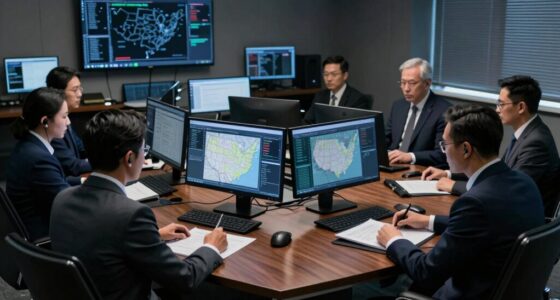
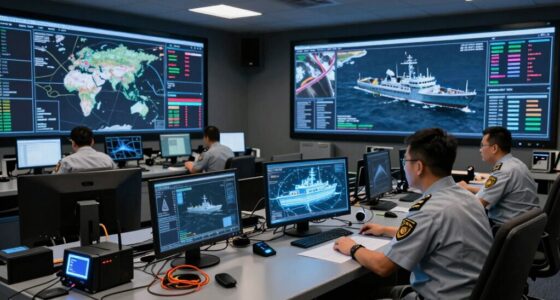
Coast Guard intelligence protects America’s maritime borders by combining cutting-edge surveillance tools like radar, satellite imagery, and patrol assets with highly skilled personnel. This technology helps you detect suspicious vessels, illegal crossings, and potential threats early, allowing quick response and intervention. By analyzing data and patterns, you can differentiate routine shipping from illicit activities. Continuing will reveal how this integrated approach keeps our waters secure and supports national security efforts around the clock.

Get privacy and security gear delivered free — and shop member deals
- Fast, free delivery on millions of items
- Access to Prime Big Deal Days deals on October 6–7
- Prime Video, Amazon Music and more included
Key Takeaways
- Coast Guard intelligence integrates advanced surveillance technology and human analysis to monitor and secure U.S. maritime borders.
- It detects and assesses threats like illegal crossings, smuggling, and piracy through real-time data analysis.
- Threat analysis enables proactive responses, allowing rapid deployment of resources to prevent security breaches.
- The combined use of technology and personnel enhances maritime domain awareness and situational understanding.
- These efforts protect national security, coastal communities, and economic interests by maintaining robust maritime security.

Have you ever wondered how the Coast Guard keeps maritime borders safe and responds quickly to emergencies? It all begins with their sophisticated intelligence operations, which rely heavily on maritime surveillance and threat analysis. These tools are essential for maintaining a vigilant watch over vast stretches of ocean, where threats can emerge unnoticed. Maritime surveillance involves using a combination of radar, satellite imagery, unmanned aerial systems, and patrol boats to monitor activity across the waters. This constant watch allows the Coast Guard to detect suspicious vessels, illegal crossings, or potential security threats before they reach shore. It’s like having eyes everywhere, even in the most remote areas of the maritime domain. Advanced technologies and dedicated personnel work together to enhance maritime domain awareness, ensuring a comprehensive understanding of the maritime environment.
Maritime surveillance ensures the Coast Guard detects threats early across vast ocean areas.
Threat analysis complements surveillance efforts by turning raw data into actionable intelligence. Once information is collected, analysts sift through the details to identify patterns, assess risks, and determine the intent behind vessel movements. For example, if a vessel deviates from its typical route or communicates unusual signals, threat analysis tools help determine whether it’s a routine shipping activity or something more sinister, like smuggling or piracy. This process requires a keen understanding of maritime behaviors and the ability to connect dots quickly. The intelligence gathered through threat analysis helps prioritize responses, ensuring resources are directed where they’re needed most. It also enhances situational awareness, allowing the Coast Guard to anticipate potential threats before they materialize.
Your safety hinges on these intelligence efforts. When authorities detect a suspicious vessel early, they can deploy interceptors or aircraft to investigate further, preventing illegal activities from escalating. During emergencies, real-time surveillance and precise threat assessment enable rapid decision-making, saving lives and protecting critical infrastructure. The integration of advanced technology and human expertise creates a layered defense system that is adaptable and resilient. It’s not just about reacting to threats but proactively identifying vulnerabilities and neutralizing them before they cause harm.
Through continuous maritime surveillance and thorough threat analysis, the Coast Guard maintains a robust security posture along America’s coastlines. These efforts protect not only national security but also the safety of mariners, coastal communities, and economic interests. Every day, your Coast Guard personnel work tirelessly behind the scenes, leveraging intelligence to keep the waters safe. By understanding how they use surveillance and threat analysis, you can appreciate the complex, high-stakes nature of their mission—one that’s crucial to safeguarding America’s maritime borders.
maritime surveillance radar
As an affiliate, we earn on qualifying purchases.
As an affiliate, we earn on qualifying purchases.
Frequently Asked Questions
How Does Coast Guard Intelligence Collaborate With Other Agencies?
You see how Coast Guard Intelligence collaborates with other agencies through effective interagency communication and intelligence sharing. They work closely with DHS, FBI, and other maritime partners to exchange critical information, coordinate operations, and respond to threats. This teamwork enhances maritime security, ensures faster responses, and maintains a unified effort to safeguard America’s maritime borders. By sharing intelligence, they bolster situational awareness and strengthen national security efforts.
What Technologies Are Used for Maritime Surveillance?
Did you know that over 70% of maritime surveillance relies on advanced technologies? You use maritime drones to monitor large areas quickly and satellite imagery to detect suspicious activity from space. These tools give you real-time data, enhancing your ability to identify threats early. By integrating these technologies, you can respond faster, ensuring maritime safety and security while covering vast and often inaccessible ocean regions efficiently.
How Are Threats Prioritized Within Coast Guard Intelligence?
You prioritize threats through thorough threat assessment and intelligence analysis. First, you gather data from various sources, then evaluate the potential risks based on severity, likelihood, and impact. This process helps you identify high-risk activities or entities, enabling you to allocate resources effectively. Continuous monitoring and reassessment guarantee you stay ahead of emerging threats, maintaining maritime security and protecting America’s borders efficiently.
What Training Do Intelligence Personnel Receive?
Like a modern-day Sherlock Holmes, you’ll receive specialized training in maritime cybersecurity and underwater reconnaissance. This prepares you to detect threats, analyze cyber intrusions, and conduct covert underwater operations. Your coursework includes intelligence analysis, cybersecurity protocols, sonar technology, and maritime law. You’ll also train in advanced surveillance techniques and threat assessment, ensuring you’re equipped to safeguard America’s maritime borders with sharp skills and strategic insight, much like a vigilant guardian of the seas.
How Does Coast Guard Intelligence Adapt to Emerging Threats?
You adapt to emerging threats by continuously updating your skills in maritime cybersecurity and smuggling detection. You leverage advanced technology and intelligence-sharing partnerships to identify new tactics used by criminals and adversaries. By staying informed on evolving threats, you enhance surveillance, analyze data, and develop proactive strategies. This proactive approach guarantees you can effectively counter threats, protect maritime borders, and maintain national security in a constantly changing environment.
Conclusion
So, next time you’re enjoying a peaceful boat ride or a beach day, remember the Coast Guard Intelligence team is busy working behind the scenes—protecting your paradise from those pesky threats. Because nothing says “security” like secret agents watching over your sunny day, ready to jump into action at a moment’s notice. Who knew maritime safety could be so clandestine? Just sit back, relax, and trust that their covert operations are keeping America’s coast as safe as a secret recipe.
Fall Picks
fall essentials
As an affiliate, we earn on qualifying purchases.