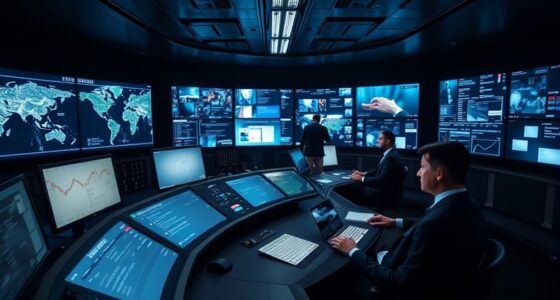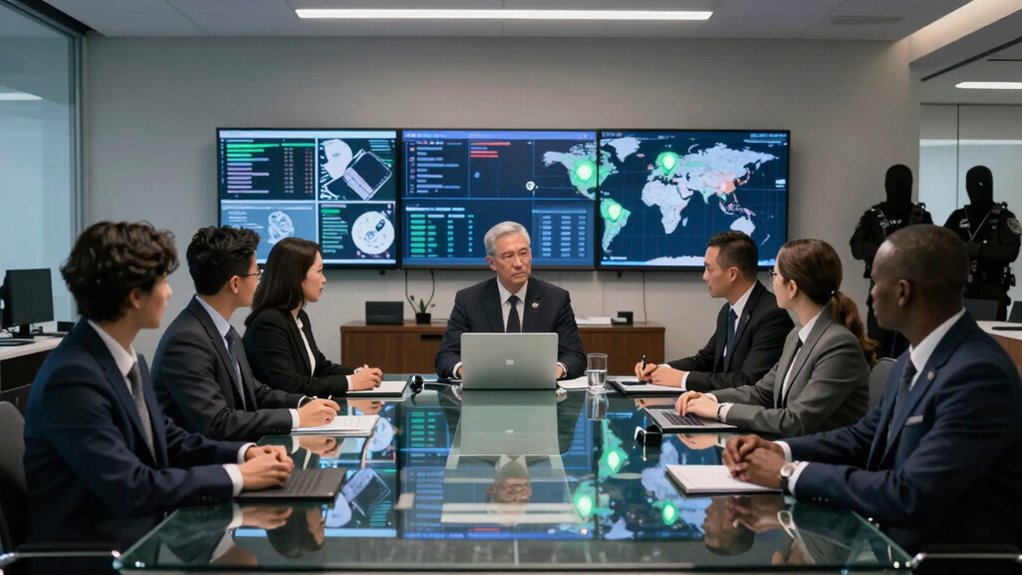
The FBI focuses on threats within the U.S., conducting law enforcement and criminal investigations, while the CIA operates mainly overseas, gathering foreign intelligence and conducting covert missions. Your FBI deals with domestic terrorism, cyber threats, and enforcing laws, often using undercover operations. Conversely, the CIA relies on espionage, surveillance, and secret operations in foreign countries. These distinct roles shape their methods and focus; if you keep exploring, you’ll discover more about their unique approaches in modern spy efforts.
Key Takeaways
- The FBI operates domestically within the U.S., focusing on law enforcement and criminal investigations, while the CIA conducts overseas intelligence and covert operations.
- The FBI’s mission emphasizes preventing domestic terrorism and cyber threats, whereas the CIA primarily gathers foreign intelligence to inform national policy.
- FBI uses undercover work, electronic surveillance, and community trust-building; CIA relies on espionage, clandestine activities, and foreign recruitment.
- The FBI enforces U.S. laws and investigates crimes within borders; the CIA conducts secret operations abroad to protect national interests.
- Their differing jurisdictions and operational environments shape distinct methods and objectives in modern spy work.
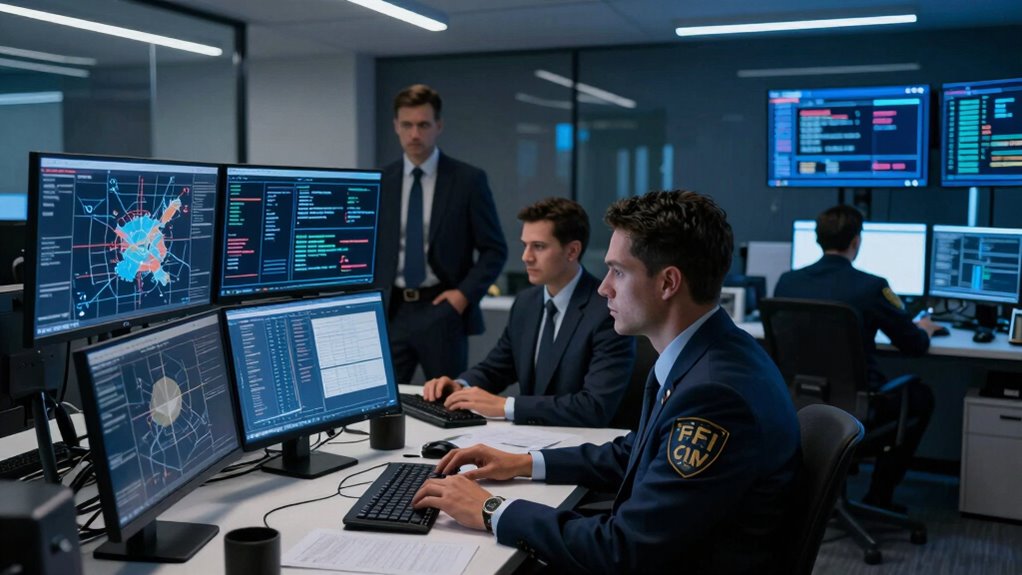
While both the FBI and CIA play essential roles in national security, their core missions and methods set them apart in modern spy work. You might think of the FBI as the agency that handles threats within the United States, focusing on law enforcement, criminal investigations, and preventing domestic terrorism. In contrast, the CIA operates largely overseas, gathering foreign intelligence and conducting covert operations to protect national interests abroad. This fundamental difference shapes the kind of work each agency does and how they approach modern threats.
For example, the FBI’s cybersecurity initiatives are a key part of their domestic efforts. You’ll see the FBI actively working to track cybercriminals, combat hacking groups, and secure government and private sector networks from cyberattacks. Their investigations often involve undercover operations, where agents embed themselves within criminal groups or online communities to gather intelligence from the inside. These undercover operations require deep understanding of cyber environments, technical skill, and the ability to build trust without revealing identities. It’s a constant game of cat and mouse, with agents working undercover to thwart cyber threats before they escalate into large-scale attacks. The FBI’s focus on cybersecurity initiatives directly impacts national security by protecting critical infrastructure and sensitive data from malicious actors. Additionally, the agency’s use of electronic surveillance is crucial in monitoring and intercepting digital communications related to threats.
Meanwhile, the CIA’s work revolves around gathering foreign intelligence and conducting covert operations abroad. Their methods are often secretive, involving espionage, surveillance, and sometimes clandestine activities in foreign countries. Unlike the FBI, which works within the boundaries of U.S. law, the CIA operates in a more clandestine world, often taking risks in foreign territories to collect information that could prevent international crises or uncover threats to U.S. interests. Their covert operations might include recruiting foreign agents, sabotaging hostile operations, or gathering intelligence on terrorist networks overseas. These activities are complex, dangerous, and require a high level of secrecy, making the CIA’s role in modern spy work uniquely challenging and essential.
Understanding the differences helps you see that while the FBI is more on the front lines of domestic security, using undercover operations and cybersecurity initiatives to prevent threats before they reach U.S. borders, the CIA’s focus is on collecting foreign intelligence to inform national policy and conduct covert operations abroad. Both agencies are essential, but their tools, methods, and missions reflect their distinct roles in safeguarding the nation.

Security Monitoring with Wazuh: A hands-on guide to effective enterprise security using real-life use cases in Wazuh
As an affiliate, we earn on qualifying purchases.
As an affiliate, we earn on qualifying purchases.
Frequently Asked Questions
How Do FBI and CIA Budgets Compare Today?
You’ll find that the CIA’s budget is generally larger than the FBI’s, reflecting its focus on foreign intelligence and covert operations. The FBI’s budget prioritizes domestic security and law enforcement, aligning with its specialization in criminal investigations. Budget allocation varies based on agency needs and priorities, but overall, the CIA’s funding emphasizes intelligence gathering abroad, while the FBI’s supports counterterrorism, cybercrime, and federal investigations within the U.S.
What Training Differences Exist Between FBI and CIA Agents?
You’ll find FBI and CIA agents undergo distinct training protocols tailored to their roles. FBI agents focus heavily on criminal investigation, law enforcement techniques, and undercover missions within the U.S., emphasizing skills like surveillance and forensic analysis. CIA agents, on the other hand, receive training geared toward intelligence gathering abroad, including espionage tactics and covert operations. Both prioritize undercover missions, but their training reflects their specific responsibilities and operational environments.
How Do FBI and CIA Coordinate on International Threats?
You see, when facing international threats, the FBI and CIA team up like a superpower through joint task forces and seamless intelligence sharing. They combine their unique strengths—domestic expertise and global reach—to tackle complex issues. This coordination allows them to act swiftly, share critical information instantly, and outsmart enemies who operate across borders. Together, they form an unstoppable force, ensuring national security isn’t just protected, but fortified on every front.
What Public Oversight Do FBI and CIA Operations Have?
You should know that both the FBI and CIA operate under legal limitations and are subject to public transparency requirements. The FBI, as a domestic agency, reports to Congress and the Department of Justice, ensuring oversight. The CIA, focusing on foreign intelligence, faces restrictions from laws like the Intelligence Oversight Act. Though they keep some operations classified, they’re accountable through hearings, reports, and legal frameworks to prevent overreach.
How Do FBI and CIA Handle Cyber Espionage Differently?
You’ll find that the FBI handles cyber espionage mainly through cyber hacking and data analysis within the United States, focusing on criminal and national security threats. The CIA, on the other hand, conducts cyber operations overseas, emphasizing intelligence gathering and covert cyber hacking activities. While the FBI investigates cyber crimes and collects evidence, the CIA’s role centers on strategic cyber espionage to protect national interests globally.

Private Investigators Case Management Journal
As an affiliate, we earn on qualifying purchases.
As an affiliate, we earn on qualifying purchases.
Conclusion
In the end, understanding the FBI and CIA is like seeing two sides of the same coin—each essential, yet distinct. The FBI’s focus on domestic crime and law enforcement complements the CIA’s global intelligence efforts. Together, they form a powerful duo, but it’s their unique missions that keep them from merging into one. So, next time you think of spies, remember: it’s not just about secrets—it’s about the difference between protecting your home and exploring the unknown.

Podoy Bird Observing Listening Recording Device, Listening Device, Electronic Digital Device Sound Amplifier, Digital Recording Device Include Headphone, Visible Range Upto 300ft Long Range
- Optical System: 8-power roof prism for clear viewing
- Range: Up to 300ft sound and sight range
- Includes: Headphone for listening comfort
As an affiliate, we earn on qualifying purchases.
As an affiliate, we earn on qualifying purchases.

SpyX / Micro Gear Set – 4 Real Spy Toys Kit + Adjustable Belt for Spy Kids Role Play. Junior Secret Agent/Detective/Ninja Toy Gadgets Set for Boys & Girls
- Complete Spy Toy Set: Includes 4 real spy gadgets and belt
- Award-Winning Design: Creative Child Magazine Product of the Year
- Educational & Fun: Encourages spy role play for ages 6+
As an affiliate, we earn on qualifying purchases.
As an affiliate, we earn on qualifying purchases.