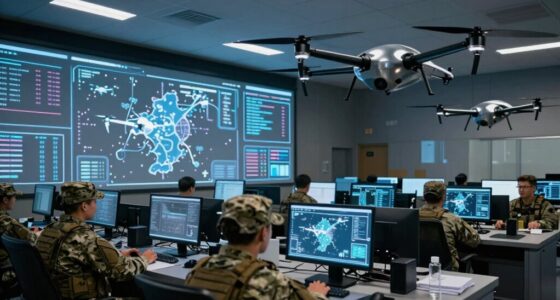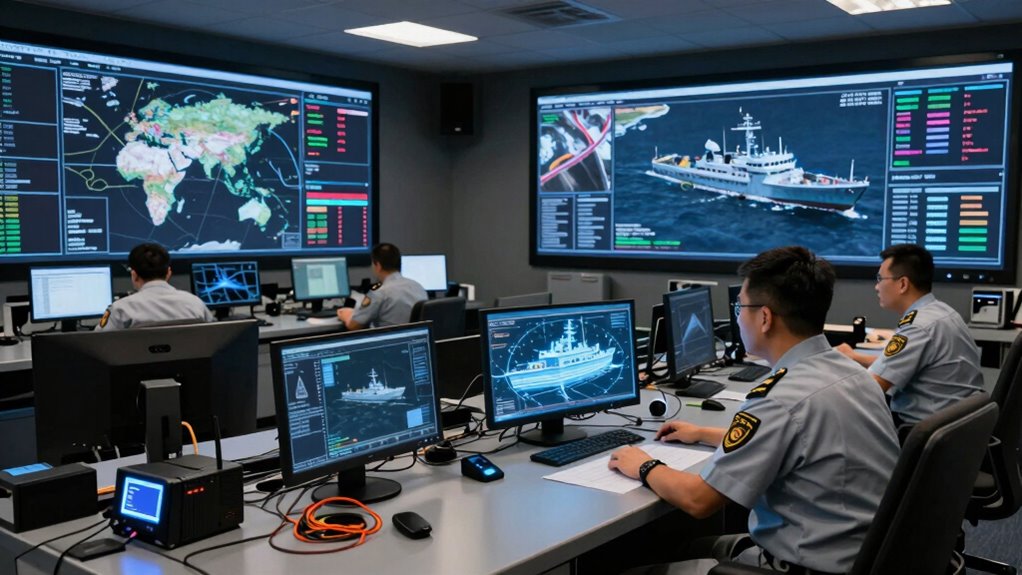

Each day, you monitor digital environments for vulnerabilities and analyze cyber threat intelligence to spot patterns and potential risks. You coordinate with agencies for surveillance and analyze satellite imagery for enemy movements. You review intercepted communications and open-source info to understand broader threats. You participate in drills, collaborate with cybersecurity experts, and update reports to support strategic decisions. To stay ahead, you continuously learn new techniques—if you want to know more, keep exploring how the Office of Naval Intelligence operates daily.
Key Takeaways
- Monitor and analyze cybersecurity threats to protect naval data and operations.
- Conduct reconnaissance and gather intelligence through surveillance, imagery, and communication interception.
- Review intercepted communications and open-source information to anticipate enemy actions.
- Collaborate with military and cybersecurity teams to simulate attacks and improve defensive measures.
- Document findings, update intelligence databases, and prepare reports for strategic decision-making.
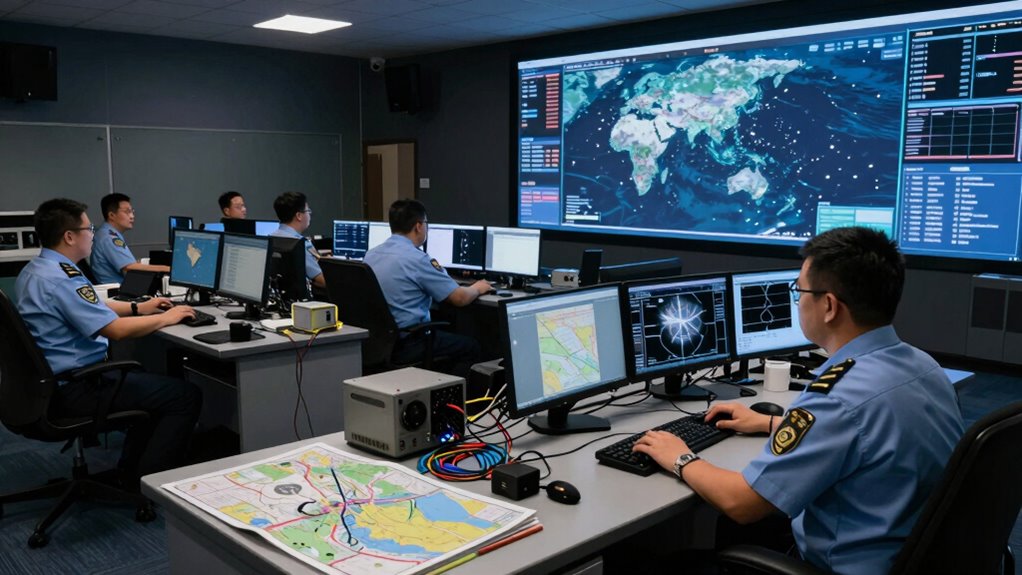
Ever wondered what a typical day at the Office of Naval Intelligence (ONI) looks like? Well, it’s a mix of high-stakes operations, strategic planning, and technical expertise. Your day might start with a briefing on the latest cyber security threats. ONI constantly monitors digital environments for vulnerabilities, trying to prevent cyber attacks that could compromise naval operations or sensitive data. You spend time analyzing cyber threat intelligence, looking for patterns or indicators of malicious activity. This involves sifting through vast amounts of data, spotting anomalies, and evaluating risks. The goal is to stay one step ahead of adversaries trying to infiltrate naval networks or steal classified information.
Monitoring digital threats and analyzing data to stay ahead of cyber adversaries.
After that, your focus shifts to reconnaissance missions. These are essential for gathering intelligence on potential threats or foreign assets. You might coordinate with other intelligence agencies or military units to plan surveillance operations—either digital or physical—that provide critical insights about enemy movements or capabilities. This involves deploying advanced sensors, intercepting communications, or analyzing satellite imagery. Your role is to guarantee the information collected is accurate, timely, and actionable. Reconnaissance missions often require tight security protocols and rapid decision-making, so you’re constantly adjusting plans based on real-time intelligence. Incorporating specialized sensors can significantly enhance the quality and scope of reconnaissance efforts, ensuring comprehensive coverage.
Throughout the day, you may also review intercepted communications or monitor open-source channels for any signs of emerging threats. ONI’s work isn’t just about gathering data—it’s about understanding the bigger picture. You analyze patterns, anticipate enemy actions, and help shape naval strategies. Your insights support decision-makers who need to respond quickly to evolving situations. This could mean advising commanders on potential cyber breaches or identifying vulnerabilities in enemy defenses. Additionally, understanding color accuracy and contrast ratios in digital platforms can be crucial when interpreting satellite images or cyber threat visuals. Accurate visual interpretation is vital for making precise assessments based on digital imagery and threat analysis. Staying current with emerging technologies and methods is essential for maintaining an edge over adversaries in the digital domain. Developing expertise in digital forensics is also increasingly important for analyzing cyber intrusions and tracing malicious activities.
In addition, you participate in training exercises designed to simulate cyber attacks or reconnaissance scenarios. These drills keep your skills sharp and prepare you for real-world challenges. You learn new techniques, test security measures, and refine your response strategies. Collaboration is indispensable; you work closely with cyber security specialists, intelligence analysts, and military operatives to guarantee seamless coordination.
As the day winds down, you document your findings, update intelligence databases, and prepare reports for senior officials. Your work at ONI is relentless and detail-oriented, always aiming to protect naval assets and maintain strategic superiority. It’s a demanding job that requires vigilance, technical expertise, and quick thinking—qualities that keep the Navy one step ahead in an increasingly complex global landscape.
PowerShell Automation and Scripting for Cybersecurity: Build Security Tools, Automate Threat Detection, and Strengthen Defense Systems with PowerShell
As an affiliate, we earn on qualifying purchases.
As an affiliate, we earn on qualifying purchases.
Frequently Asked Questions
How Do ONI Agents Maintain Operational Secrecy Daily?
You maintain operational secrecy daily by using secure channels for oceanic espionage and employing covert communication techniques. You stay vigilant about information sharing, limiting details to authorized personnel only. You leverage encryption, anonymous messaging, and clandestine methods to prevent detection. Regularly updating protocols and practicing discretion ensures your activities remain hidden, protecting both your mission and national security. This disciplined approach keeps your operations covert and effective in the complex sphere of oceanic intelligence.
What Technology Does ONI Develop for Intelligence Gathering?
You see, ONI develops advanced technology like satellite reconnaissance and cyber espionage tools to gather critical intelligence. Satellite reconnaissance allows you to monitor foreign activities from space, providing real-time insights. Cyber espionage lets you infiltrate networks discreetly, collecting valuable data without detection. These innovations help you stay ahead of adversaries, ensuring national security. ONI’s cutting-edge tech is essential for covert operations and strategic decision-making.
How Does ONI Coordinate With Other Military Branches?
You see, ONI coordinates with other military branches through joint intelligence operations, sharing crucial information on maritime espionage and covert communications. They collaborate closely, ensuring seamless data exchange and coordinated responses. By integrating efforts across services, they enhance national security. ONI’s specialized capabilities in covert communications help maintain operational secrecy, while their maritime espionage insights inform strategic decisions, making sure all branches act with unified purpose and precision.
What Training Do New ONI Recruits Undergo?
Think of ONI recruits as sailors preparing for uncharted waters. You’ll undergo rigorous training in physical fitness, ensuring you’re ready to handle demanding situations. Recruitment strategies focus on attracting top talent, with tests that challenge your mental acuity and resilience. You’ll learn espionage techniques, communication skills, and cybersecurity essentials. This intensive preparation equips you to navigate complex intelligence challenges, just like a seasoned sailor expertly steering through unpredictable seas.
How Does ONI Handle Data Analysis and Cybersecurity?
You’ll find that ONI handles data analysis and cybersecurity by actively monitoring cyber threats and safeguarding sensitive information. They use advanced data encryption to protect classified data from cyber attacks, ensuring that intel stays secure. Analysts constantly analyze patterns in cyber threats to stay ahead of potential breaches, and they implement robust security protocols to defend against intrusion attempts. This proactive approach helps maintain the integrity of naval intelligence operations.
Conclusion
So, next time you hear about naval intelligence, remember it’s more than secret missions and coded messages. Daily, you’re likely overlooking their real work—analyzing global data, tracking threats, and supporting naval operations. Some say their true purpose is to maintain maritime dominance quietly. While that might be partly true, what’s clear is that their efforts keep sailors safe and national security strong, even if their work remains mostly behind the scenes.