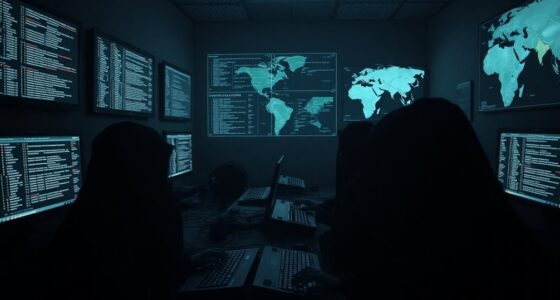


As Denmark’s Centre for Cyber Security (CFCS) raises the cyber threat level for the telecom sector from medium to high, you should be aware that repeated cyber espionage attempts are increasingly jeopardizing the industry. Foreign state-backed hackers, particularly from China, Russia, and Iran, are the main culprits behind these attacks. This growing threat impacts not just Denmark but also other European nations, which face similar risks targeting their critical infrastructure.

Get privacy and security gear delivered free — and shop member deals
- Fast, free delivery on millions of items
- Access to Prime Big Deal Days deals on October 6–7
- Prime Video, Amazon Music and more included
Telecom networks are particularly vulnerable to breaches, often resulting in service disruptions and data leaks. The consequences of such breaches aren’t trivial; they can lead to manipulated information and pose potential national security risks. Imagine waking up one day to find that your telecom service is down due to a cyber attack. It affects everyone—businesses lose revenue, and individuals face significant inconveniences.
Therefore, ensuring data security is crucial as cybercriminals relentlessly aim to intercept data transmissions. Telecom companies now face increased regulatory scrutiny, pushing them to enhance their cybersecurity measures. Economic risks are also looming; cyber threats can degrade consumer trust and hinder market growth.
With the ever-evolving nature of cyber threats, companies must continuously update their technology to maintain security. The stakes are high, and the need for robust cybersecurity practices has never been more urgent.
To combat these challenges, telecom firms should implement several vital measures. Regular software updates are essential to patch vulnerabilities that hackers might exploit. Continuous network monitoring can help detect unusual activity and enable prompt responses to potential threats.
Educating employees about phishing scams and safe internet practices is another critical step; a well-informed workforce is your first line of defense against security breaches. Data encryption is another powerful tool. By encrypting sensitive information, even if hackers gain access, they won’t easily decode the data.
Moreover, implementing multi-factor authentication makes it significantly harder for unauthorized users to access accounts, adding an extra layer of security.
Looking ahead, the Denmark telecom market is projected to grow, valued at approximately €2.5 billion by 2025. Factors like the rollout of 5G technology and increasing IoT device adoption will drive this growth.
However, as competition intensifies among established players and MVNOs, securing your network against cyber threats will be essential for sustaining progress and maintaining consumer confidence in this vital sector.
cybersecurity software for telecom
As an affiliate, we earn on qualifying purchases.
As an affiliate, we earn on qualifying purchases.
Fall Picks
fall essentials
As an affiliate, we earn on qualifying purchases.