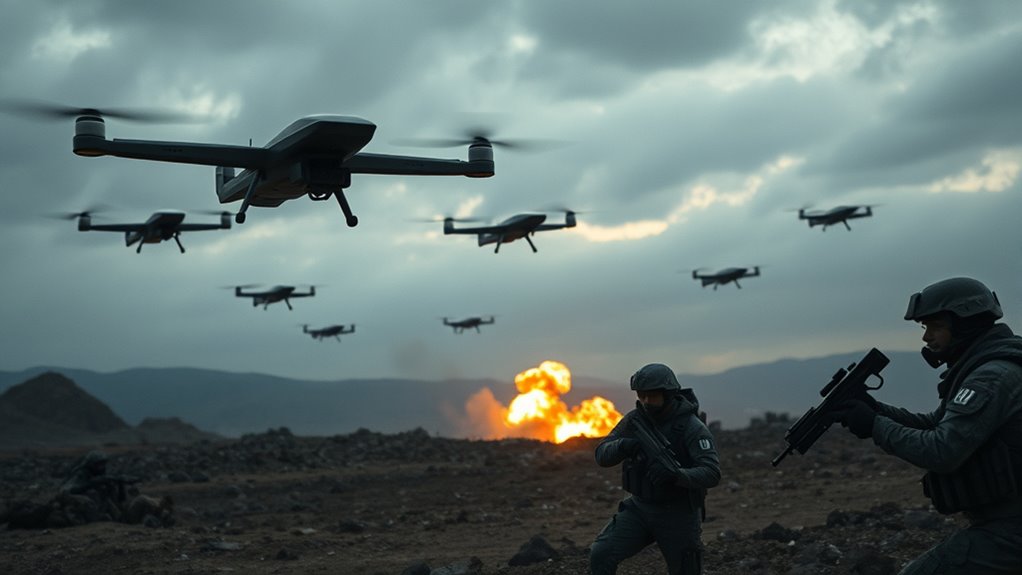

China's military upgrade, driven by Xi's AI war push, is reshaping warfare into a deadlier and more unpredictable battlefield. By 2035, they aim to integrate AI extensively, enhancing decision-making and operational efficiency. Rapid advancements from the private sector ensure the People's Liberation Army remains competitive, while autonomous unmanned systems allow for strategic advantages without risking human lives. This evolving military landscape poses significant challenges for the U.S. and its allies. Discover how these changes are impacting global security.
Open a free Amazon Business account
Business pricing, bulk buying and tax-exempt orders.
As an affiliate, we earn on qualifying purchases.
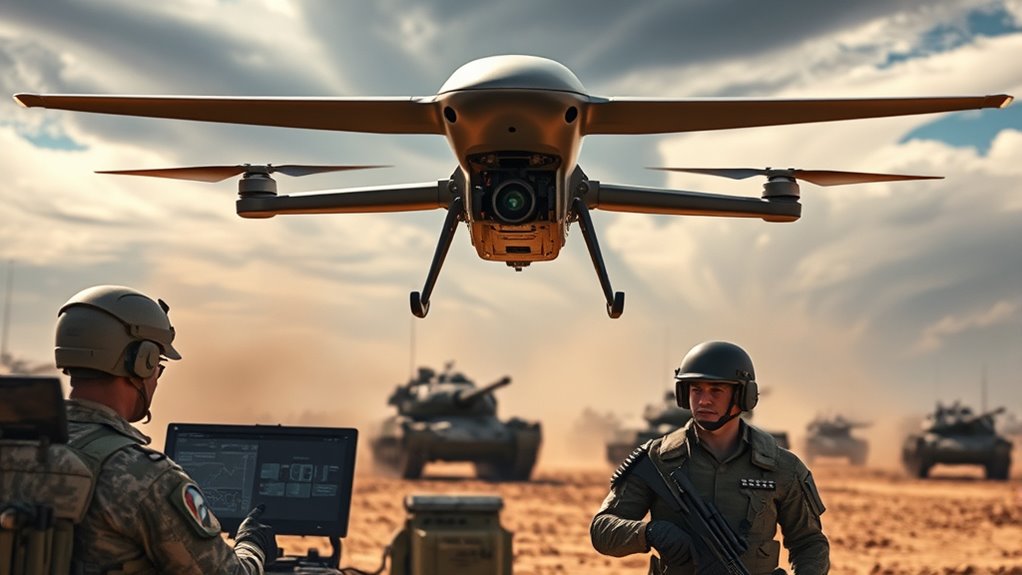
As China races toward its goal of integrating artificial intelligence into military operations by 2035, it's clear that Xi Jinping's vision for "intelligentized" warfare is reshaping the global military landscape. This ambitious plan focuses on modernizing the Chinese military, transforming it from traditional mechanization to a highly advanced, intelligentized force. You should be aware that AI plays a pivotal role in this transformation, enhancing decision-making and battlefield efficiency like never before.
China's approach hinges on a strategy known as military-civil fusion, which allows seamless integration of AI advancements from the private sector into military applications. This rapid transfer of technology means that innovations can be deployed quickly, giving China a potential edge over its adversaries. As you observe this development, keep in mind that the People's Liberation Army's Strategic Support Force is key to driving AI innovation, ensuring that China remains competitive on the global stage.
China's military-civil fusion strategy accelerates AI integration, giving it a strategic advantage through rapid technology deployment.
In terms of battlefield application, AI revolutionizes how troops manage vast amounts of information. By analyzing large data sets in real-time, AI improves tactical decision-making, enabling commanders to respond rapidly to evolving situations. Unmanned systems, including drone swarms, are becoming increasingly common, providing situational awareness and engaging in combat operations without risking human lives. This shift not only enhances China's military capabilities but also raises significant concerns for countries like the U.S. and its allies. Additionally, the PLA is pursuing greater autonomy in uncrewed systems, which could further amplify its operational effectiveness.
As you consider the strategic implications, remember that China aims to establish itself as a global leader in AI by 2030. This ambition isn't just about technology; it extends to nuclear capabilities, with projections suggesting that China could possess over 1,000 nuclear warheads by 2030. The rapid deployment of military capabilities into space further complicates the situation, increasing the risk of orbital warfare and challenging existing deterrence frameworks.
AI's role in cognitive warfare can't be overlooked either. By leveraging AI to influence adversaries' decision-making processes, China is crafting new methods of conflict that could destabilize traditional military engagements. The U.S. and its allies face daunting challenges in countering these advancements, and the urgency to develop effective strategies grows daily.
Ultimately, as you navigate this complex landscape, it's clear that Xi's AI war push isn't just about technological superiority—it's about redefining warfare itself. With AI at the forefront, the future of military operations appears more lethal and unpredictable than ever.
Conclusion
As you ponder the implications of Xi's AI war push, it's almost amusing to think that in the quest for supreme military might, China might just be crafting its own Pandora's box. You'd expect technology to bring peace, yet here it's sharpening the edge of conflict. Ironically, while nations race to harness AI for security, they might just be accelerating the very chaos they fear. In the end, who knew that innovation could lead us closer to destruction?
military drone swarm kits
As an affiliate, we earn on qualifying purchases.
As an affiliate, we earn on qualifying purchases.
Fall yard work Picks
leaf blowers
As an affiliate, we earn on qualifying purchases.