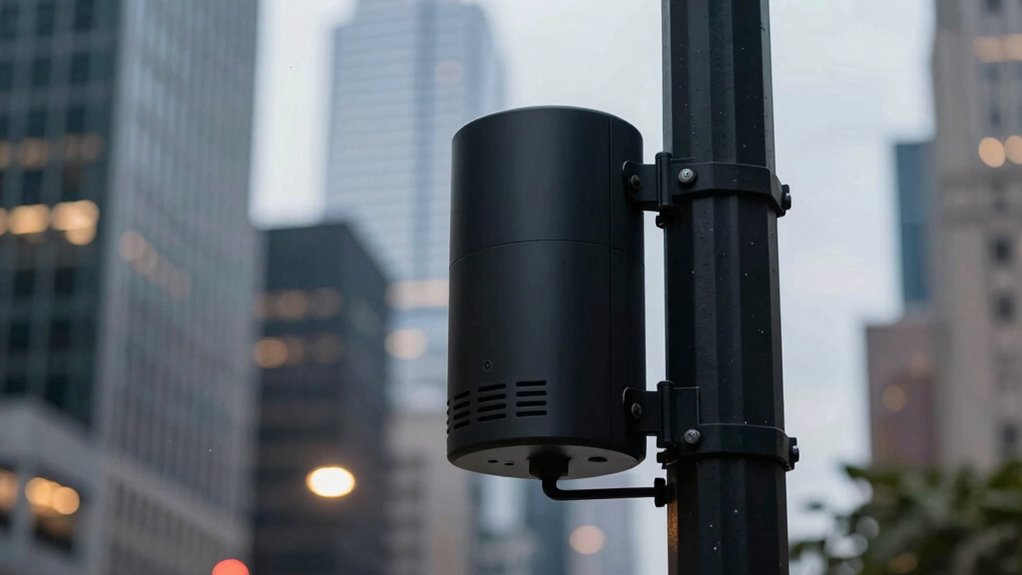

Cell-site simulators, or Stingrays, mimic real cell towers to attract your phone, allowing authorities to track your location and monitor calls, texts, and data. They often operate without your knowledge or a warrant, raising serious privacy concerns. This broad surveillance can capture info from innocent bystanders and may violate your constitutional rights. The controversy centers on how these devices are used and whether proper oversight exists. Keep exploring to understand the full scope of their impact.
Get ready for Prime Big Deal Days — try Prime free
Exclusive member deals on October 6–7, plus fast free delivery. Cancel anytime.
As an affiliate, we earn on qualifying purchases.
Key Takeaways
- Cell-site simulators mimic legitimate towers to locate and monitor phones without users’ knowledge.
- They can capture calls, texts, and data from multiple devices during broad sweeps.
- Use often occurs without warrants, raising Fourth Amendment and privacy violation concerns.
- Data retention policies and access controls are unclear, increasing risks of misuse or leaks.
- Their deployment balances investigative benefits against significant privacy and legal rights controversies.

Cell-site simulators, often called “stingrays,” are powerful tools used by law enforcement to track and intercept mobile phone communications. These devices mimic cell towers, causing nearby phones to connect to them instead of legitimate towers. When this happens, authorities can pinpoint a phone’s location, monitor calls, texts, and data, often without the phone user’s knowledge. While this technology can be invaluable for solving crimes, it raises significant privacy concerns. You might not realize that your phone could be unknowingly revealing your location and communications to law enforcement, sometimes without a warrant. This lack of transparency fuels fears about unchecked surveillance and the erosion of personal privacy.
Cell-site simulators track and intercept phones, often without user knowledge or warrants, raising serious privacy concerns.
The controversy surrounding cell-site simulators doesn’t stop at privacy issues. Legal implications are equally complex. In many cases, law enforcement agencies deploy stingrays without obtaining proper warrants, which could violate your Fourth Amendment rights against unreasonable searches and seizures. Courts are divided on whether using such devices without prior judicial approval is constitutional, and this legal gray area leads to ongoing debates. When authorities use stingrays without warrants, it threatens to set a precedent where surveillance becomes more invasive and less regulated. This situation puts citizens at risk of being monitored without any suspicion of wrongdoing, raising questions about the limits of law enforcement powers and individual rights.
Moreover, the use of cell-site simulators often involves broad sweeps that capture data from multiple phones, not just the target device. This means innocent bystanders’ information might be collected and stored, further amplifying privacy concerns. Law enforcement agencies argue that such measures are necessary to catch criminals and prevent threats, but critics contend that the potential for abuse outweighs the benefits. The lack of clear policies and oversight makes it difficult to ensure that stingray technology isn’t used excessively or improperly.
In addition, legal implications extend to issues of data retention and access. Once data is gathered, questions arise about how long law enforcement can keep it, who can access it, and how securely it’s stored. Without strict regulations, there’s a risk of misuse or leaks, further jeopardizing privacy. As a citizen, you need to be aware that while cell-site simulators can be effective investigative tools, they also pose serious questions about your rights and the potential for abuse. The ongoing debate highlights the need for clearer laws and restrictions to balance law enforcement needs with your constitutional protections.
cell phone privacy protection device
As an affiliate, we earn on qualifying purchases.
As an affiliate, we earn on qualifying purchases.
Frequently Asked Questions
How Do Cell-Site Simulators Differ From Traditional Cell Towers?
You might notice that cell-site simulators differ from traditional cell towers because they actively mimic legitimate towers to intercept signals. Unlike regular towers, they can gather data through signal interception without your knowledge. The legality of this equipment varies, often raising privacy concerns. While traditional towers serve your network provider, simulators are typically used by law enforcement or agencies, making their use controversial due to privacy and legality issues.
Can Civilians Legally Purchase or Use Cell-Site Simulators?
Think of a cell-site simulator as a secret garden tool—powerful but not for everyone. You can’t legally purchase or use them as a civilian, because of strict legal restrictions meant to protect privacy and security. While some devices might be available on the commercial market, they’re often heavily regulated or outright illegal for personal use. Using one without proper authorization could land you in serious legal trouble.
What Safeguards Exist to Prevent Misuse of Cell-Site Simulators?
Legal oversight and technological safeguards are in place to prevent misuse of cell-site simulators. You’re protected by laws requiring law enforcement to obtain warrants before using these devices, ensuring proper oversight. Additionally, technological safeguards like encryption and access controls limit unauthorized use. These measures aim to balance investigative needs with privacy rights, though ongoing debate emphasizes the importance of transparency and strict regulation to prevent abuse.
How Long Do Cell-Site Simulators Typically Operate During an Investigation?
Typically, cell-site simulators operate for a few hours during an investigation, but this varies based on legal restrictions and technical limitations. You should know that law enforcement agencies often set strict time limits to prevent misuse, ensuring they don’t run longer than necessary. These restrictions help protect privacy rights, while technical constraints like battery life and signal range also influence how long a simulator can actively gather data during an investigation.
What Are the Privacy Implications for Bystanders Near These Devices?
You might worry about privacy concerns when you’re near cell-site simulators, as they can unintentionally capture data from bystanders. This impact raises questions about your personal information being monitored without your knowledge or consent. Bystander impact is significant because these devices can collect metadata and signals from nearby devices, potentially infringing on privacy rights. Staying aware of your surroundings and understanding these tools helps you better protect your personal privacy.
Conclusion
In the end, cell-site simulators walk a fine line between useful tools and privacy invaders. While they can help catch criminals, they also raise serious concerns about unwarranted surveillance. You don’t want to throw the baby out with the bathwater, but you also don’t want your rights to be trampled in the process. Staying informed and vigilant is key—after all, knowledge is power when it comes to protecting your privacy in this tech-driven world.
Fall Picks
fall essentials
As an affiliate, we earn on qualifying purchases.