
Encryption keeps your secrets safe by turning readable information into complex code that only authorized people can unlock with special keys. You use algorithms like AES or RSA to lock and unlock data, ensuring no one else can access it without permission. While strong encryption is tough to break, attackers use methods like brute-force or cryptanalysis to try. If you’re curious, there’s more to discover about how these techniques stay ahead of hackers.
Key Takeaways
- Encryption transforms readable data into ciphertext using complex algorithms and keys, making it inaccessible without proper decryption keys.
- Symmetric encryption uses the same key for locking and unlocking data, while asymmetric encryption employs a public key for encryption and a private key for decryption.
- Security relies on strong algorithms, long keys, and resistance to attacks like brute-force and cryptanalysis, which attempt to break encryption.
- Attackers can break encryption through brute-force methods, exploiting vulnerabilities, or using cryptanalysis to find weaknesses in algorithms.
- Ongoing research and technological advancements continually improve cryptography, helping protect secrets from unauthorized access and potential breaches.
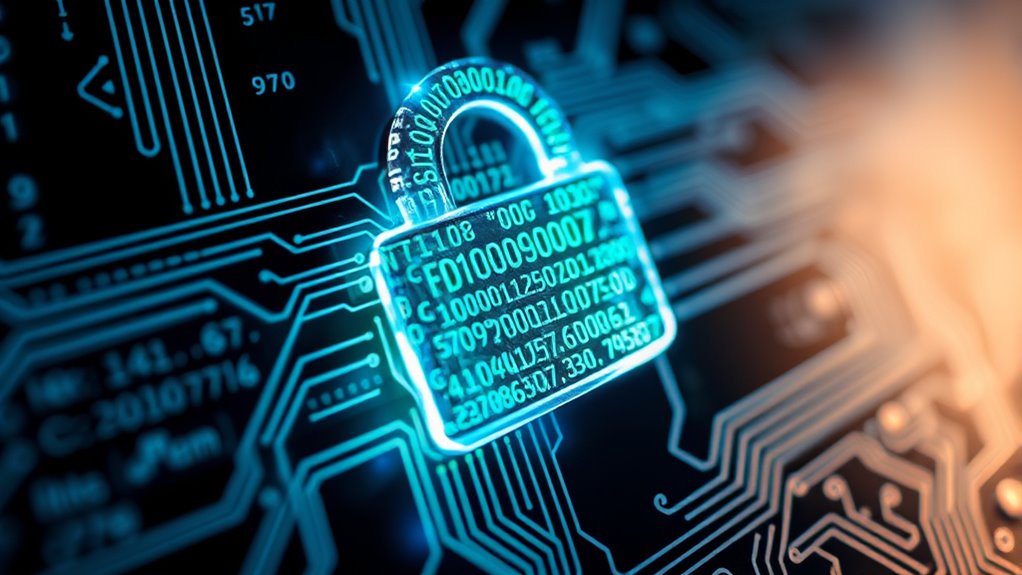
Have you ever wondered how your online information stays private and secure? It’s a fascinating world rooted in cryptography fundamentals, which is the science of protecting data through complex mathematical techniques. At its core, encryption transforms readable information, or plaintext, into an unreadable format called ciphertext. This process relies heavily on encryption algorithms, which are the set of rules used to perform the encryption and decryption. These algorithms are carefully designed to guarantee that only authorized parties can access the original data, making your emails, banking details, and personal messages safe from prying eyes.
Cryptography fundamentals protect your data with complex mathematical techniques and encryption algorithms ensuring privacy and security.
Understanding cryptography fundamentals helps you appreciate how encryption algorithms work behind the scenes. These algorithms use keys—unique strings of characters—that lock and unlock data. Symmetric encryption algorithms, for example, use the same key for both encrypting and decrypting information. This makes them fast and efficient, ideal for securing large data sets. On the other hand, asymmetric encryption employs a pair of keys: a public key to encrypt the data and a private key to decrypt it. This approach provides an extra layer of security, especially in scenarios like online banking and secure communications.
Encryption algorithms are tested rigorously by security experts to prevent vulnerabilities. Popular algorithms like AES (Advanced Encryption Standard) are trusted because they’ve withstood years of scrutiny and attack attempts. These algorithms rely on complex mathematical operations, such as substitution and permutation, to scramble data in ways that are extremely difficult for anyone without the proper key to reverse. The strength of an encryption algorithm depends on factors like key length, computational complexity, and resistance to known attack methods. Longer keys generally mean better security, but they also require more processing power.
While encryption algorithms are designed to keep information secure, they’re not invincible. Skilled attackers use various methods, like brute-force attacks, where they systematically try every possible key, or cryptanalysis, which exploits weaknesses in the algorithms. That’s why ongoing research in cryptography is crucial, constantly evolving to stay ahead of potential threats. When someone manages to break an encryption, it usually involves exploiting vulnerabilities in the algorithms or gaining access to the keys themselves. Additionally, the complex mathematical operations involved in encryption add an extra layer of difficulty for attackers attempting to decipher protected data.
In the end, your online privacy hinges on the strength of these cryptography fundamentals and encryption algorithms. They form a complex but essential shield, guaranteeing that your digital secrets remain private. As technology advances, so does the need to understand and improve these cryptographic techniques, helping you stay one step ahead of those trying to access your information without permission.

The Design of Rijndael: AES – The Advanced Encryption Standard
- Condition: Used Book in Good Condition
As an affiliate, we earn on qualifying purchases.
As an affiliate, we earn on qualifying purchases.
Frequently Asked Questions
Can Encryption Be Completely Unbreakable?
Encryption can’t be completely unbreakable because cryptography challenges and encryption vulnerabilities always exist. While strong algorithms make it extremely difficult for attackers to crack your data, clever hackers and advances in technology might find ways around them. You should always stay updated on security practices and use best practices like strong passwords and multi-factor authentication, as no encryption method is entirely invulnerable.
What Is the Difference Between Symmetric and Asymmetric Encryption?
Imagine passing a secret note—symmetric encryption is like sharing a single key to both write and read it, making it quick but risky if someone intercepts the key. Asymmetric encryption, on the other hand, uses a pair of keys—public and private—for secure key exchange. This method relies on complex encryption algorithms, ensuring your messages stay safe even if the public key is known.
How Do Quantum Computers Threaten Current Encryption Methods?
Quantum computers threaten current encryption methods because they can run quantum algorithms like Shor’s algorithm, which can quickly break cryptography vulnerabilities such as RSA and ECC. This means your encrypted data could become vulnerable if powerful quantum machines emerge. To stay ahead, researchers are developing quantum-resistant cryptography, but until then, your secrets may be at risk, so it’s crucial to stay informed about these technological advancements.
Is Encryption Illegal in Any Countries?
You might wonder if encryption is illegal somewhere. In some countries, strict encryption legislation limits its use, making it almost like a locked vault you can’t open. Governments may use surveillance to peek inside, but these laws can also restrict your privacy rights. While encryption itself isn’t universally banned, these regulations cast a shadow over digital security, turning your private communications into a guarded secret, watched closely by authorities.
How Can I Tell if My Data Is Properly Encrypted?
You can tell if your data is properly encrypted by checking if it uses recognized encryption standards like AES or RSA, which ensure strong security. Look for secure protocols such as HTTPS or VPNs that indicate proper encryption. Additionally, verify data integrity through hashing or checksums, which confirm your data hasn’t been tampered with. Proper encryption guarantees your data remains confidential and maintains its integrity during transmission or storage.

The Mathematics of Secrets: Cryptography from Caesar Ciphers to Digital Encryption
As an affiliate, we earn on qualifying purchases.
As an affiliate, we earn on qualifying purchases.
Conclusion
Think of encryption as a secret garden, hidden behind towering walls and guarded gates. Only those with the key can step inside and uncover its treasures. While some might try to breach these defenses, strong encryption keeps your secrets safe, like a lighthouse guiding ships through stormy seas. By understanding these protections, you can navigate the digital world with confidence, knowing your information remains yours alone—hidden in plain sight, just like a whisper in the wind.
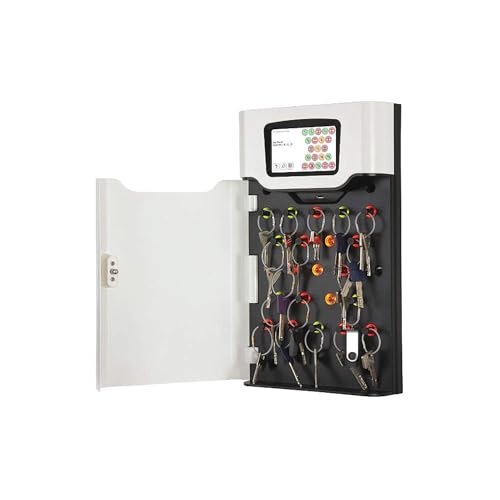
Medeco EA-100117 T21 High Security Key Cabinet Electronic Key Management
- Product Type: Medeco EA-100117 T21 Key Cabinet
- Mounting Style: Wall Mount
- Key Capacity: Holds 21 Keys
As an affiliate, we earn on qualifying purchases.
As an affiliate, we earn on qualifying purchases.

KEYESTUDIO Microbit Basic Starter Kit for BBC Micro:bit V2 Accessories STEM Kit Coding for Beginners (Micro:bit V2.21 Included)
- Includes Microbit V2.21 Controller: Built-in BLE, accelerometer, compass, buttons, LED matrix
- Comprehensive Starter Kit: Resistors, LEDs, sensors, display, for 18+ projects
- Detailed Tutorials Provided: Guides on wiring, coding, installation, and projects
As an affiliate, we earn on qualifying purchases.
As an affiliate, we earn on qualifying purchases.