

To separate signal from noise, you must validate data by cross-checking sources and verifying credibility, ensuring what you act on is accurate. Be aware of your biases shaped by past experiences and environment, as they can distort your view. Focus on meaningful signals by filtering out irrelevant information, especially in complex environments. Continuously question your assumptions and check for recent developments. Mastering these strategies will help you refine your analysis and uncover genuine insights that matter most.
Key Takeaways
- Use data validation techniques to verify the credibility and accuracy of information before analysis.
- Apply critical thinking to question assumptions and identify potential biases affecting interpretation.
- Filter data sources to focus on relevant, credible information, reducing the impact of noise.
- Continuously compare new data with existing intelligence to detect consistent signals.
- Maintain awareness of contextual biases to avoid misinterpreting misleading or irrelevant information.

Have you ever wondered how intelligence analysts distinguish meaningful information from the overwhelming amount of data they receive? It’s a complex process that requires sharp judgment, critical thinking, and a keen eye for detail. At the heart of this task is the challenge of separating signal—the valuable, actionable insights—from noise, which can be misleading or irrelevant information. To do this effectively, you need to be aware of factors like contextual biases that can distort your perception. Contextual biases occur when your prior experiences, assumptions, or the environment influence how you interpret data, often leading you to see what you expect rather than what’s actually there. Recognizing these biases is vital because they can cause you to overlook important details or give undue weight to misleading information.
Recognizing biases is crucial to avoid overlooking key details and misinterpreting data.
To counteract these biases, you must engage in rigorous data validation. Data validation acts as a filter, guaranteeing that the information you rely on is accurate, complete, and credible. This process involves cross-checking multiple sources, verifying the origins of data, and evaluating the reliability of each piece of information. When you validate data thoroughly, you reduce the risk of acting on false or distorted signals. It’s about establishing confidence in your inputs before drawing conclusions. Without validation, your analysis could be compromised by errors, misinformation, or biased reports, all of which add to the noise that obscures the true signal. Understanding the role of cybersecurity tactics can help you identify potential threats that might otherwise be mistaken for benign data. Additionally, being aware of information overload helps you develop strategies to focus on relevant data and avoid being overwhelmed. Knowing about data sources and their credibility also strengthens your ability to filter out irrelevant information.
Effective intelligence analysis demands a disciplined approach to filtering out irrelevant or misleading information. You need to remain alert to the influence of contextual biases and actively question your assumptions. Is this piece of information consistent with other data? Could your interpretation be colored by recent experiences or external pressures? By continuously applying validation checks and challenging your perceptions, you sharpen your ability to identify genuine signals. This process isn’t a one-time effort but an ongoing practice, especially in fast-changing environments where new data constantly arrives.
In essence, separating signal from noise hinges on your capacity to maintain objectivity and rigorously validate your data. Recognizing the role of biases helps you stay aware of potential pitfalls, while diligent validation ensures that your conclusions are based on trustworthy information. When you combine these strategies, you enhance your ability to extract meaningful insights from a sea of data, making your analysis more accurate, timely, and actionable.
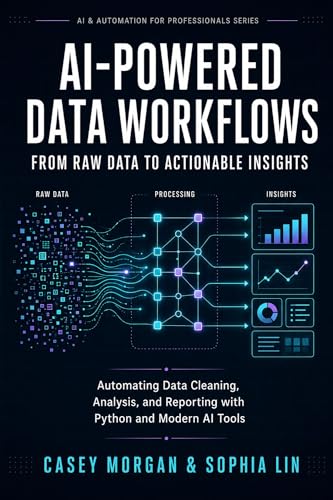
AI-Powered Data Workflows: From Raw Data to Actionable Insights: Automating Data Cleaning, Analysis, and Reporting with Python and Modern AI Tools (AI & Automation for Professionals Series Book 3)
As an affiliate, we earn on qualifying purchases.
As an affiliate, we earn on qualifying purchases.
Frequently Asked Questions
How Do Analysts Handle Conflicting Data Sources?
You handle conflicting data sources by using data triangulation, cross-referencing multiple sources to confirm accuracy. You verify each source carefully, checking for credibility and consistency. When discrepancies arise, you analyze the context and look for patterns or corroborating evidence. This process helps you filter out noise, ensuring your assessments are based on reliable, corroborated information. Staying objective and methodical allows you to navigate conflicting data confidently.
What Role Does Technology Play in Filtering Noise?
Technology plays a vital role in filtering noise, especially through machine learning and data visualization. You rely on machine learning algorithms to identify patterns and prioritize relevant information, reducing the impact of irrelevant data. Data visualization helps you quickly interpret complex data sets, making it easier to spot signals amid noise. Together, these tools enhance your ability to focus on meaningful insights, ensuring you make well-informed decisions efficiently.
How Is Bias Minimized in Intelligence Analysis?
You can minimize bias by actively recognizing your cognitive biases and questioning your assumptions. Use analytical heuristics to guide your reasoning, but stay vigilant for shortcuts that might skew your judgment. Regularly cross-check your conclusions with diverse perspectives, encouraging constructive debate. This approach helps you stay objective, ensuring your analysis remains balanced and credible, even when faced with complex or ambiguous information.
What Training Is Required to Improve Signal Detection Skills?
To improve your signal detection skills, you need targeted training in pattern recognition and cognitive training exercises. These programs help you identify subtle clues and distinguish meaningful data from background noise. You’ll learn to develop sharper analytical instincts, enhance your focus, and reduce bias. Consistent practice with real-world scenarios and feedback is essential, enabling you to quickly spot critical signals and improve your overall intelligence analysis accuracy.
How Do Analysts Determine the Credibility of Information?
You determine the credibility of information through source verification and credibility assessment. You check the origin of the data, considering the source’s reliability, reputation, and consistency with other intelligence. You also evaluate the context, possible biases, and corroborate details with multiple sources. This thorough process helps you filter out unreliable information, ensuring you base your analysis on credible, verified data, which is essential for accurate intelligence.
Conclusion
Think of intelligence analysis as tuning a radio—you sift through static and distractions to catch that clear, crisp signal. By sharpening your focus and trusting your instincts, you can cut through the noise like a skilled chef filleting a fish, revealing the valuable insights hidden beneath. Remember, every piece of noise is just part of the symphony, and with patience, you’ll tune into the true melody of the story. Stay sharp, and the signal will always find you.