
Power inverters for vehicles convert the DC power from your battery into AC power, just like household outlets. This allows you to run everyday devices such as laptops, chargers, or small appliances while on the road. It’s important to match the inverter’s input voltage and wattage to your vehicle’s system to avoid damage or overloads. If you’re curious about how to choose the right inverter and install it safely, you’ll find helpful information below.

Get privacy and security gear delivered free with Prime
- Fast, free delivery on millions of items
- Prime Video, Amazon Music and more included
- Member-only deals all year
Key Takeaways
- Power inverters convert DC vehicle battery power into AC household-compatible electricity.
- Proper matching of inverter voltage and vehicle battery prevents damage and ensures safety.
- Inverter wattage ratings determine the ability to power specific devices reliably.
- Correct installation with adequate ventilation and wiring is essential for performance and safety.
- Understanding vehicle electrical systems helps select suitable inverters and avoid electrical issues.
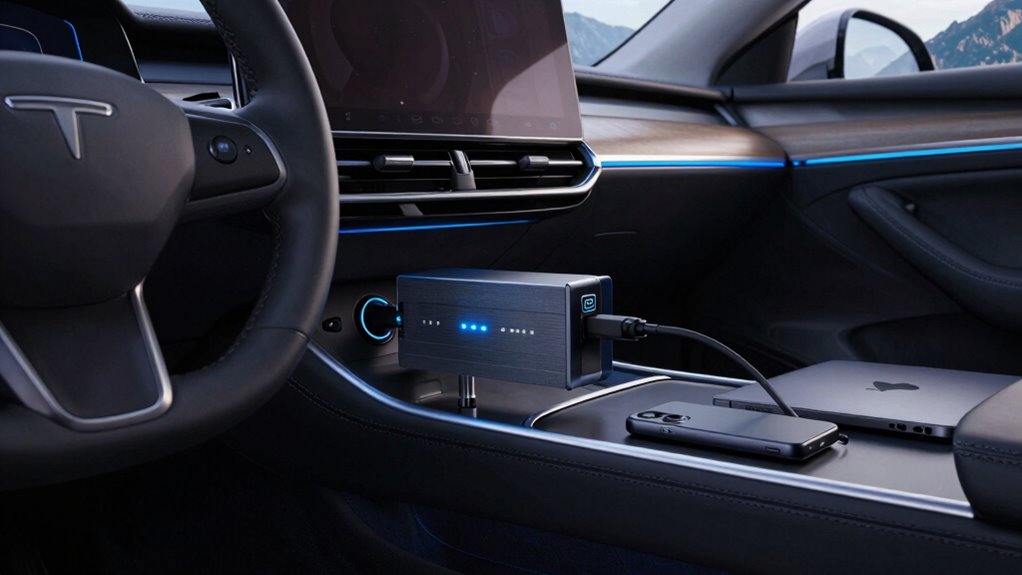
A key factor to evaluate when choosing a power inverter is battery compatibility. Your vehicle’s battery supplies the DC power that the inverter will convert, so you need to verify the inverter’s input voltage aligns with your battery’s specifications—most commonly 12V or 24V. Using an inverter incompatible with your battery voltage can cause damage to the inverter or your vehicle’s electrical system. Additionally, pay attention to the inverter’s wattage capacity and surge ratings. If you plan to run power-hungry devices, you’ll need an inverter with a higher continuous wattage rating and a robust surge capacity to handle initial startup currents. Understanding your vehicle’s electrical system is essential to ensure safe and efficient use of the inverter. Proper installation considerations are equally important. Proper installation not only maximizes performance but also guarantees safety. You should contemplate where and how you mount the inverter; it needs good ventilation to prevent overheating, especially during extended use. Also, verify you connect it directly to the battery using heavy-gauge wiring to handle the current safely. Using the vehicle’s cigarette lighter socket might seem convenient, but it typically limits power output and may not support larger devices. For added safety and efficiency, consider appropriate wiring to ensure reliable operation. Before installing, check your vehicle’s manual for any specific wiring or fuse requirements, and consider consulting a professional if you’re unfamiliar with electrical systems. Electrical system knowledge can help you make informed decisions during installation and operation. Gaining a comprehensive understanding of inverter technology can also aid in selecting the right model for your needs and ensuring reliable performance.
Products Worth Considering

Apple MacBook Air 13.6-inch Laptop with M5 Chip, 16GB Memory, 512GB SSD, Sky Blue

Anker SOLIX C1000 Gen 2 Portable Power Station, 1,024Wh

Jackery Explorer 1000 v2 Portable Power Station, 1070Wh, 1500W
As an affiliate, we earn on qualifying purchases.
Frequently Asked Questions
Can Vehicle Power Inverters Run High-Wattage Appliances Safely?
Yes, vehicle power inverters can run high-wattage appliances safely if you choose one with sufficient wattage capacity. Check the inverter’s appliance compatibility and verify it can handle your appliance’s power requirements. Remember, higher wattage inverters tend to be more power efficient for larger loads, reducing strain on your vehicle’s electrical system. Always follow manufacturer guidelines to prevent overloads and guarantee safe operation.
How Long Can a Vehicle Power Inverter Operate Continuously?
Like a well-oiled machine, your vehicle inverter can run for hours if you guarantee proper battery compatibility and meet installation requirements. Typically, it operates continuously from a few hours up to 24 hours, depending on the inverter’s wattage and your vehicle’s power capacity. Keep an eye on temperature and battery health, and avoid overloading the system to prevent overheating or drain, ensuring a smooth, uninterrupted power supply.
Are There Safety Risks Using Inverters While Driving?
Using inverters while driving does pose safety risks if you’re not careful. You should guarantee proper electrical grounding to prevent shocks and short circuits. Overload protection is essential, as exceeding the inverter’s capacity can cause overheating or damage. Always follow manufacturer guidelines, avoid plugging in too many devices, and disconnect the inverter when not in use to minimize risks and make certain of safe operation on the road.
Do Inverters Drain the Vehicle’s Battery?
Yes, inverters can drain your vehicle’s battery if used excessively or with high power loads. They draw power from the battery, so prolonged use may lead to battery drain, especially if your engine isn’t running. To prevent this, practice good power management by turning off the inverter when not in use and avoiding high-wattage devices. This helps guarantee your vehicle’s battery stays charged and ready to start.
What Is the Lifespan of a Typical Vehicle Power Inverter?
Ever wondered how long your vehicle power inverter lasts? Typically, a well-made inverter can serve you for around 3 to 5 years, depending on usage and quality. You might ask, what affects this lifespan? It’s mainly battery efficiency and inverter durability. Proper maintenance, avoiding constant heavy loads, and choosing a high-quality model can extend your inverter’s life, ensuring reliable power when you need it most.
Conclusion
Think of a vehicle power inverter as the heartbeat of your journey, transforming the engine’s raw power into a essential pulse that keeps your devices alive. It’s more than just electricity; it’s your bridge between motion and convenience, a silent guardian ensuring your gadgets never fade into darkness. As you navigate roads, remember this small device is your beacon, turning the engine’s energy into endless possibilities—fueling your adventures and your everyday life alike.