A Secure Compartmented Information Facility (SCIF) is a highly secure space designed to protect sensitive information from unauthorized access and espionage. You’ll find strict physical security measures like secure doors, soundproof walls, and surveillance systems, along with advanced encryption protocols to safeguard digital data. Access is limited to trusted personnel with proper clearance, and thorough vetting guarantees only those with a need-to-know can enter. To understand the full scope of SCIFs, keep exploring how they integrate technology and human oversight for complete security.

Get privacy and security gear delivered free — and shop member deals
- Fast, free delivery on millions of items
- Access to Prime Big Deal Days deals on October 6–7
- Prime Video, Amazon Music and more included
Key Takeaways
- SCIFs are secure environments designed to protect classified information from unauthorized access and eavesdropping.
- They use advanced encryption protocols to safeguard digital communications and data transmission.
- Access is restricted to vetted personnel with high-level security clearance and a need-to-know basis.
- Physical security features include soundproof walls, secure entry points, surveillance, and intrusion detection systems.
- They integrate technology, physical security, and human oversight to ensure holistic protection of sensitive information.
Have you ever wondered how sensitive government or corporate information stays protected from unauthorized access? The answer lies in secure environments called Secure Compartmented Information Facilities, or SCIFs. These facilities are specially designed to safeguard classified information, guaranteeing that only authorized personnel can access it. To achieve this level of security, multiple layers of protection are employed, including strict encryption protocols and personnel vetting procedures.
Encryption protocols are the backbone of data security within a SCIF. They encode information so that even if someone manages to intercept data, they can’t understand it without the correct decryption keys. These protocols are constantly updated and tested to counteract evolving cyber threats, making certain that sensitive information remains confidential. Encryption isn’t just about software; it’s integrated into all communication channels and data storage within the facility. This means emails, voice calls, and stored documents are all protected by sophisticated encryption measures, preventing unauthorized eavesdropping or data breaches.
Encryption ensures all data—emails, calls, documents—remains secure and confidential within a SCIF, thwarting unauthorized access.
Personnel vetting is equally essential. Not everyone is allowed into a SCIF—only individuals with the highest level of security clearance and a need-to-know basis can gain access. This process involves rigorous background checks, interviews, and continuous monitoring to verify trustworthiness. You, as an authorized person, are subjected to thorough screening, including criminal record checks, financial history, and foreign contacts assessment. Once inside, your access is limited to only the information relevant to your role, minimizing the risk of accidental or intentional leaks.
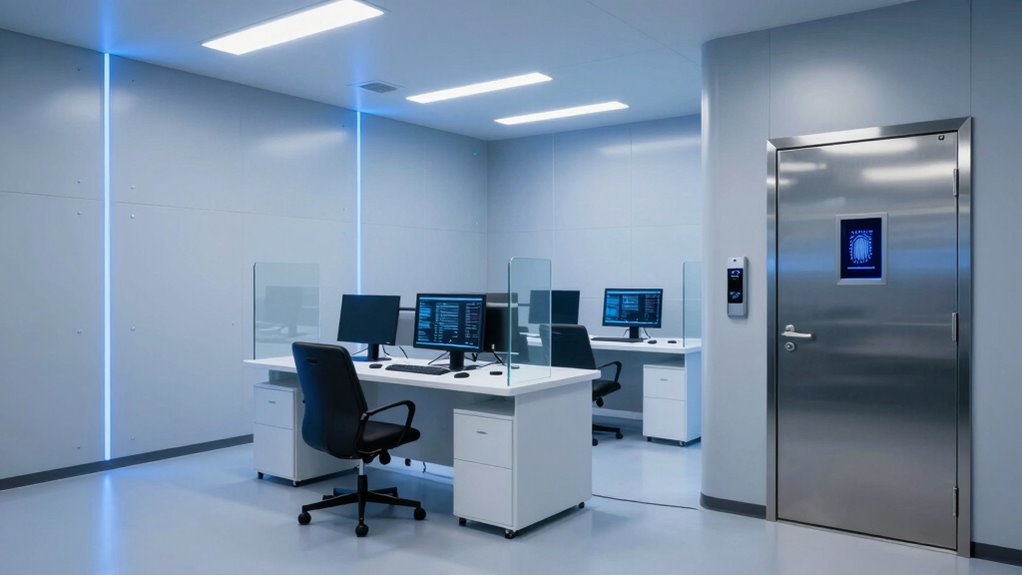
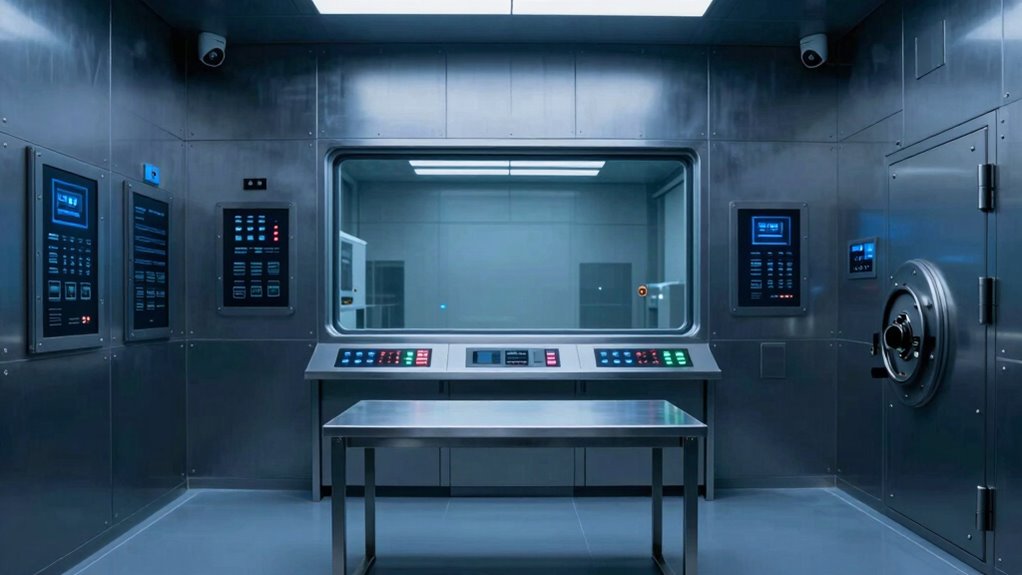
The physical structure of a SCIF also plays a key role. It’s constructed to prevent eavesdropping and unauthorized entry, with soundproof walls, intrusion detection systems, and controlled entry points. But the security doesn’t stop at the physical barrier. Electronic surveillance, access logs, and strict visitor controls are maintained to guarantee accountability. Additionally, physical security measures like secure doors, alarms, and controlled entry points are crucial for maintaining the integrity of the facility.
In essence, a SCIF isn’t just a high-security room; it’s a holistic system combining advanced technology, physical security, and human oversight. Encryption protocols keep digital data safe, while personnel vetting ensures only trustworthy individuals gain access. This combination creates a secure environment where sensitive information can be discussed, stored, and transmitted with confidence. Whether for intelligence agencies or corporate giants, understanding what a SCIF is helps you appreciate the meticulous efforts taken to protect the most sensitive information from malicious threats or accidental disclosure.
soundproof security room doors
As an affiliate, we earn on qualifying purchases.
As an affiliate, we earn on qualifying purchases.
Frequently Asked Questions
How Much Does a SCIF Typically Cost to Build?
A SCIF typically costs between $50,000 and $100,000 to build, depending on size, security protocols, and required features. You need to take into account specialized construction, secure communications, and strict access controls during scif construction. These security protocols guarantee sensitive information stays protected, which can greatly influence costs. Be prepared for ongoing expenses related to maintenance and inspections to uphold the security standards necessary for a compliant SCIF.
Who Is Authorized to Access a SCIF?
Imagine you’re a top intelligence analyst, trusted to handle sensitive info. Only personnel with proper security clearance and a need-to-know basis can access a SCIF, following strict classified protocols and access control measures. For example, government officials, cleared contractors, and certain military personnel are authorized, but unauthorized visitors are strictly prohibited. You’re responsible for maintaining these protocols to prevent leaks and protect national security.
How Are SCIF Security Breaches Detected?
You detect SCIF security breaches through breach detection systems that monitor unauthorized access attempts and unusual activity. These systems track entry logs, alarm triggers, and electronic signals to identify potential breaches quickly. You also conduct regular inspections and review access records to spot anomalies. Combining technological safeguards with physical checks helps guarantee that any unauthorized access or breach is promptly identified, maintaining the integrity and security of the SCIF.
Can a SCIF Be Moved or Relocated Easily?
Did you know that relocating a SCIF can be complex, often taking several weeks? A portable design can ease the process, but relocation challenges remain significant. You need to carefully dismantle and reassemble security features, such as shielding and access controls. Moving a SCIF isn’t simple—it requires meticulous planning to maintain compliance and security standards, making easy relocation nearly impossible without expert coordination.
What Are the Maintenance Requirements for a SCIF?
You need to regularly maintain your SCIF by checking access control systems and guaranteeing physical security measures are intact. This includes inspecting alarms, surveillance, and entry points for vulnerabilities. You should also verify that all security devices function properly, update access logs, and conduct routine security audits. Proper maintenance ensures the SCIF remains secure, compliant, and effective in protecting sensitive information from unauthorized access or breaches.
Conclusion
As you step inside a SCIF, every sound seems to hush, every shadow whispers secrets. The air feels thick with confidentiality, and the unseen walls guard truths you can’t yet fully grasp. You realize this isn’t just a room—it’s a fortress of silence, a vault where knowledge is locked tight, waiting for the right moment to reveal what lies beneath. In this quiet, the weight of secrecy lingers, leaving you wondering what’s hidden just beyond the threshold.
Fall Picks
fall essentials
As an affiliate, we earn on qualifying purchases.