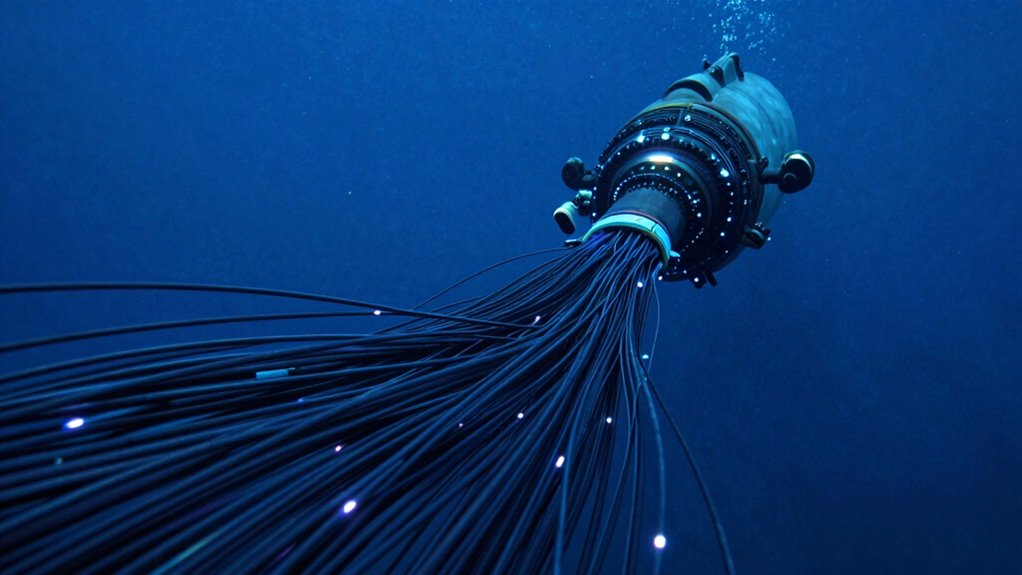

You might not realize it, but undersea cable interception has become a strategic priority because these cables carry most of the world’s internet and communication data. Governments and private companies see intercepting or protecting these links as essential for national security, economic stability, and global influence. Monitoring and disrupting cables gives insight into foreign plans and vulnerabilities, helping shape diplomacy and security efforts. If you keep exploring, you’ll discover how technological advances are shaping this critical field even further.
Key Takeaways
- The strategic importance of undersea cables grew due to their critical role in global communication and economic stability.
- Advances in interception technology enhanced surveillance capabilities, making cable interception vital for intelligence gathering.
- Concerns over cybersecurity threats and potential cable disruptions elevated their protection as a national security priority.
- Interception of data reveals foreign intentions and vulnerabilities, influencing diplomatic and military strategies.
- Increasing geopolitical tensions and technological advancements prompted nations to prioritize monitoring and safeguarding these infrastructures.

This heightened focus on undersea cable interception has transformed into a strategic priority because of its implications for national security and global stability. Countries see the ability to monitor or disrupt these cables as a means to assert influence or safeguard their interests. For instance, intercepting data flowing through these cables can reveal intentions, vulnerabilities, or plans of foreign powers, giving a significant advantage in diplomatic or military negotiations. Conversely, the risk of cable tapping also raises concerns about maritime security, as hostile actors could potentially disable or damage cables to disrupt critical infrastructure, leading to widespread outages and economic chaos.
The surge in efforts to secure these underwater routes reflects a growing understanding that digital and maritime security are intertwined. Protecting undersea cables isn’t simply about maintaining internet connectivity; it’s about safeguarding the backbone of global communication networks. When nations invest in undersea cable security, they are fundamentally fortifying their digital borders, preventing espionage, and ensuring the resilience of international data flows. This has led to increased collaboration between military and civilian agencies, as well as private companies, to monitor threats and develop rapid response strategies. Recognizing the technological advancements in cable interception is essential for understanding how these operations evolve and adapt to emerging challenges. Furthermore, the evolving sophistication of interception techniques underscores the need for continuous innovation in security measures.
You also need to recognize that undersea cable interception is a game-changer in the domain of global surveillance. It allows for real-time access to vast streams of data, which can be used for intelligence, counterterrorism, or economic espionage. As cyber threats evolve, so does the importance of these covert operations. Countries are now viewing undersea cable interception not just as a way to gather intelligence but as a crucial element of their maritime security. Protecting these underwater arteries has become a strategic priority because it ensures national security, supports global surveillance efforts, and maintains the stability of the interconnected world you rely on daily. Additionally, understanding the sophisticated techniques used in these operations can help nations better prepare for emerging threats. The integration of advanced interception technology into these efforts has significantly increased the scope and effectiveness of surveillance capabilities.
undersea cable security monitoring equipment
As an affiliate, we earn on qualifying purchases.
As an affiliate, we earn on qualifying purchases.
Frequently Asked Questions
How Do Countries Monitor Undersea Cable Traffic Legally?
You monitor undersea cable traffic legally by leveraging diplomatic channels and international agreements, ensuring compliance with national laws. Countries may collaborate with cable operators or use legal intercepts to address undersea cable vulnerabilities, all while steering diplomatic tensions. You focus on authorized methods like legal warrants and international cooperation, which help prevent cyber threats and espionage, maintaining security without breaching international laws or escalating diplomatic issues.
What Technologies Are Used for Intercepting Undersea Cables?
You use advanced technologies like fiber optic signal tapping and specialized equipment to intercept undersea cables. Fiber optic systems transmit data through light pulses, making signal tapping a challenge that requires precise, covert methods. You might deploy submarine cable taps or install interception devices directly onto the cable’s core. These techniques allow you to access and analyze data traffic, ensuring your intelligence operations stay ahead of potential threats.
Who Are the Main Actors Involved in Cable Interception?
You should know that the main actors involved in cable interception include governments, intelligence agencies, and military entities, all focused on undersea espionage. They target cable vulnerabilities to gather intelligence or disrupt communications. Countries with advanced technological capabilities often lead these efforts, and private companies may also be involved. Understanding these actors helps you grasp how vital undersea cables are in global security and the ongoing efforts to protect or exploit them.
How Does Interception Impact Global Internet Security?
Imagine a vast, silent ocean where undersea cables lie like hidden veins, carrying your data across continents. Undersea cable espionage and clandestine data harvesting threaten global internet security by exposing sensitive information and enabling cyberattacks. When these cables are intercepted, your private communications can be compromised, and nations can manipulate or disrupt essential services. This covert activity risks destabilizing the entire digital infrastructure you rely on daily.
Are There International Laws Governing Undersea Cable Interception?
International laws on undersea cable interception are limited, leaving much to the domain of undersea sovereignty and cable sovereignty. While treaties like the United Nations Convention on the Law of the Sea (UNCLOS) set guidelines for maritime conduct, they don’t specifically regulate cable interception. This lack of clear legal frameworks means countries can justify actions based on national security needs, often challenging the sovereignty of other nations and complicating global cooperation.
Conclusion
You might find it surprising how closely the rise of undersea cable interception aligns with the growing importance of global communication. As nations secretly tap into these cables, it’s almost as if the world’s interconnectedness inadvertently created a new front for espionage. So, next time you think about the internet’s invisible backbone, remember—it’s not just about data, but about the strategic coincidences shaping power, privacy, and security in a way you’d never expect.