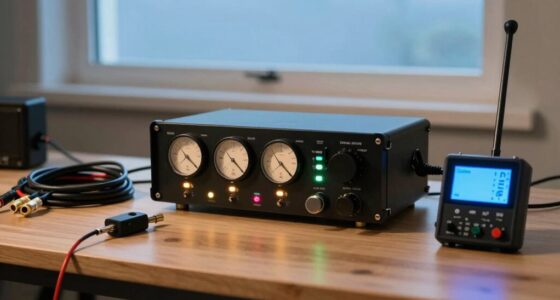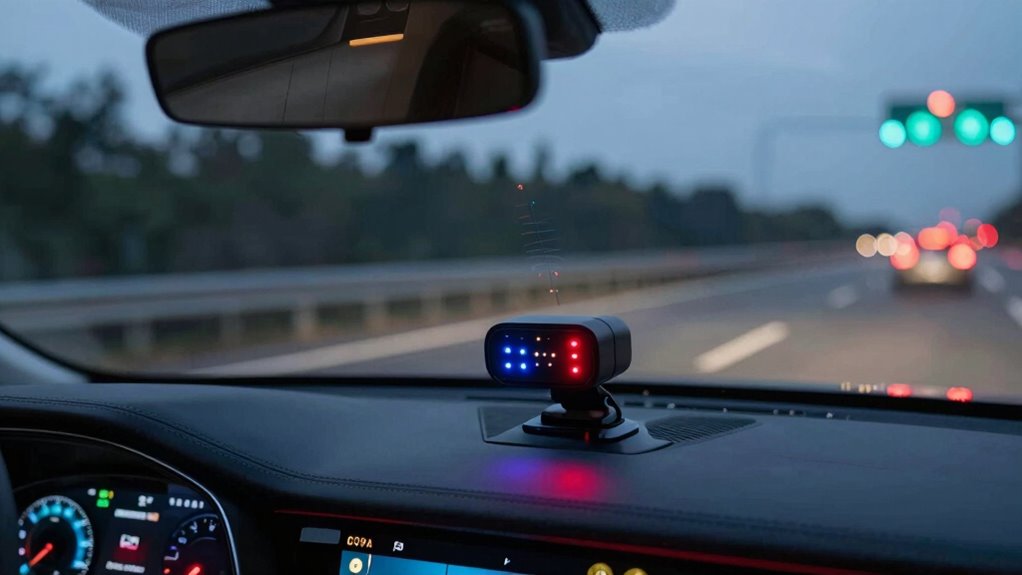

Radar detectors alert you to signals from police radar guns and other speed monitoring devices. They detect radar and sometimes laser signals used by law enforcement to measure your speed. These alerts give you a chance to adjust your speed before getting caught. Keep in mind, they aren’t foolproof and might miss or false alarm due to weather or nearby electronic devices. Want to understand what these devices can and can’t do? Keep exploring to find out more.

Get privacy and security gear delivered free with Prime
- Fast, free delivery on millions of items
- Prime Video, Amazon Music and more included
- Member-only deals all year
Key Takeaways
- Detect signals from police radar guns to warn drivers of nearby speed enforcement.
- Alert to false signals from automatic doors, weather, or electronic devices that may mimic radar.
- Provide early warnings, but may not detect laser or instant-on radar used by law enforcement.
- Indicate the presence of radar signals in the vicinity, helping drivers slow down proactively.
- Serve as a safety reminder, emphasizing responsible driving rather than guaranteed avoidance of tickets.
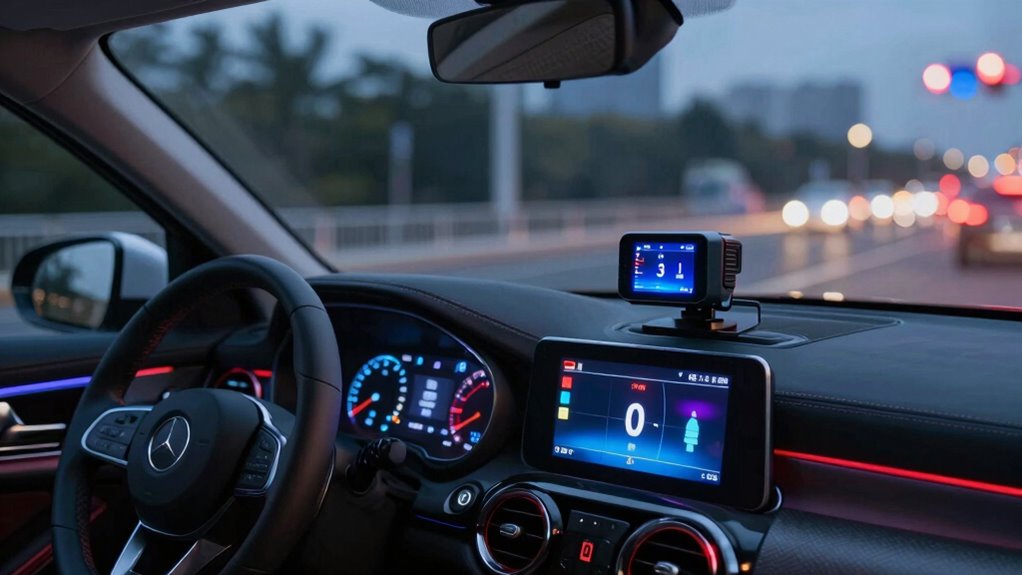
Radar detectors are essential tools for drivers who want to avoid speeding tickets and stay aware of nearby law enforcement. These devices detect signals from police radar guns, giving you a chance to slow down before you get caught. But it’s important to understand what exactly these detectors alert you to and what limitations they have. When it comes to legal considerations, you need to know that the legality of radar detectors varies depending on where you drive. In some states and countries, using them is completely legal, while in others, they’re banned or restricted. Ignoring these laws can lead to fines or even confiscation of your device. So, before relying on a radar detector, it’s wise to familiarize yourself with local regulations to avoid unintended violations.
Knowing local laws about radar detectors helps you drive responsibly and avoid legal trouble.
Technological limitations also affect what your radar detector can actually alert you to. While they’re effective at picking up police radar signals, they aren’t foolproof. For instance, some law enforcement agencies now use laser guns instead of traditional radar, and many detectors have limited ability to detect these laser signals. Furthermore, radar detectors can sometimes produce false alerts caused by automatic doors, certain weather conditions, or other electronic devices that emit similar signals. This can lead to unnecessary distractions or even missed alerts when real threats are present. Additionally, radar signals are directional, so if you’re not facing the police vehicle directly, your detector might not pick it up clearly.
Another aspect to contemplate is that modern police equipment often employs techniques designed to evade detection, such as radar jamming or instant-on radar that only turns on when a vehicle approaches at high speed. These tactics reduce the effectiveness of radar detectors, making it harder for you to receive timely alerts. Despite these technological limitations, a good radar detector can still provide valuable warning if used properly. It’s important to remember that these devices aren’t just about avoiding tickets—they also help you stay more aware of your surroundings and drive more responsibly.
Ultimately, you should see a radar detector as a supplemental tool rather than a guarantee of immunity from law enforcement. Legal considerations play a significant role in how you should use these devices, and understanding their technological limitations ensures you don’t rely on them solely for safety or legal compliance. Staying informed about both aspects helps you make smarter decisions on the road, blending technology with responsible driving habits.
best radar detector for cars
As an affiliate, we earn on qualifying purchases.
As an affiliate, we earn on qualifying purchases.
Frequently Asked Questions
Can Radar Detectors Detect All Types of Speed Enforcement Devices?
Radar detectors can’t detect all speed enforcement devices. They primarily alert you to radar guns, but false positives and signal interference can cause false alarms, making you suspicious of their accuracy. Some devices, like laser guns or newer speed cameras, might not trigger your detector at all. It’s important to stay aware of local laws and use detectors as supplementary tools, not your primary method for avoiding speeding tickets.
Do Radar Detectors Work Equally Well in All Weather Conditions?
Radar detectors don’t work equally well in all weather conditions. Weather interference like heavy rain, fog, or snow can weaken signal reliability, making detectors less effective or slower to alert you. You might miss signals or get false alarms. To stay safe, know that weather impacts performance, so don’t rely solely on your detector in adverse conditions. Always drive cautiously, especially during poor weather when detection capabilities are compromised.
Are Radar Detectors Legal to Use Everywhere?
Radar detector legality varies depending on where you are. In some regions, they’re legal for civilian use, but others have strict restrictions or bans due to legal restrictions and regional variations. You need to check local laws before using a radar detector, as penalties can include hefty fines or vehicle confiscation. Always stay informed about regional rules to avoid legal trouble and make certain you’re driving within the law.
How Do False Alerts From Other Signals Affect Radar Detector Effectiveness?
False alerts from signals like nearby radar guns or automatic door openers can reduce your radar detector’s effectiveness. For example, if your detector frequently signals false positives from a local store’s automatic doors, you might ignore real police radar alerts. Signal interference causes these false positives, making it harder to trust your detector when it genuinely warns you of speed traps. This compromises your ability to respond promptly and stay safe.
Can Radar Detectors Detect Laser Speed Guns?
Radar detectors generally cannot detect laser speed guns directly because lasers use a different technology than radar. However, some detectors can alert you to laser signals or laser jammer interference. Keep in mind, laser jammers are designed to block laser signals, and signal interference from other sources can affect detection. Ultimately, staying aware of your surroundings and using additional safety measures is your best defense against laser speed enforcement.
Conclusion
Radar detectors act as your vigilant co-pilot, warning you of police radar signals before you’re caught speeding. Think of them as a lighthouse guiding ships safely through treacherous waters—without them, you might unknowingly drift into danger. While they don’t guarantee immunity from tickets, they give you an essential heads-up, helping you stay aware and in control. Use them wisely, and they’ll serve as a reliable warning system, much like a trusted friend watching your back.
Halloween Picks
halloween
As an affiliate, we earn on qualifying purchases.