

The Black Chamber was America’s first secret codebreaking agency, established before the NSA. It pioneered signals intelligence by intercepting and deciphering enemy communications, shifting espionage from simple observation to complex cryptography. Focused on diplomatic and military messages, it demonstrated the strategic value of signals interception. Despite secrecy and controversy, its efforts laid the groundwork for modern cryptography and intelligence strategies. If you want to uncover how it transformed espionage, keep exploring its fascinating history.
Key Takeaways
- The Black Chamber was the first U.S. secret codebreaking agency, established in 1919, preceding the NSA.
- It specialized in intercepting and deciphering diplomatic and military communications for intelligence.
- The agency shifted espionage tactics from simple observation to signals intelligence and cryptography.
- Operations were secretive and controversial, laying the foundation for modern signals intelligence practices.
- Its legacy influenced the development of future agencies like the NSA and advanced cryptography techniques.
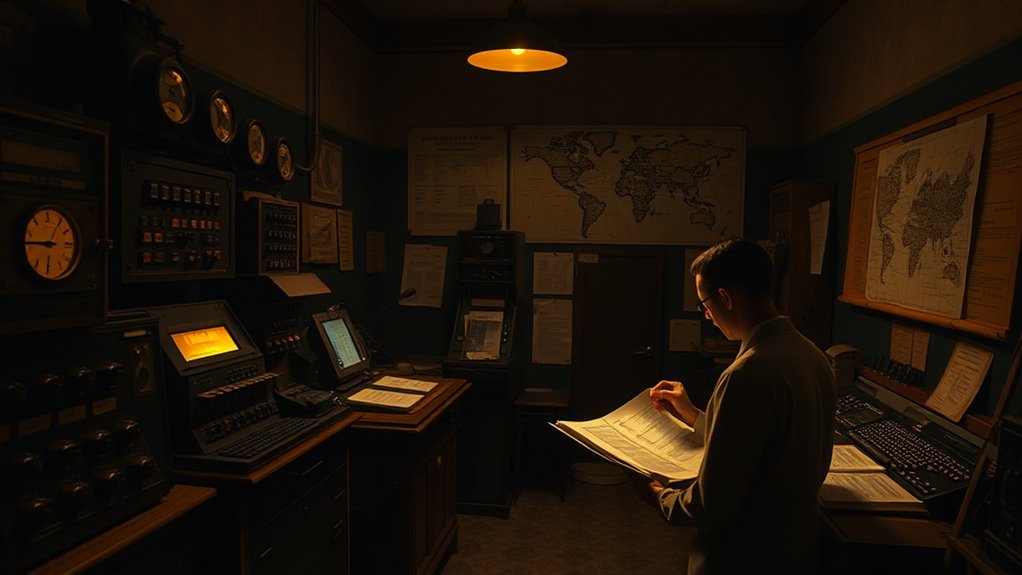
Before the NSA became the powerhouse of signals intelligence, the United States established its first secret codebreaking agency known as the Black Chamber. This early effort marked a significant step in the cryptography evolution, showcasing how nations recognized the strategic value of intercepting and deciphering enemy communications. You might not realize it, but during this period, espionage tactics shifted from simple covert observation to sophisticated signals intelligence, giving the U.S. a crucial edge in international affairs.
Before the NSA, the Black Chamber pioneered signals intelligence and cryptography evolution, transforming espionage strategies and national security.
As you explore the history of the Black Chamber, you see that it was more than just a secretive office; it was a pioneer in the field of cryptography. The agency’s work involved developing and employing advanced ciphers, breaking enemy codes, and analyzing intercepted messages. This was a time when cryptography was moving from basic substitution ciphers to more complex systems, reflecting the ongoing cryptography evolution. The Black Chamber’s efforts laid the groundwork for modern cryptography by demonstrating how encrypted communication could be exploited for intelligence purposes.
You also notice how espionage tactics evolved during this era. The Black Chamber’s approach relied heavily on intercepting diplomatic cables and military communications, then painstakingly decrypting them to gather intelligence. This was a game-changer because it shifted the focus from traditional espionage—like recruiting spies—to strategic signals interception. It meant that by understanding enemy communications, the U.S. could anticipate actions and make more informed decisions, often before the enemy even knew they’d been compromised.
The agency’s methods weren’t foolproof, and its operations were often shrouded in secrecy and controversy. Nonetheless, the Black Chamber proved that signals intelligence could be an essential component of national security. You might find it fascinating that many techniques pioneered during this era still influence modern cryptography and espionage tactics today. The agency’s efforts demonstrated the importance of staying ahead in the ongoing cryptography evolution, as encrypted communications became more complex and harder to decipher.
Additionally, the development of cryptography techniques during this period highlights the importance of continuous innovation in the field of signals intelligence. Ultimately, the Black Chamber’s legacy is clear: it showed the potential of signals intelligence to transform national security strategies. By understanding the early days of cryptography evolution and espionage tactics, you gain insight into how intelligence agencies developed the tools and methods that now form the backbone of modern signals intelligence. It set the stage for future agencies, including the NSA, to refine and expand these techniques, shaping the landscape of global espionage for decades to come.
Frequently Asked Questions
How Did the Black Chamber Influence Modern Cryptography?
You see, the Black Chamber greatly influenced modern cryptography by shaping its evolution through early codebreaking techniques. Its intelligence legacy introduced advanced methods and strategic thinking that still underpin cryptography today. By pioneering systematic decryption efforts, it laid the groundwork for secure communications. This legacy helps you understand how cryptography evolved from simple ciphers to complex algorithms, ensuring privacy and security in today’s digital world.
What Was the Black Chamber’s Most Significant Intelligence Success?
Imagine opening a treasure chest before anyone else, and that’s what the Black Chamber did with its most significant intelligence success. By cracking diplomatic codes, it influenced cryptography evolution and gave America a strategic edge, impacting intelligence operations for years. This breakthrough showcased the agency’s ability to decipher enemy secrets, shaping future codebreaking methods and highlighting its essential role in early U.S. national security efforts.
Were Any Black Chamber Members Prosecuted or Exposed Publicly?
You should know that no Black Chamber members were publicly prosecuted or exposed, despite the era’s racial discrimination. Their secretive operations kept their identities hidden, making exposure difficult. However, some members faced discrimination within the government, impacting their careers. The secrecy helped protect individuals from racial bias, but it also meant that their contributions remained largely unknown for a long time.
How Was the Black Chamber Funded and Staffed?
You learn that the Black Chamber was funded mainly through government sources, like the Department of State, ensuring its operations stayed secret. Staffing strategies involved recruiting talented cryptologists and intelligence experts, often from military or government backgrounds, to work on codebreaking tasks. The organization relied on a small, skilled team to maximize efficiency, and secrecy was maintained to protect its methods and personnel from exposure or prosecution.
What Lessons From the Black Chamber Apply to Today’s Intelligence Agencies?
If you think today’s intelligence agencies have all the secrecy and oversight figured out, think again. The Black Chamber teaches you that cryptography ethics matter—trust but verify. Oversight keeps secrets from becoming scandals, and transparency prevents us from becoming the next unwitting spies. Learn from past mistakes to strike a balance between security and civil liberties, ensuring that intelligence work doesn’t turn into a cloak-and-dagger free-for-all.
Conclusion
You might find it fascinating that the Black Chamber cracked over 100 foreign codes in just its first year, laying the groundwork for modern intelligence. This early success shows how crucial codebreaking was even before the NSA’s era. It highlights how America’s clandestine efforts have long shaped national security, proving that innovation in intelligence isn’t new. The Black Chamber’s achievements remind you that the foundations of today’s digital security were built on these early, groundbreaking efforts.