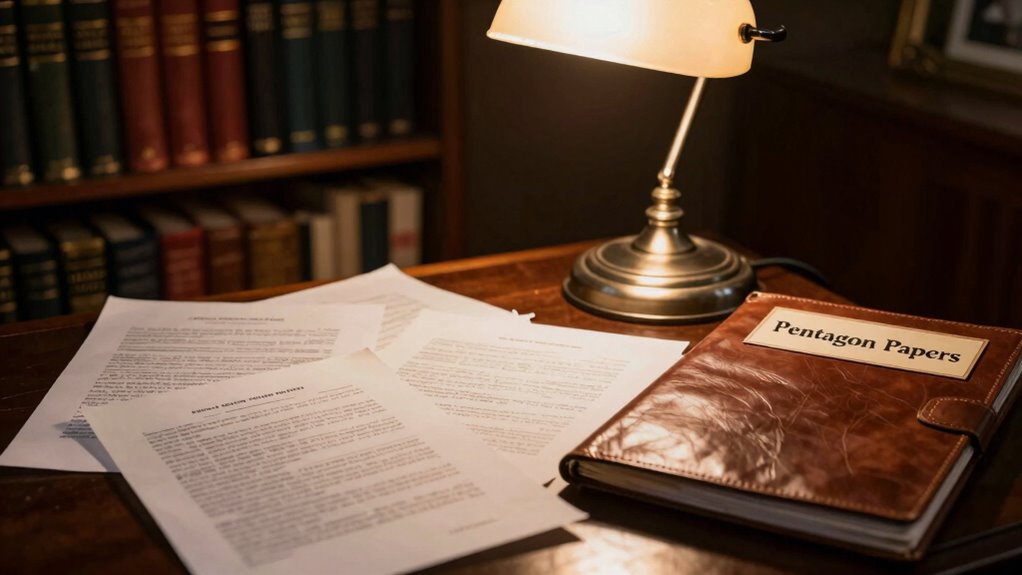

The Pentagon Papers revealed that government secrecy during the Vietnam War hid mistakes, misled the public, and limited accountability. They exposed how officials concealed truths about the war’s scope and progress, often to serve political motives or cover errors. This secrecy made it hard for citizens and oversight groups to hold leaders accountable and fostered distrust. If you keep exploring, you’ll discover how transparency plays a key role in maintaining democracy and preventing abuse of power.

Get privacy and security gear delivered free — and shop member deals
- Fast, free delivery on millions of items
- Access to Prime Big Deal Days deals on October 6–7
- Prime Video, Amazon Music and more included
Key Takeaways
- The Pentagon Papers exposed government deception and misjudgments about the Vietnam War, revealing how secrecy can conceal errors.
- They demonstrated that classified information often masks political motives and flawed assumptions, undermining transparency.
- Secrecy in the papers hindered oversight, preventing citizens and officials from holding authorities accountable.
- The leak highlighted the importance of transparency to prevent abuse of power and maintain democratic trust.
- The controversy underscored the need for a balance between necessary security measures and openness in government actions.

Have you ever wondered how secrecy in government can impact accountability? When governments withhold information, especially classified information, it creates a veil that shields their actions from public scrutiny. The Pentagon Papers offer a clear example of how secrecy can both protect national interests and obscure the truth from citizens. These classified documents, leaked in the early 1970s, revealed that multiple administrations had misled the public about the scope and progress of the Vietnam War. As you examine this situation, it becomes evident that government transparency is crucial for holding leaders accountable. Without access to accurate information, citizens can’t make informed decisions or question policies that may be unjust or flawed. The Pentagon Papers exposed a deep disconnect between what officials communicated to the public and what they knew to be true, highlighting the dangers of compartmentalized, classified information that prevents oversight.
The leak was a turning point because it demonstrated that the government’s secrecy could serve to conceal mistakes, misjudgments, or even deliberate deception. When information is classified, it often becomes nearly impossible for journalists, watchdog groups, and ordinary citizens to hold authorities responsible for their actions. This lack of transparency breeds distrust and erodes democratic principles. The Pentagon Papers revealed that despite claims of protecting national security, much of the classified information was related to decisions that were politically motivated or based on flawed assumptions. This discrepancy underscores how the classification of information can be used to serve specific interests rather than the public good.
As you think about the implications of the Pentagon Papers, it’s clear that the balance between government transparency and the need for classified information is delicate. While some information must remain protected to ensure national security, excessive secrecy can undermine trust and accountability. The documents made it obvious that when governments operate in the dark, their actions are vulnerable to abuse and misjudgment. The leak not only ignited debates about the limits of government secrecy but also emphasized the importance of transparency as a safeguard against unchecked power. Ultimately, the Pentagon Papers showed that secrecy can be used to distort reality, making it harder for citizens to hold their leaders accountable, and that openness is essential for a functioning democracy.
government transparency books
As an affiliate, we earn on qualifying purchases.
As an affiliate, we earn on qualifying purchases.
Frequently Asked Questions
How Did the Pentagon Papers Influence Future Government Transparency Policies?
The Pentagon Papers pushed you to demand greater government transparency and influenced transparency reforms. It exposed how government secrecy can hide important truths, prompting stricter policies on classified information and whistleblower protections. These reforms aimed to hold officials accountable and guarantee the public stays informed. As a result, you see an increased push for openness, with more oversight and disclosure to prevent hidden agendas and promote trust in government actions.
Were Any Individuals Prosecuted for Leaking the Pentagon Papers?
You’d think whistleblowers would get medals, but instead, some faced serious legal repercussions for leaking the Pentagon Papers. Daniel Ellsberg, the infamous leaker, was prosecuted under the Espionage Act, though charges were eventually dropped. While whistleblower protections exist, they often come with a hefty legal price tag. So, if you’re considering transparency, remember: government secrets still carry a hefty risk, even if you’re brave enough to expose them.
What Long-Term Impacts Did the Pentagon Papers Have on Journalism?
You see, the Pentagon Papers profoundly impacted journalism by strengthening protections for whistleblowers and challenging media censorship. It encouraged journalists to pursue transparency and hold government accountable, knowing they could publish sensitive information without fear of retaliation. This case set a precedent that promoted greater press freedom, inspiring reforms to safeguard reporters and sources. Ultimately, it fostered a more courageous, investigative media dedicated to exposing government secrets, shaping journalism’s future.
Did the Pentagon Papers Reveal Any Covert Operations Unrelated to Vietnam?
A secret’s a secret, but the Pentagon Papers did reveal covert operations beyond Vietnam. You learn that classified missions, including activities in countries like Laos and Cambodia, were hidden from the public eye. These disclosures exposed that the U.S. conducted covert operations that extended past traditional warfare, showing a pattern of secrecy. This newfound transparency challenged trust and raised questions about government accountability in handling sensitive, covert missions.
How Did the Pentagon Papers Affect U.S. Foreign Policy Decisions?
The Pentagon Papers profoundly impacted U.S. foreign policy decisions by exposing government secrecy and eroding public trust. When you see how officials concealed essential information, it becomes clear that policies shifted toward greater transparency to rebuild trust. This revelation prompted reforms, encouraging policymakers to be more accountable and cautious about secrecy. As a result, future decisions often consider the significance of honesty with the public, influencing U.S. foreign relations moving forward.
Conclusion
Like peeling back the layers of an onion, the Pentagon Papers expose the tangled web of secrecy hiding uncomfortable truths. They remind you that accountability is the light that keeps our government honest and transparent. When you uncover hidden stories, you empower yourself and others to demand honesty from those in power. Ultimately, these papers serve as a mirror, urging you to stay vigilant and guarantee that transparency never stays locked away in the shadows.
Fall Picks
fall essentials
As an affiliate, we earn on qualifying purchases.