You need election security policies that directly address AI-generated content because it can spread misinformation quickly and convincingly, undermining trust in the electoral process. Deepfake technology creates false videos or audio clips that can manipulate public perceptions and influence voters’ decisions. Without proper detection and regulation, these manipulated contents pose serious threats to democracy. By understanding these risks better, you’ll see why proactive measures are essential to protect election integrity and democratic trust.
Listen free for 30 days with Audible
Thousands of audiobooks and originals — cancel anytime.
As an affiliate, we earn on qualifying purchases.
Key Takeaways
- AI-generated content can spread misinformation rapidly, undermining public trust in elections.
- Deepfake technology enables the creation of convincing false media of public figures, influencing voter perceptions.
- Effective detection systems are essential to identify manipulated content and prevent false narratives.
- Regulatory frameworks must adapt to rapidly evolving AI capabilities to safeguard election integrity.
- Promoting transparency and media literacy helps voters critically evaluate and verify election-related information.
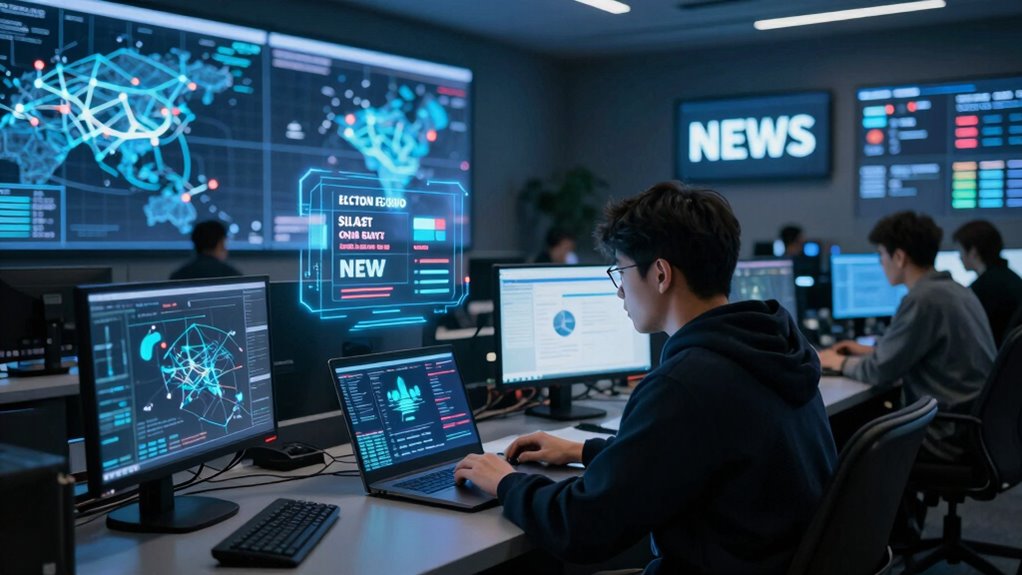
As artificial intelligence continues to advance, it’s increasingly important to understand how AI-generated content can impact election security. With the rise of sophisticated tools like deepfake technology, the risk of misinformation spreading rapidly and convincingly has grown considerably. These AI-created videos or audio clips can make it appear as though public figures are saying or doing things they never did, sowing confusion and eroding trust in the electoral process. That’s why election security policies must prioritize deepfake detection and misinformation mitigation strategies. You need systems capable of identifying manipulated content quickly and accurately to prevent false information from influencing voters’ perceptions or decisions.
Prioritizing deepfake detection and misinformation mitigation is essential to protect election integrity and public trust.
Effective deepfake detection tools are essential in this effort. They allow authorities and platforms to verify the authenticity of visual and audio content before it reaches the public. When policies mandate the use of such technologies, it becomes harder for malicious actors to spread false narratives that could sway elections. These policies should also support ongoing research and development of advanced detection algorithms, ensuring they stay ahead of increasingly realistic AI-generated content. By establishing standards and protocols for verifying digital content, election officials can reduce the chances that misinformation will take hold, thereby safeguarding voters from deception. Additionally, content authenticity plays a crucial role in maintaining public confidence in electoral processes.
Misinformation mitigation isn’t just about catching deepfakes; it’s about creating an environment where accurate information thrives. Election security policies need to promote transparency and promote the dissemination of verified facts. This might involve partnerships with social media platforms to flag or remove false content swiftly or providing voters with trusted sources of election-related information. Educating the public about how to recognize AI-generated misinformation is equally important, empowering voters to critically evaluate what they see online. When policies emphasize media literacy alongside technological safeguards, they strengthen the overall resilience of the electoral process against manipulation. Additionally, understanding the role of content accuracy in maintaining trust can guide the development of more effective policies.
Furthermore, integrating regulatory frameworks that adapt to evolving AI capabilities ensures that policies remain effective over time. You also have a role in supporting policies that allocate resources toward AI research and public awareness campaigns. By doing so, you contribute to an all-encompassing approach that addresses both technological vulnerabilities and human factors. In a landscape where AI can produce convincing misinformation at scale, proactive measures are essential. Ensuring that election security policies adapt to the capabilities of AI-generated content isn’t just a technical challenge; it’s a fundamental part of protecting democracy. Through targeted efforts like deepfake detection and misinformation mitigation, you help maintain the integrity of elections and uphold public trust in the democratic process.
deepfake detection software
As an affiliate, we earn on qualifying purchases.
As an affiliate, we earn on qualifying purchases.
Frequently Asked Questions
How Can Voters Identify Ai-Generated Misinformation?
You can identify AI-generated misinformation by sharpening your digital literacy skills and applying fact-checking methods. Look for inconsistencies, unusual language patterns, or images that seem off. Cross-check facts with reputable sources, and use fact-checking tools to verify claims. Stay skeptical of sensational content, and always question the origin of the information. Developing these habits helps you spot AI-generated content and prevents spreading false information during elections.
What Legal Measures Exist Against Malicious AI Content?
Legal measures against malicious AI content include laws like the U.S. Malicious Deep Fake Prohibition Act, which targets deceptive AI-generated videos. Only 20% of countries have thorough policies addressing AI misinformation, highlighting the need for stronger legal frameworks. You need robust policy development to hold creators accountable and protect election integrity. Staying informed about existing laws helps you understand how legal measures aim to combat malicious AI content effectively.
How Do AI Tools Influence Voter Behavior?
AI tools influence your voter behavior by creating convincing deepfakes and targeted content that sway opinions. When you encounter misinformation, deepfake detection tools can help you spot false videos, while algorithm transparency guarantees you understand how content is prioritized. By promoting awareness of these AI-generated manipulations, election security policies can empower you to critically evaluate information, reducing the impact of misleading content on your voting decisions.
Are Current Election Laws Prepared for AI Threats?
You might be surprised to learn that current election laws aren’t fully prepared for AI threats. Imagine a deepfake video falsely showing a candidate endorsing violence, spreading automated disinformation. While AI detection tools exist, laws often lack clear regulations on these issues. Without updates, election security remains vulnerable to sophisticated AI-generated misinformation, risking voter trust and democratic integrity. You need stronger policies to address these emerging challenges effectively.
What Training Is Needed for Election Officials Regarding AI?
You need targeted training in AI literacy and threat mitigation to effectively handle AI-related challenges. As an election official, you should learn how AI can generate disinformation and manipulate information, and develop skills to identify and counteract these threats. Regular workshops and updates on emerging AI tools will keep you prepared. Building your understanding of AI’s capabilities and vulnerabilities guarantees you can protect election integrity and respond swiftly to misinformation.
Conclusion
You must prioritize election security policies that address AI-generated content, because safeguarding truth safeguards democracy. You need to recognize the threat, understand the challenge, and implement solutions that protect integrity, promote transparency, and build trust. Only by acting proactively, by staying vigilant, and by adapting swiftly can you guarantee elections remain fair and free. Because in this fight against deception, your awareness, your actions, and your commitment are the keys to preserving democracy’s future.
Fall Picks
fall essentials
As an affiliate, we earn on qualifying purchases.