

As you consider the 100-year history of the Espionage Act, you see it as both a protector of national secrets and a threat to whistleblowers and journalists. While it aims to shield sensitive information from adversaries, it can also suppress transparency and freedom of speech. The debate continues on whether it primarily serves national security or stifles accountability—if you’re curious about how this balance has evolved, there’s more to explore.
Key Takeaways
- The Espionage Act, originally meant to protect national security during wartime, has been used to prosecute whistleblowers and journalists revealing government misconduct.
- Critics argue it suppresses transparency and chills free speech, often labeling disclosures as threats to national security.
- Supporters believe it is essential for safeguarding sensitive information and preventing adversaries from exploiting classified data.
- Over time, its scope has expanded beyond wartime, raising concerns about overreach and targeting legitimate oversight efforts.
- The Act’s century-long legacy embodies the ongoing tension between national security interests and the right to transparency.
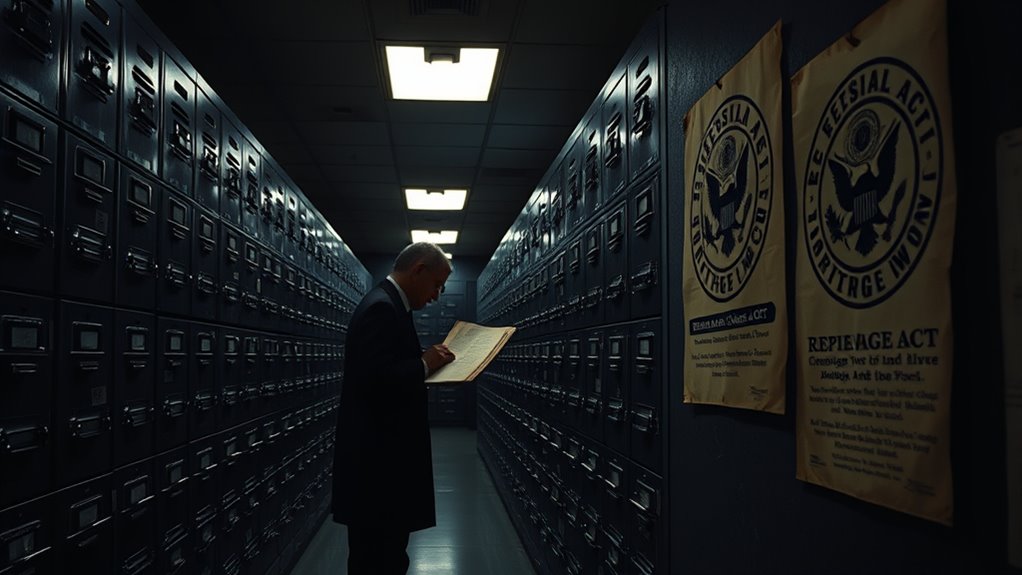
Have you ever wondered how a single piece of legislation can shape national security and free speech for a century? The Espionage Act, passed in 1917, has done just that. It was initially designed to prevent interference with military operations and to promote national security during wartime. But over the years, its scope has expanded, raising questions about its impact on press freedom and the rights of whistleblowers. You might see the Act as a necessary tool to protect sensitive information, or as a threat to transparency and open dialogue. Its history shows the delicate balance governments try to strike between safeguarding secrets and respecting free speech rights.
This legislation has been used to prosecute journalists, leakers, and whistleblowers who reveal government misconduct or classified information. Such actions often spark debates about whether protecting national security justifies curbing press freedom. When the government labels certain disclosures as threats to national security, it can justify suppressing information that the press or individuals seek to expose. That’s where the tension lies: do these prosecutions serve the public interest or do they silence crucial oversight? Many argue that the Espionage Act’s broad language allows authorities to criminalize almost any disclosure, creating a chilling effect on journalists and sources who might otherwise expose abuses or illegal activities.
On the other hand, supporters believe the Act is essential for protecting national security. In a world where sensitive information can be exploited by adversaries, they argue, the government must have strong laws to prevent leaks that could compromise military operations or intelligence efforts. They see the Espionage Act as a shield — a way to keep secrets that, if exposed, could threaten lives or national stability. However, critics warn that overreach can undermine the press’s role as a watchdog, preventing the public from understanding how their government operates behind closed doors.
As you look at the century of its existence, it’s clear the Espionage Act remains a powerful and controversial tool. It embodies the ongoing struggle between transparency and secrecy, between the need for national security and the importance of press freedom. Whether viewed as a necessary safeguard or a tool for suppression, its legacy influences how governments handle information, whistleblowers, and journalism today. As you consider its impact, remember that the debate over the Espionage Act is ultimately about balancing the rights of individuals and the interests of the nation — a challenge that continues to evolve with each new generation.
Frequently Asked Questions
How Has the Espionage Act Been Used Against Whistleblowers Historically?
You should know that historically, the Espionage Act has been used against whistleblowers by targeting those exposing government secrecy. You face serious legal repercussions if you leak classified information, as authorities often charge you with espionage or conspiracy. This act has been a powerful tool to silence dissent, making it risky for you to reveal misconduct or abuses within the government, underlining its role as both a shield for secrets and a threat to transparency.
What Legal Defenses Are Available for Defendants Charged Under the Act?
You can use legal defenses like challenging the sufficiency of evidence or arguing that your actions didn’t violate the Espionage Act. Procedural challenges, such as claiming violations of your constitutional rights or improper search and seizure, may also help. Additionally, asserting that your disclosures served the public interest can sometimes be a defense. Ultimately, working with an experienced attorney can help identify the most effective defenses based on your specific case.
Are There Any Recent Amendments to the Espionage Act?
You’ll find no recent amendments to the Espionage Act itself, despite all the amendment debates and legislative updates swirling around. Congress keeps the core law intact, perhaps fearing it’s the perfect tool for secrecy. So, if you’re hoping for a shiny new clause to protect whistleblowers or crack down on leaks, you’ll be waiting — the law remains as unchanged as that ancient, dusty tome on the shelf.
How Does the Act Impact Journalistic Freedom and Press Confidentiality?
You might find that the Espionage Act impacts your ability to maintain press secrecy and shield journalists from revealing sources. It can be used to threaten or prosecute reporters for publishing classified information, potentially chilling investigative journalism. This act puts pressure on journalists to disclose sources or suppress sensitive stories, which could undermine press freedom and the right to protect journalist shielding, essential for holding power accountable.
What International Laws Compare to the Espionage Act?
You’ll find that international laws like the UK’s Official Secrets Act and espionage treaties such as the NATO Status of Forces Agreement resemble the Espionage Act. These laws govern intelligence sharing and protect national security secrets, making it risky to disclose information. They aim to prevent espionage, but also raise concerns about whistleblower protections. Understanding these laws helps you see how countries collaborate and guard sensitive information globally.
Conclusion
As you reflect on the Espionage Act’s century of use, remember that over 2,000 individuals have faced charges under it, many for whistleblowing. This statistic highlights how the law can act as both a shield for national secrets and a potential threat to transparency. As society evolves, you must consider whether the Act protects essential information or stifles accountability. Its ongoing impact urges you to think carefully about the balance between security and freedom.