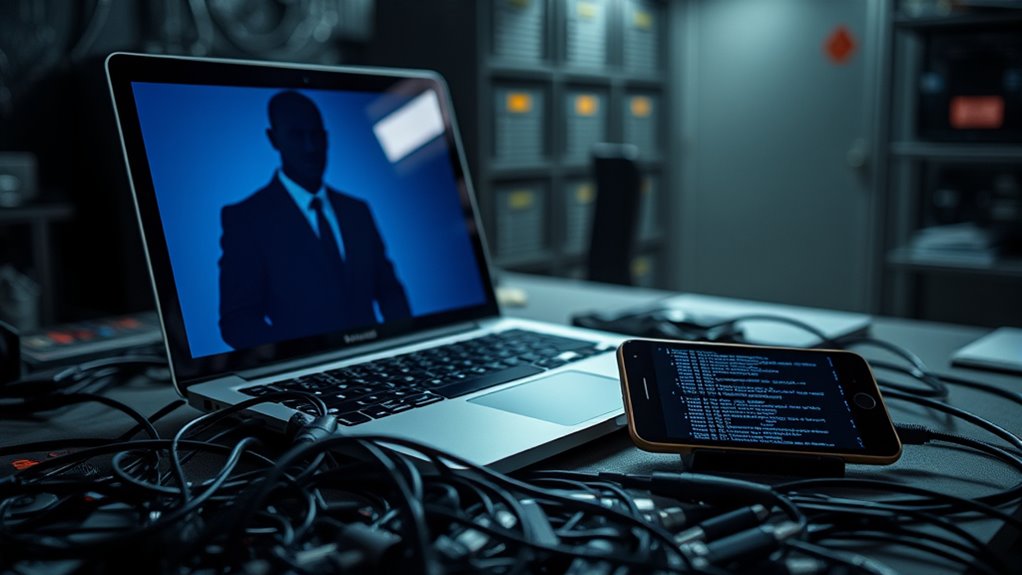

You may wonder if democracies should buy hacker tools and spyware to protect security. While these tools can help fight terrorism and cybercrime, they also pose serious privacy risks and ethical dilemmas. If misused, they can lead to wrongful surveillance and erode public trust. Balancing security needs with respecting privacy rights is complex, but understanding the potential consequences can help clarify the broader implications—something important to explore further.
Listen free for 30 days with Audible
Thousands of audiobooks and originals — cancel anytime.
As an affiliate, we earn on qualifying purchases.
Key Takeaways
- Purchasing hacker tools can enhance national security but risks misuse and erosion of privacy rights.
- Transparency and oversight are essential to prevent abuse and maintain public trust in surveillance practices.
- Ethical hacking principles advocate responsible use, but governments often operate with less accountability.
- The proliferation of commercial hacking tools increases the potential for misuse beyond intended security purposes.
- Democracies must balance security needs with protecting personal privacy and civil liberties when considering such tools.

Have you ever wondered how much of your digital life governments can access without your knowledge? It’s a troubling thought, especially as surveillance technology becomes more advanced. Governments justify purchasing hacker tools, often called government spyware, by claiming they’re necessary for national security and fighting crime. But this raises serious questions about digital privacy—your right to keep personal information safe from unwarranted intrusion. When authorities deploy these tools, they can access emails, messages, location data, and even activate microphones or cameras on your devices. The line between security and privacy blurs, and many argue that such practices threaten fundamental rights.
Governments access personal data through spyware, risking privacy and fundamental rights in the name of security.
Some proponents argue that buying hacker tools is essential for democracies to stay ahead of cyber threats. They say that without these capabilities, law enforcement and intelligence agencies are handicapped against sophisticated criminals or malicious actors. However, this approach often comes at the cost of ethical hacking principles—using hacking skills responsibly to improve security, not infringe on individual rights. Governments sometimes justify these actions by claiming they’re targeting terrorists or organized crime, but the risk of abuse remains high. When these tools fall into the wrong hands or are misused, innocent people can become unwitting victims of wrongful surveillance or data breaches.
The debate intensifies when considering accountability. Unlike private companies, governments operate with less transparency, making it difficult to scrutinize how these hacker tools are used. Many worry that once a government acquires spyware, it’s nearly impossible to prevent misuse or overreach. Critics argue that democratic societies should prioritize establishing clear legal frameworks and oversight to prevent abuse, rather than relying solely on clandestine hacking operations. _furthermore_, the use of such tools can erode public trust, creating a climate of suspicion where citizens feel constantly watched, even when they’ve done nothing wrong.
Additionally, the proliferation of commercial hacking tools raises concerns about the potential for misuse and the importance of regulation in this rapidly evolving field. Ethical hacking practices emphasize transparency and responsible use, focusing on improving cybersecurity without infringing on personal rights. Governments, however, often sidestep these principles, risking the privacy rights of millions. When state agencies buy hacker tools, they must consider the broader implications—how it affects digital privacy, the potential for misuse, and the ethical boundaries they should respect. Ultimately, the decision to equip law enforcement with these tools isn’t just a technical matter; it’s a moral one. As a citizen, understanding the delicate balance between security and privacy helps you better grasp why this debate matters so profoundly in democratic societies today.
government spyware detection tools
As an affiliate, we earn on qualifying purchases.
As an affiliate, we earn on qualifying purchases.
Frequently Asked Questions
How Does Government Spyware Impact Citizen Privacy Rights?
Government spyware considerably impacts your privacy rights by causing privacy erosion and expanding surveillance. When governments deploy these tools, they often access your personal data without consent, infringing on your right to privacy. This surveillance expansion can lead to misuse or abuse of power, making you feel constantly watched and less free to express yourself. Ultimately, government spyware threatens your fundamental freedoms by undermining trust and privacy in democratic societies.
Are There International Laws Regulating Government Hacking Tools?
Think of international laws regulating government hacking tools as the fragile bridge connecting nations. Currently, there’s no holistic global agreement, but international cooperation is growing to establish legal regulations. Countries are beginning to recognize the need for rules that prevent misuse and protect citizens’ rights. While efforts are underway, you should stay aware that this evolving landscape aims to balance security and privacy through collaborative legal frameworks.
What Are the Potential Risks of Misuse by Authorities?
You risk surveillance overreach and misuse of authority when authorities deploy hacking tools improperly. If unchecked, they might target innocent individuals or abuse power, leading to privacy violations and erosion of civil liberties. Such misuse can undermine public trust and provoke legal challenges. Thus, strict oversight and transparent policies are essential to prevent authorities from crossing ethical boundaries and ensure hacking tools serve only legitimate security purposes.
How Do Governments Justify the Purchase of Hacker Tools?
Imagine a locksmith with a master key, claiming it’s necessary to open locked doors for safety. Governments justify buying hacker tools through surveillance justification, arguing they’re indispensable for safeguarding national security. They believe these tools help detect threats, prevent attacks, and protect citizens. While the allegory raises questions about trust and misuse, nations see them as essential to defend against unseen enemies lurking in the shadows.
Can Spyware Be Used to Target Political Opponents?
Yes, spyware can target political opponents, raising serious surveillance ethics concerns. When governments use such tools for political repression, they undermine democratic principles, violate privacy rights, and suppress dissent. As you consider this, remember that deploying spyware against opponents often crosses ethical boundaries, risking abuse of power. It’s vital to question whether such actions serve the public interest or merely enable authoritarian tactics disguised as national security measures.
Conclusion
As you imagine the digital landscape, think of government spyware as a double-edged sword slicing through the shadows. While it can shield your nation from unseen threats, it also risks cutting into your privacy and freedoms. Like walking a tightrope over a stormy sea, you must weigh the safety against the storm within. Ultimately, the choice to buy these hacker tools shapes not just security, but the very fabric of your democratic freedom.
Flea & tick season Picks
flea and tick prevention
As an affiliate, we earn on qualifying purchases.