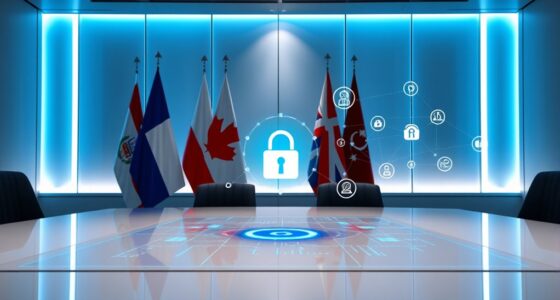

You might think space is a strict domain for peaceful uses, but spy satellites operate in a legal gray area. International treaties like the Outer Space Treaty focus on preventing weapons of mass destruction but don’t explicitly ban espionage, so countries can conduct covert surveillance easily. This makes orbit somewhat of a free-for-all for intelligence gathering. To understand how these activities unfold and what rules are being tested, keep exploring these complex issues further.

Get privacy and security gear delivered free — and shop member deals
- Fast, free delivery on millions of items
- Access to Prime Big Deal Days deals on October 6–7
- Prime Video, Amazon Music and more included
Key Takeaways
- International treaties like the Outer Space Treaty promote peaceful use but do not explicitly prohibit espionage activities in orbit.
- Spy satellites operate in a legal gray area, leveraging dual-use technology that blurs research and intelligence functions.
- Enforcement of space law regarding surveillance is challenging due to covert operations and technological advancements outpacing regulations.
- Diplomatic efforts aim to clarify acceptable surveillance, but mistrust hampers comprehensive international agreements on espionage in space.
- The rapidly evolving technology makes space a contested domain, with no clear legal boundaries preventing satellite-based espionage.

Have you ever wondered how nations monitor each other from space? It’s a fascinating mix of technology, international agreements, and covert operations. Spy satellites play a crucial role in gathering intelligence, but their existence raises questions about legality and sovereignty. To regulate these activities, countries have established satellite treaties that set boundaries on space operations, including surveillance. These treaties, like the Outer Space Treaty of 1967, emphasize that space should be used peacefully and prohibit weapons of mass destruction from orbit. However, they don’t specifically ban espionage activities, which leaves a gray area that many nations exploit.
Espionage regulations are less formalized than treaties, but they’re equally important. Countries craft their own rules for covert operations, often behind closed doors, to prevent international conflicts and protect their interests. These regulations aren’t always publicly known, but they influence how spy satellites are operated and what intelligence is collected. For instance, some nations might operate satellites under the guise of scientific research but secretly use them for surveillance purposes. This dual-use technology complicates the legal landscape, making it difficult to distinguish between legitimate satellite activities and espionage. It’s a delicate dance, balancing national security with international law.
You might think orbit is a free-for-all, but it’s not entirely unregulated. Countries are aware that unchecked surveillance could escalate tensions or lead to conflicts. That’s why they follow satellite treaties and espionage regulations, even if these aren’t always enforceable. Many nations engage in diplomatic discussions to clarify what’s acceptable, but enforcement remains a challenge. For example, if a satellite is suspected of spying on another country’s military bases, accusations can quickly turn into diplomatic crises. Some countries have even proposed new treaties or protocols to better oversee satellite activities, but progress is slow, largely due to mistrust and differing national interests. Additionally, advancements in space situational awareness help nations monitor and respond to potential threats, further shaping the legal landscape.
Despite the legal frameworks, the reality is that space remains a contested domain. Nations continue to develop advanced spy satellites, pushing the boundaries of what’s permissible under current regulations. As technology evolves, so do the tactics for surveillance, often outpacing international agreements. This creates a complex environment where the line between peaceful observation and covert espionage blurs. While satellite treaties and espionage regulations provide a foundation, the rapid pace of technological advancement means that orbit is far from a strictly regulated zone. It’s a high-stakes game of intelligence, diplomacy, and law—where the rules are constantly tested and rewritten.
spy satellite model kit
As an affiliate, we earn on qualifying purchases.
As an affiliate, we earn on qualifying purchases.
Frequently Asked Questions
How Do Countries Legally Justify Spying via Satellites?
You might wonder how countries justify satellite spying legally. They often rely on advancements in satellite technology, arguing that such activities fall within the scope of national security and intelligence. Some claim diplomatic immunity extends to space-based assets, though this is debated. While international space law isn’t explicit, nations typically assert their rights under sovereignty and security concerns, making satellite espionage appear legal despite ethical questions.
Are There International Treaties Regulating Spy Satellite Operations?
You should know that international treaties, like the Outer Space Treaty, aim to respect satellite sovereignty while addressing the complexities of espionage. These agreements, often called espionage treaties, regulate activities in space, but enforcement remains a challenge. Though no specific treaties fully govern spy satellite operations, these frameworks encourage responsible behavior, helping nations balance security concerns with the peaceful use of space, fostering trust amidst the silent watch of orbit.
What Penalties Exist for Violating Space Espionage Laws?
If you violate space espionage laws, you could face significant espionage penalties, including fines and imprisonment, depending on the severity of the breach. Satellite encryption is vital for protecting sensitive data, and breaking it can lead to legal consequences. International treaties aim to regulate these actions, but enforcement varies. You should be aware that unauthorized spying risks serious legal repercussions, emphasizing the importance of adhering to space law and encryption standards.
Can Private Companies Operate Spy Satellites Legally?
You can operate spy satellites legally if you follow international space laws and national regulations. Private companies must respect satellite privacy and avoid commercial espionage, which can lead to legal penalties. You need proper licensing, transparency, and adherence to treaties like the Outer Space Treaty. Failing to do so risks legal action and damages, so ensuring compliance helps protect your operations and maintain trust in space activities.
How Does Space Debris Impact Espionage Satellite Operations?
Space debris critically impacts your espionage satellite operations by increasing collision risks with orbital debris. Space debris, like defunct satellites and fragments from collisions, can cause satellite collisions, damaging or destroying your equipment. To prevent this, you need effective debris mitigation strategies, such as avoiding crowded orbits and designing satellites to minimize debris creation. Managing space debris is essential to guarantee your spy satellites remain operational and secure in orbit.
Conclusion
Ultimately, the current space law framework struggles to keep up with the rapid rise of spy satellites, making orbit feel like a wild west for espionage. You might think space is a peaceful frontier, but in reality, it’s teeming with covert activities that threaten global security. Without stronger international regulations, the skies could become an unstoppable battleground, turning what should be the final frontier into the most chaotic arena of covert operations the world has ever seen.
Fall Picks
fall essentials
As an affiliate, we earn on qualifying purchases.