

Human rights groups want AI governance rules that prioritize accountability, transparency, and human rights protection. You should make sure AI systems are designed ethically, with clear oversight to prevent biases and discrimination. Privacy safeguards are essential to control data use and prevent intrusion. These groups call for strict regulations that guarantee responsible development and responsible use of AI, ensuring technology benefits everyone equally. If you keep exploring this topic, you’ll discover more about how responsible AI governance can protect your rights and society’s future.
Key Takeaways
- Clear rules to ensure responsible and ethical AI development aligned with human rights principles.
- Transparency about AI decision-making processes to promote understanding and accountability.
- Privacy safeguards to protect individuals’ data from misuse and intrusive surveillance.
- Regulations to reduce biases, discrimination, and promote fairness across all demographic groups.
- Enforceable standards that hold developers and users accountable for AI impacts.
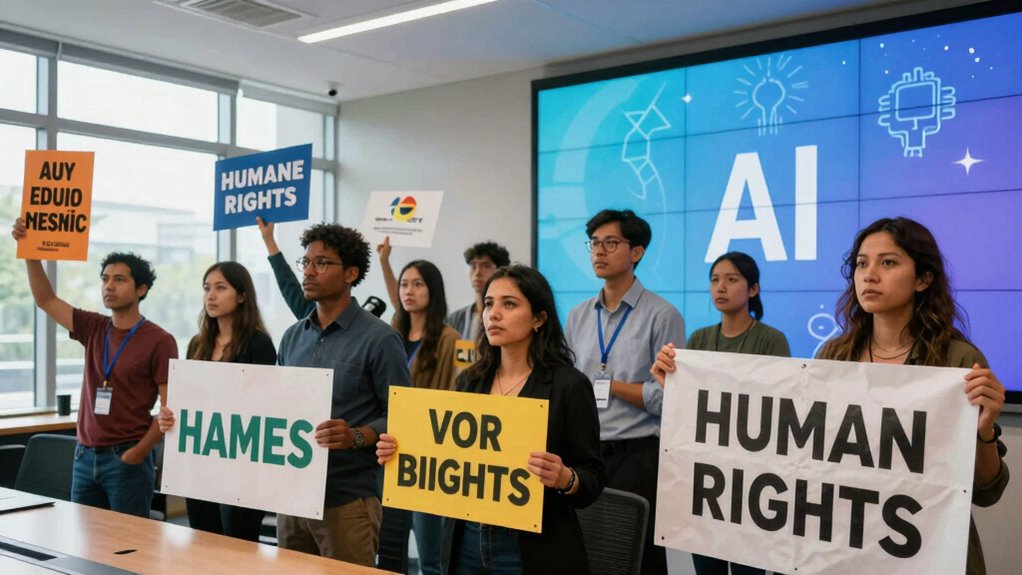
As artificial intelligence becomes more integrated into daily life, safeguarding human rights must be a top priority. You need to understand that AI governance isn’t just about managing technology; it’s about protecting the fundamental rights of individuals. Human rights groups are calling for clear rules that guarantee AI systems are developed and used responsibly. Central to their concerns are AI accountability and privacy safeguards. These elements are essential because they directly impact your rights to privacy, fairness, and transparency. When AI makes decisions that affect your life—whether in hiring, lending, or law enforcement—there must be mechanisms to hold developers and users accountable for how these systems operate. Without accountability, biases and errors can go unchecked, leading to unfair treatment or discrimination. Human rights advocates insist that AI systems should be transparent about how they work and how decisions are made, so you can understand and challenge outcomes if necessary. This transparency is necessary for building trust and ensuring that AI serves everyone equitably. Emerging trends in digital publishing can help spread awareness about these critical issues and promote responsible AI development. Incorporating ethical standards into AI design is crucial for aligning technological progress with human rights principles. Additionally, establishing regulatory frameworks can help enforce these standards and ensure compliance across industries. Moreover, clear guidelines on data collection are vital to prevent misuse and to uphold your rights to control your personal information.
Privacy safeguards are equally important. As AI collects and processes vast amounts of data, your personal information becomes vulnerable to misuse or breaches. Human rights groups demand strict privacy protections to prevent unauthorized access and to give you control over your data. You should have clear rights to know what information is being collected, how it’s being used, and to opt out if you choose. There’s also a growing call for regulations that limit the scope of data collection and enforce strict security standards. These safeguards are designed to prevent intrusive surveillance and protect your autonomy. Alongside privacy, there’s a push for AI systems to be designed with fairness in mind. This means reducing biases that can lead to discrimination based on race, gender, or socioeconomic status. Human rights organizations want regulations that ensure AI is developed ethically, with oversight that can identify and remedy harmful impacts.
In essence, what human rights groups want from AI governance rules is a complete framework that balances technological innovation with fundamental rights. They’re asking for enforceable standards that guarantee AI accountability and implement robust privacy safeguards, so you’re protected from harm and discrimination. They emphasize that AI should serve humanity, not undermine your rights or perpetuate injustice. Implementing these rules isn’t just about compliance—it’s about building an AI future that respects human dignity, upholds equality, and fosters trust across societies. If these protections are in place, you can participate in a digital world where your rights are respected and your interests are prioritized.
ESSENTIAL AI TOOLS FOR TRANSPARENT MODELS USING SHAP, LIME, AND VISUALIZATION TECHNIQUES: 65 PRACTICAL EXERCISES TO ENHANCE INTERPRETABILITY AND TRUST IN BLACK-BOX MODELS

As an affiliate, we earn on qualifying purchases.
As an affiliate, we earn on qualifying purchases.
Frequently Asked Questions
How Do AI Rules Impact Marginalized Communities’ Rights?
AI rules impact marginalized communities’ rights by addressing bias mitigation and encouraging community engagement. When rules focus on bias mitigation, they reduce unfair discrimination in AI systems, protecting vulnerable groups. By promoting community engagement, you guarantee their voices influence AI development, making it more inclusive. This approach helps prevent harmful stereotypes, fosters trust, and ensures AI benefits all, especially those historically marginalized, by actively considering their needs and rights in governance processes.
What Measures Ensure AI Accountability for Human Rights Violations?
You can guarantee AI accountability for human rights violations by demanding algorithm transparency and bias mitigation. When developers openly share how algorithms work, you spot potential issues early. Implementing strict oversight, regular audits, and clear reporting channels holds organizations responsible. This way, you promote responsible AI use, safeguard human rights, and prevent harm, making accountability not just a goal but a practical reality that protects everyone’s dignity.
How Are Human Rights Groups Involved in AI Policymaking?
You can see human rights groups actively involved in AI policymaking by advocating for policies that address technological bias and strengthen privacy safeguards. They participate in consultations, provide expert input, and pressure governments to adopt regulations that protect fundamental rights. Their involvement guarantees that AI development aligns with human rights standards, holding developers accountable for reducing bias and safeguarding personal data, ultimately shaping more equitable and privacy-conscious AI frameworks.
Can AI Governance Balance Innovation With Ethical Concerns?
You can see that 70% of people value AI transparency, which shows balancing innovation with ethics is essential. By implementing clear ethical frameworks, you guarantee AI advances without compromising human rights. These frameworks guide responsible development, helping you foster innovation while addressing ethical concerns. Striking this balance requires ongoing commitment to transparency and ethical standards, so you build trust and create AI systems that serve everyone fairly and safely.
What International Standards Exist for AI and Human Rights?
International standards for AI and human rights emphasize data privacy and algorithm transparency. You should follow guidelines like the OECD AI Principles and the UN’s guidance on AI ethics, which advocate for protecting personal data and ensuring clear, understandable algorithms. These standards aim to prevent misuse, promote accountability, and uphold human rights, guiding nations and organizations to develop responsible AI systems that respect privacy and foster trust.
Conclusion
So, as you navigate the evolving landscape of AI governance, remember that human rights groups are quietly shaping the future with your well-being in mind. It’s no coincidence that their calls for fairness, transparency, and accountability align with your desire for technology that truly serves everyone. By paying attention now, you help guarantee that AI advances not just innovation, but also the dignity and rights we all cherish. The future’s in your hands—don’t overlook its potential.