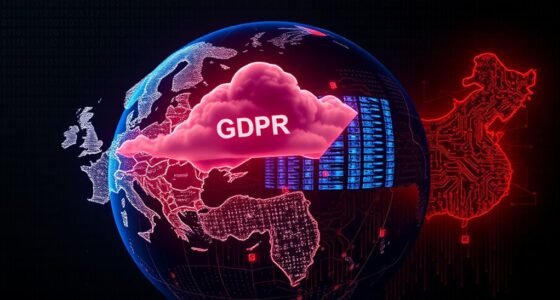


As Elon Musk pushes for significant reforms in U.S. cyber and intelligence agencies, he recently visited the National Security Agency (NSA) to discuss the urgent need for an overhaul in cyberespionage tactics. Meeting with NSA chief Gen. Timothy Haugh, Musk aimed to address the critical need for updated cybersecurity measures. His visit came just a week after he publicly called for a comprehensive overhaul of the country's intelligence operations, marking his first recorded engagement with an intelligence agency as a special adviser to the president.
You might find Musk's push for change intriguing, especially given the rapid evolution of cyber threats. The increasing sophistication of cyberattacks demands more agile and tech-driven solutions. Many experts share Musk's concerns, arguing that current frameworks are outdated and require modernization to protect national security effectively. While some view Musk's advocacy as a necessary step forward, others express apprehension about potential privacy implications. The balance between enhancing security and safeguarding individual privacy remains a contentious topic.
Musk's call for updated cybersecurity measures highlights the urgent need to balance national security with individual privacy rights.
During his discussions at the NSA, Musk also touched upon operational changes, including staff reductions and the agency's recent organizational challenges. With ongoing workforce disruptions, including offers for deferred resignations, the NSA faces a critical juncture. The timing of Musk's visit coincided with a push for reorganization plans from various intelligence agencies, highlighting the urgency of the situation. Current infrastructure is deemed insufficient against sophisticated cyber threats, underscoring the necessity for Musk's proposed reforms.
Musk's involvement could pave the way for increased collaboration between tech firms and government agencies. This potential partnership may lead to leveraging private sector innovations to bolster national cybersecurity measures. However, you should consider the challenges that come with such collaboration, as balancing private interests with public security needs can be complex.
The proposed overhaul of cyberespionage policies could significantly influence future legislation, further intertwining the roles of technology firms and government agencies. As you reflect on these developments, it's essential to recognize the global context of cybersecurity challenges.
Growing cyber threats require both private and public sectors to adopt a proactive stance. By integrating cutting-edge technologies, the U.S. could enhance its defenses against these evolving threats while ensuring that regulations are clear enough to prevent overreach. The future implications of Musk's advocacy might just usher in a new era of private-public partnerships in addressing cybersecurity challenges.
As an affiliate, we earn on qualifying purchases.
As an affiliate, we earn on qualifying purchases.
PowerShell Automation and Scripting for Cybersecurity: Build Security Tools, Automate Threat Detection, and Strengthen Defense Systems with PowerShell
As an affiliate, we earn on qualifying purchases.
As an affiliate, we earn on qualifying purchases.
private sector cybersecurity solutions
As an affiliate, we earn on qualifying purchases.
As an affiliate, we earn on qualifying purchases.