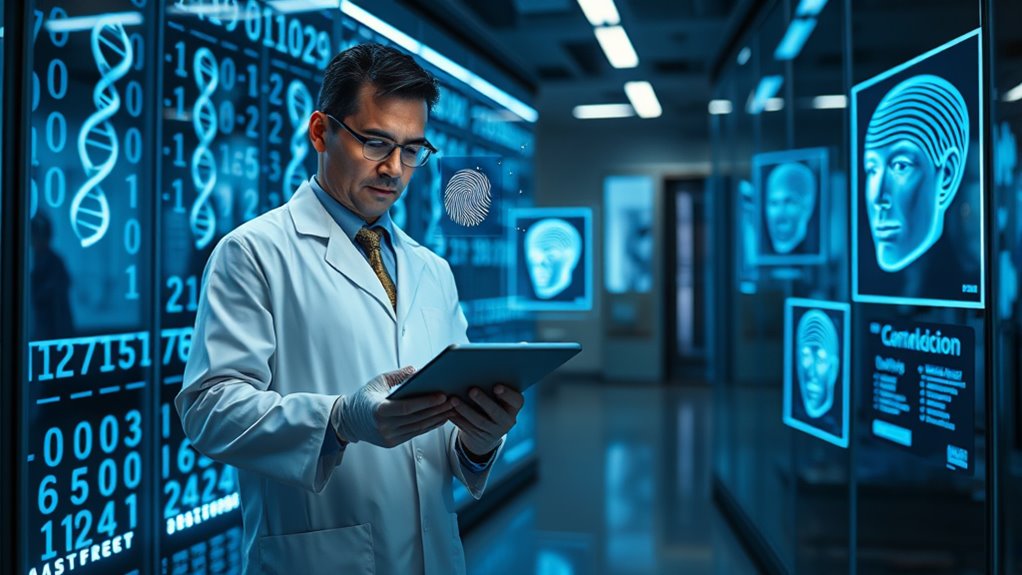

DNA databases and face scans improve law enforcement by helping you identify suspects quickly and solve cold cases. However, they also raise serious privacy concerns, as your genetic and biometric data can reveal sensitive personal details. Many worry about misuse, breaches, and the loss of control over their information. While these tools boost security, they may threaten individual freedoms. Keep going to explore how these technologies impact privacy and what measures could protect you better.
Key Takeaways
- DNA databases enhance law enforcement accuracy but risk exposing sensitive personal and genetic health information.
- Face scans enable quick suspect identification but raise concerns about mass surveillance without consent.
- Increased use of these technologies improves crime resolution but may infringe on individual privacy rights.
- Lack of strict regulations heightens the potential for data misuse, breaches, and loss of control over personal information.
- Ethical debates focus on balancing public safety benefits against threats to civil liberties and privacy protections.
As technology advances, law enforcement agencies increasingly rely on DNA databases and face scans to identify suspects quickly and accurately. These tools have revolutionized criminal investigations, enabling authorities to solve cases that might have otherwise gone cold. However, this progress raises significant questions about genetic privacy and surveillance ethics. You might wonder how much personal information is stored in these systems and whether their use respects individual rights. The concern is that the more data collected, the greater the risk of misuse or breaches, potentially exposing innocent people to unwarranted scrutiny or identity theft. Balancing the benefits of rapid identification with the need to protect personal privacy becomes a delicate act.
DNA databases harbor sensitive genetic information that can reveal far more than just identification details. Your genetic data can expose health risks, familial connections, and other private information you may not wish to share. When law enforcement agencies amass and analyze this data, it prompts questions about consent and how securely that information is stored. Are individuals fully aware of what’s collected and how it might be used in the future? Without strict regulations, there’s a danger that genetic privacy could be compromised, leading to a loss of control over personal biological data. This concern extends beyond individual privacy, touching on broader surveillance ethics. Critics argue that broad collection and use of DNA data could lead to a surveillance state where citizens are constantly monitored, infringing on civil liberties and fostering mistrust in law enforcement practices.
Face scans add another layer of complexity. While they provide a non-invasive way to identify individuals in public spaces, they also raise privacy issues. When your face is scanned without your knowledge or consent, it can feel like an invasion of privacy. The use of facial recognition technology in public monitoring often operates in a legal gray area, with questions about whether it’s ethical to track individuals en masse. These systems can be misused, leading to false positives or targeting specific groups unfairly. The ethical dilemma is whether the convenience of quick identification outweighs the potential for misuse and overreach.
Ultimately, as these technologies become more widespread, you must consider the implications for personal privacy and societal freedoms. While they can make investigations more efficient, they also pose risks to genetic privacy and challenge surveillance ethics. You should stay informed about how data is collected, stored, and used, and advocate for clear regulations that protect individual rights without sacrificing security. The ongoing debate isn’t just about technology—it’s about defining the boundaries of privacy in a world increasingly driven by data.

Privacy and Data Protection Issues of Biometric Applications: A Comparative Legal Analysis (Law, Governance and Technology Series, 12)
As an affiliate, we earn on qualifying purchases.
As an affiliate, we earn on qualifying purchases.
Frequently Asked Questions
How Do DNA Databases Impact Genetic Diversity?
You might think DNA databases restrict genetic variation, but they actually help preserve population diversity by documenting unique genetic traits. By analyzing this data, you can identify patterns that promote genetic health and prevent inbreeding. This enhances overall population diversity, ensuring a broader genetic pool. So, rather than limiting diversity, DNA databases support efforts to maintain a rich variety of genetic information vital for adaptation and resilience.
What Are the Risks of Biometric Data Hacking?
Ironically, your biometric data, meant to enhance security, becomes a tempting target for hackers. When biometric hacking occurs, your sensitive info—like face scans and fingerprints—can be stolen, risking your data privacy. Once compromised, it’s nearly impossible to change these identifiers, leaving you vulnerable to identity theft or unauthorized surveillance. The risks highlight how trusting your biometric data to digital systems might backfire, threatening your privacy more than protecting it.
Can Face Scans Be Used for Commercial Advertising?
Yes, face scans can be used for commercial advertising through facial recognition technology. When you enter a store or browse online, companies may analyze your facial features to identify you and deliver targeted advertising tailored to your preferences. While this can make ads more relevant, it also raises privacy concerns, as your facial data is often collected and used without explicit consent, potentially infringing on your privacy rights.
How Do Privacy Laws Vary Internationally Regarding DNA?
Imagine privacy laws as a patchwork quilt, each square stitched with different rules. International regulations on DNA vary widely—some countries tightly guard genetic data, while others have loose standards. You may find privacy discrepancies as vast as oceans, making it tricky to navigate. This uneven landscape means your DNA rights can change dramatically depending on where you are, leaving your genetic privacy vulnerable across borders.
What Are the Ethical Concerns of Predictive Genetic Profiling?
You should be aware that predictive genetic profiling raises ethical concerns like genetic discrimination, where your genetic information might unfairly influence employment or insurance decisions. It also emphasizes the importance of informed consent, ensuring you fully understand how your genetic data is used and shared. Without strict protections, these issues could threaten your privacy and rights, making it vital to advocate for transparent policies and ethical guidelines.

Front Camera Cover,Webcam Cover Compatible for Phone 14 Pro/14 Pro Max/15 Series/16 Series,Web Blocker Protect Your Privacy and Security-Infrared Facial Recognition Can Be Turned Off-Black
- Privacy Protection: Shield your camera from peeping
- Easy Privacy Control: Slide cover to block or unblock camera
- Compatibility: Fits iPhone 14, 15, 16 series
As an affiliate, we earn on qualifying purchases.
As an affiliate, we earn on qualifying purchases.
Conclusion
So, as you weigh the benefits and risks, remember that DNA databases and face scans are like double-edged swords—powerful tools that can protect or pierce your privacy. It’s up to you to stay informed and advocate for safeguards that keep your personal details safe. After all, trusting technology without boundaries is like sailing a ship without a rudder—easy to steer off course. Stay vigilant, and protect your privacy before it slips through the cracks.

Windows Hello Fingerprint Reader for Windows 11 10, Offline Physical Security Vault for PC, USB Biometric Fingerprint Scanner, 360° Touch Secure Login & Data Encryption Device for Laptop Sliver
- Offline Physical Vault: Secure offline biometric data storage
- Fast 0.1s Unlock: Instant fingerprint recognition from any angle
- 360° Touch Sensor: High-sensitivity capacitive fingerprint scanner
As an affiliate, we earn on qualifying purchases.
As an affiliate, we earn on qualifying purchases.

23andMe Health + Ancestry Service: DNA Test Kit, FDA-Authorized Reports, Genetic Test, Health Predispositions, Carrier Status, Family Tree (Before You Buy See Important Test Info Below)
- Genetic Testing Kit: At-home DNA test with health insights
- Comprehensive Reports: FDA-authorized health, carrier, and ancestry reports
- Personalized Insights: 100+ genetic insights for health and wellness
As an affiliate, we earn on qualifying purchases.
As an affiliate, we earn on qualifying purchases.