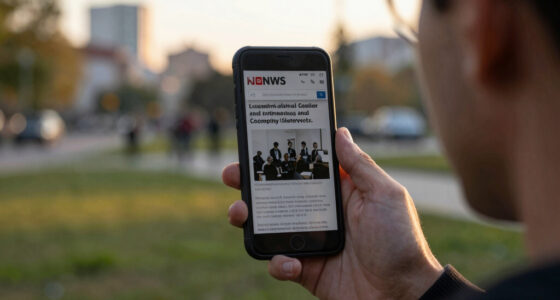

Your security policy should treat social media platforms as strategic terrain because they directly impact your organization’s security posture. These platforms are essential for communication but also present risks like data breaches, phishing, and corporate espionage if misused. Establish clear usage guidelines and educate employees on secure practices. Continuous monitoring and an incident response plan help you stay ahead of evolving threats. Keep exploring to learn how to turn social media into a security asset rather than a vulnerability.
Key Takeaways
- Security policies recognize social media as a critical component affecting organization’s overall security posture.
- They establish clear guidelines for responsible social media usage to prevent data leaks and reputational harm.
- Continuous monitoring of social channels is mandated to detect and respond to threats proactively.
- Employee training emphasizes secure sharing practices and awareness of social engineering tactics.
- Incident response protocols include procedures for addressing social media account compromises and related threats.

In today’s digital landscape, social media platforms have become integral to personal and professional communication, yet they also pose significant security risks. As you navigate these platforms, it’s crucial to recognize that they are more than just channels for sharing updates—they’re strategic terrain that can impact your organization’s security posture. A well-crafted security policy treats social media not merely as a tool for engagement but as a critical component of your overall cybersecurity strategy. Cyber threats targeting social media can lead to data breaches, identity theft, or even corporate espionage, making it essential to establish clear guidelines on how these platforms are used within your organization.
Your security policy should emphasize data privacy, ensuring that sensitive information isn’t inadvertently exposed or shared inappropriately. Social media platforms often have complex privacy settings, and employees might not always be aware of the risks associated with oversharing. By implementing strict access controls and educating your team about secure posting practices, you reduce the chances of data leakage. It’s also vital to monitor social media channels for suspicious activity that could indicate a cyber threat, such as phishing attempts, fake accounts, or malware links. Early detection can prevent significant damage, safeguarding both your reputation and your data. Recognizing the complex privacy settings of social media platforms is essential for effective security management and risk mitigation.
Prioritize data privacy, monitor for suspicious activity, and educate staff to prevent social media-related security risks.
Treating social media as strategic terrain means recognizing its potential as a vector for cyber threats. Attackers frequently exploit social platforms to target organizations through social engineering tactics, such as spear-phishing or bogus profiles designed to steal confidential information. Your security policy should define clear boundaries about what can and cannot be shared, and outline consequences for violations. Regular training sessions help employees understand these risks, turning them into active participants in your security defenses. It is equally important to stay informed about security best practices to adapt your policies as social media technologies evolve, ensuring ongoing protection. Staying updated on emerging threats and security measures is crucial to maintaining a robust defense against increasingly sophisticated cyberattacks. It’s also essential to establish protocols for incident response if a social media account is compromised, ensuring quick action to contain any breach.
Ultimately, your security policy must reflect the understanding that social media platforms are dynamic environments that require ongoing vigilance. They are a strategic terrain where cyber threats can evolve rapidly, and data privacy can be compromised in a matter of moments. By prioritizing security measures, fostering awareness, and setting clear guidelines, you help protect your organization from these risks, making social media a controlled and safe space rather than a vulnerability. Recognizing that social media can be a strategic terrain for cyber threats emphasizes the importance of proactive security measures. In doing so, you reinforce your organization’s resilience against cyber threats, turning social media from a potential liability into a strategic advantage. Additionally, understanding the power of electric bikes and generators can inspire innovative security measures, such as utilizing renewable energy sources for critical infrastructure during outages.
The Family Digital Shield: A Parent's Complete Guide to Protecting Your Kids Online — From Home Devices and First Phones to Social Media, Gaming, and AI Tools

As an affiliate, we earn on qualifying purchases.
As an affiliate, we earn on qualifying purchases.
Frequently Asked Questions
How Do Security Policies Adapt to Emerging Social Media Trends?
Your security policies adapt to emerging social media trends by addressing user-generated content and influencer collaborations. You implement guidelines that monitor and manage the risks associated with these trends, such as misinformation or brand reputation issues. You also guarantee that collaborations comply with legal and privacy standards. By staying flexible and updating policies regularly, you protect your organization while allowing innovative social media uses to thrive securely.
What Are the Legal Implications of Monitoring Social Media Platforms?
You need to understand that monitoring social media platforms raises significant legal implications, especially around legal compliance and privacy concerns. You must guarantee your actions respect users’ privacy rights and follow relevant laws like GDPR or CCPA. If you overlook these aspects, you risk legal penalties and damage to your reputation. Always balance your security needs with respecting individual privacy, and consult legal experts to navigate complex regulations effectively.
How Do Organizations Measure Social Media Security Risks Effectively?
You can gauge social media security risks by tracking user behavior patterns and deploying threat analytics tools that act like digital detectives. By monitoring engagement, content sharing, and potential vulnerabilities, you paint a clear picture of risks lurking beneath the surface. Regularly analyzing this data enables you to spot emerging threats early, allowing you to shore up defenses before malicious actors breach your social media fortress.
What Role Do Employees Play in Social Media Security Strategies?
You play a vital role in social media security strategies through employee vigilance. By staying alert to potential insider threats, you help prevent sensitive information leaks and malicious activities. Your awareness and adherence to security policies diminish risks and protect your organization’s digital reputation. Active participation in security training and cautious sharing on social media guarantee you contribute effectively to the overall security posture, fortifying defenses against evolving threats.
How Does Social Media Influence National Security Policies?
Social media influences national security policies by highlighting vulnerabilities and misinformation threats. You must recognize that social media vulnerabilities can be exploited for cyberattacks or espionage, prompting policymakers to develop strategies to counteract these risks. Misinformation threats can sway public opinion or destabilize governments, so your policies need to include monitoring and response plans. Staying vigilant helps you protect national interests and maintain security integrity amid the evolving social media landscape.
Conclusion
As you consider how security policies treat social media as a strategic terrain, one thing becomes clear: the landscape is constantly shifting. Every decision you make today could shape future vulnerabilities or defenses. But what lies just beyond the horizon? The next move by malicious actors, or perhaps a breakthrough in policy? Stay vigilant—because in this game of strategy and security, the next chapter is always about to unfold.