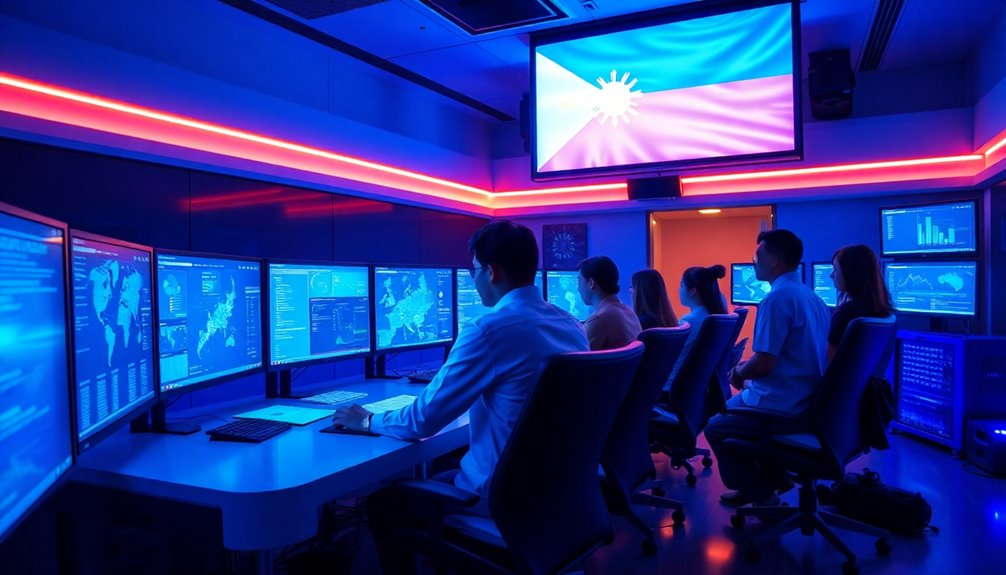


How can the Philippines safeguard its democracy in the face of rising cyber threats ahead of the 2025 elections? As you prepare for the upcoming elections, it's crucial to recognize the growing cyber threats that could undermine the integrity of the democratic process. Cyberattacks and disinformation campaigns are on the rise, fueled by geopolitical tensions and domestic political rivalries. You need to ensure that your systems are resilient against sophisticated threats, including deepfakes and foreign interference, particularly from nations like China.
Listen free for 30 days with Audible
Thousands of audiobooks and originals — cancel anytime.
As an affiliate, we earn on qualifying purchases.
The Philippines must bolster its defenses against rising cyber threats to protect democratic integrity ahead of the 2025 elections.
To tackle these challenges, the Philippines is building alliances with countries like Canada, the UK, Germany, and Malaysia. These partnerships focus on sharing best practices and intelligence, which are essential for countering foreign cyber threats. By collaborating with allies, you can create a united front that strengthens your cybersecurity infrastructure. This cooperation isn't just about defense; it's about sharing knowledge to develop robust systems that can withstand external pressures.
The National Cybersecurity Plan (NCSP) 2023-2028 aims to enhance cybersecurity across government agencies. This plan focuses on digitalizing services, which not only improves governance but also deters corruption. As a citizen, you can advocate for the training and upskilling of the cybersecurity workforce, ensuring that your nation has the expertise needed to tackle evolving threats. Furthermore, the Philippines' cybersecurity ranking has improved significantly, reflecting the effectiveness of these initiatives.
With improved internet speed and consolidated digital services, the government is working to establish a secure digital environment. However, the risks remain significant. Deepfakes and other disinformation tactics will likely escalate as the elections approach. Cybercriminals are becoming increasingly sophisticated, making it vital for you to support regular security audits to identify vulnerabilities in systems.
Diversifying technology providers and adopting stricter procurement policies can also reduce reliance on potentially insecure entities. Public awareness campaigns are essential for educating citizens about cyber scams and potential threats. Your role in spreading awareness can help create a more informed electorate that recognizes the signs of disinformation.
Additionally, developing robust incident response strategies is crucial to effectively manage any breaches that may occur. In this rapidly evolving landscape, the Philippines must focus on building a cyber-resilient society. By fostering international cooperation, enhancing cybersecurity infrastructure, and promoting public awareness, you can safeguard democracy and ensure that the upcoming elections remain free and fair.
cybersecurity threat detection software
As an affiliate, we earn on qualifying purchases.
As an affiliate, we earn on qualifying purchases.
Fall Picks
fall essentials
As an affiliate, we earn on qualifying purchases.