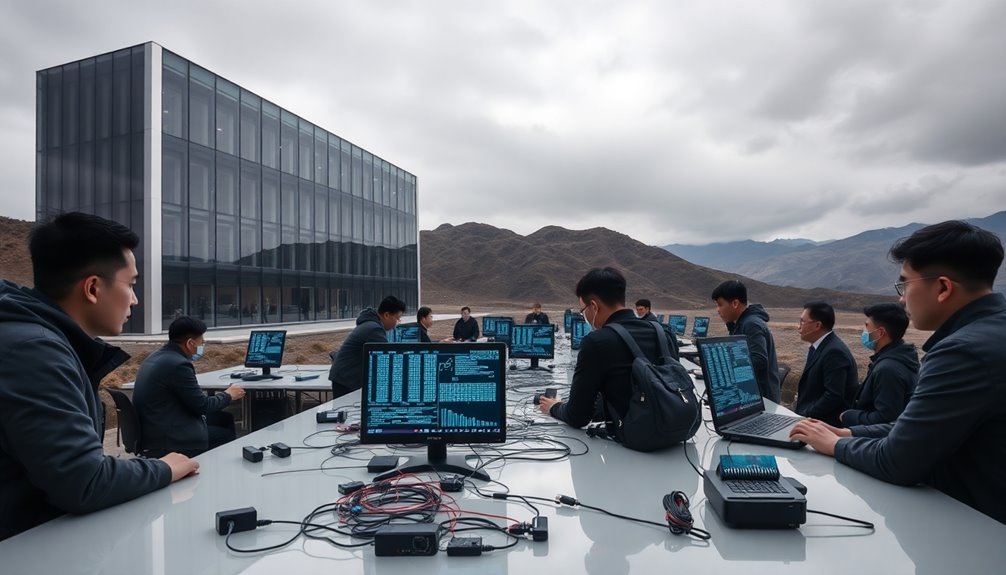


As North Korea ramps up its cyber capabilities, the establishment of Research Center 227 under the Reconnaissance General Bureau marks a significant leap into the world of AI-powered hacking. Located in the Mangyongdae District of Pyongyang, this center aims to enhance the country’s overseas information warfare capabilities. With around 90 cybersecurity professionals being recruited, it’s clear that North Korea is serious about bolstering its hacking arsenal to operate 24/7 alongside its RGB hacking groups abroad.

Get privacy and security gear delivered free — and shop member deals
- Fast, free delivery on millions of items
- Access to Prime Big Deal Days deals on October 6–7
- Prime Video, Amazon Music and more included
You should be aware that the integration of AI in their hacking strategies is a game changer. AI allows North Korean hackers to automate and scale their attacks, which increases both the speed and sophistication of their operations. They leverage advanced AI models, similar to ChatGPT and Google Gemini, to conduct fraud operations. By automating attacks, they can tailor deceptive messages and create counterfeit identities, making their tactics more effective than ever before. This scalability means they can target even the most secure systems globally.
The integration of AI revolutionizes North Korea’s hacking, enabling automated, sophisticated attacks that can penetrate even the most secure systems.
The implications of North Korea’s AI-powered hacking extend far beyond its borders, posing a significant threat to global cybersecurity. Their financial motivations are clear: hacking helps them circumvent international sanctions and secure much-needed foreign currency. Targets range from cryptocurrency exchanges to major financial institutions worldwide, using tactics like spear-phishing and malware deployment. To evade detection, North Korean hackers employ VPNs and shell companies, complicating the efforts of cybersecurity professionals trying to thwart them.
North Korea’s cyber strategy revolves around economic survival, using cybercrime not just for financial gain but also for intelligence gathering and intellectual property theft. The advantages provided by AI make these cyberattacks harder to detect and more effective. It’s evident that a coordinated global response is necessary to tackle these escalating threats, especially as North Korea’s technological advancements in this area are rapidly evolving.
Research Center 227’s missions are ambitious. They’re focused on neutralizing Western cybersecurity systems while developing AI-based techniques for information theft. This includes targeting financial assets and disrupting computer networks. The center’s automated programs facilitate real-time data collection and analysis, giving North Korean hackers an edge in the cyber realm. Notably, the center coordinates global hacking efforts to enhance North Korea’s offensive capabilities.
cybersecurity threat detection software
As an affiliate, we earn on qualifying purchases.
As an affiliate, we earn on qualifying purchases.
Fall Picks
fall essentials
As an affiliate, we earn on qualifying purchases.