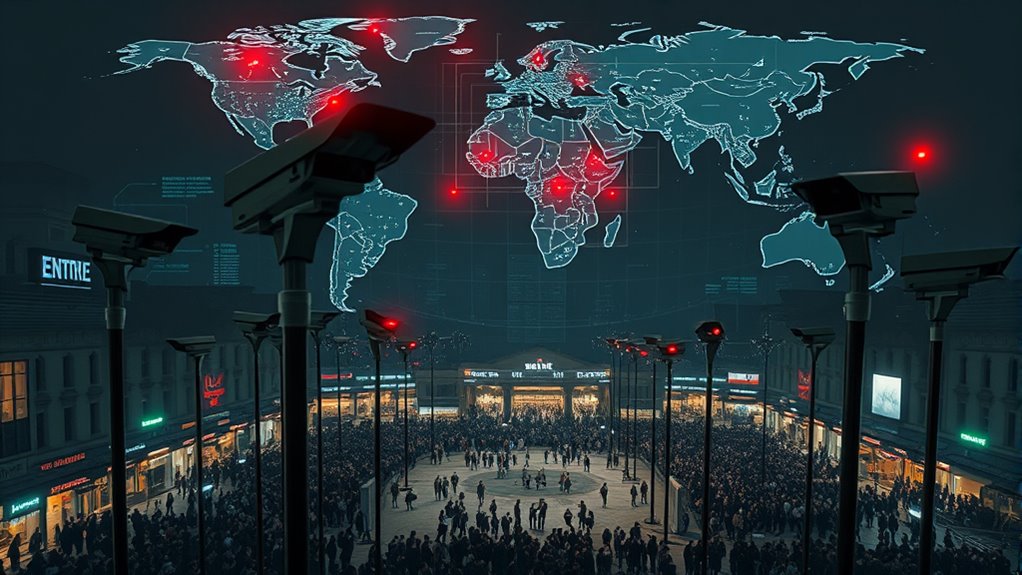

AI surveillance technology, especially facial recognition, is transforming security worldwide by allowing real-time identification and tracking of individuals. Governments and corporations now use these tools to monitor activities more efficiently, creating a powerful global spy network. However, this raises serious privacy concerns, biases, and ethical questions about misuse and transparency. As these systems evolve, understanding their impact on personal freedoms and security becomes vital. Keep exploring to learn more about how this expanding network affects your privacy and rights.

Get privacy and security gear delivered free — and shop member deals
- Fast, free delivery on millions of items
- Access to Prime Big Deal Days deals on October 6–7
- Prime Video, Amazon Music and more included
Key Takeaways
- Facial recognition AI enhances global surveillance capabilities by enabling real-time identification across borders.
- Widespread use raises privacy and ethical concerns, especially regarding mass data collection and potential misuse.
- Governments and private sectors leverage these technologies to monitor individuals, fueling debates on personal freedoms.
- Lack of transparent regulations and accountability creates risks of abuse and discriminatory targeting.
- International standards and safeguards are needed to balance security benefits with privacy and human rights protections.
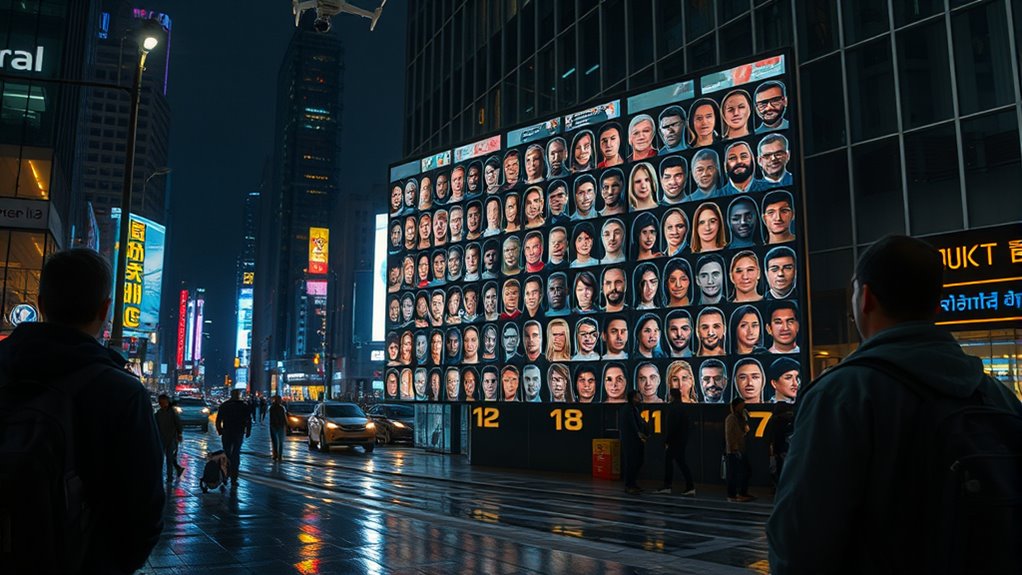
Have you ever wondered how artificial intelligence is transforming surveillance? It’s a powerful shift that’s reshaping how governments, corporations, and even individuals monitor and manage security. Among the most prominent tools in this new landscape are facial recognition systems, which use AI algorithms to identify people in real time or from stored images. While these technologies promise increased safety and efficiency, they also raise significant privacy concerns and ethical implications. When you’re constantly watched, your personal data becomes a commodity, vulnerable to misuse or exploitation. Governments and private entities can track your movements without your knowledge, creating a surveillance state where privacy feels increasingly compromised. This pervasive monitoring challenges the fundamental right to privacy, leading many to question who has access to this data and how it’s being utilized.
The ethical implications of AI-driven surveillance are equally profound. As facial recognition becomes more accurate and widespread, it’s often deployed in ways that may infringe on individual freedoms or disproportionately target specific communities. For instance, some systems have been shown to misidentify minorities at higher rates, raising concerns about bias and discrimination. These issues force us to think about whether the benefits of enhanced security outweigh the risks of misuse and abuse. Additionally, the lack of transparency surrounding how AI surveillance systems operate fuels suspicion and distrust. When decisions about who is watched, detained, or flagged are made by algorithms that most people don’t understand, it complicates accountability. You might worry about how data is collected, stored, and shared, especially when law enforcement agencies or foreign governments are involved. Moreover, ongoing research highlights the importance of building robust safety measures to mitigate vulnerabilities and prevent misuse. These measures are essential to address concerns about algorithmic bias and ensure fair treatment across diverse populations. Furthermore, the global disparity in regulations and standards creates a patchwork of protections that can leave citizens vulnerable. An increasing reliance on AI algorithms for decision-making amplifies the need for comprehensive oversight and regulation. The development of standardized protocols can help establish consistent safeguards across different jurisdictions. Ultimately, AI surveillance’s rapid development calls for careful consideration of both its immense potential and its profound responsibilities.
facial recognition security camera
As an affiliate, we earn on qualifying purchases.
As an affiliate, we earn on qualifying purchases.
Frequently Asked Questions
How Do Privacy Laws Vary Worldwide Regarding Facial Recognition?
You might notice that privacy laws vary worldwide regarding facial recognition. International regulations differ greatly, with some countries imposing strict bans or limitations, while others have minimal oversight. Cultural perspectives influence how societies view privacy and surveillance, shaping laws accordingly. In some places, facial recognition is accepted for security, while others prioritize individual rights. Understanding these differences helps you see how global attitudes and regulations shape the use of this technology.
What Ethical Concerns Are Associated With AI Surveillance Technologies?
They say “power tends to corrupt, and absolute power corrupts absolutely,” and AI surveillance tech raises serious ethical concerns. You might worry about privacy invasion and the erosion of civil liberties, as constant monitoring can infringe on personal freedoms. These technologies can be misused, leading to unjust profiling or suppression, making it essential to balance safety with respecting individual rights and ensuring transparency in their deployment.
How Accurate Is Facial Recognition Across Different Demographics?
You should know that facial recognition accuracy varies across different demographics due to biases in the data. These accuracy disparities mean that some groups, especially minorities, are more likely to face misidentifications. This inconsistency raises concerns about fairness and privacy. As a user, it’s important to understand that these demographic biases can lead to unfair treatment and undermine trust in the technology’s reliability across diverse populations.
Who Are the Major Companies Developing AI Surveillance Systems?
Imagine a web of companies weaving AI surveillance systems, each vying to dominate biometric databases. Major players like Palantir, Clearview AI, and NEC develop facial recognition tech, fueling corporate espionage and global monitoring. Their systems scan crowds, instantly identifying individuals. You see their influence everywhere—on city streets, in airports—creating a digital tapestry that watches and records, shaping a world where privacy is increasingly at risk.
What Are the Potential Future Developments in Surveillance AI Technology?
You might see future surveillance AI advancements that improve accuracy and speed, but watch out for challenges like algorithm bias, which can lead to unfair targeting or false identifications. Data security will become even more critical as systems handle vast amounts of personal info, risking breaches. Expect innovations focusing on reducing bias and strengthening data protection, making surveillance more efficient yet safer for everyone involved.
Conclusion
You might be surprised to learn that over 1 billion facial recognition searches are conducted worldwide each day. As you see, AI surveillance tech is expanding rapidly, connecting governments and corporations in a vast spy network. While it offers security benefits, it also raises serious privacy concerns. Staying informed helps you understand how this technology impacts your daily life. Ultimately, awareness empowers you to advocate for responsible use and stronger privacy protections.
Fall Picks
fall essentials
As an affiliate, we earn on qualifying purchases.